




CSIR NIScPR Foundation Day 2026 celebrated with the launch of SVASTIK portal, promoting science communication, TKDL initiatives, and policy research in India.
CSIR-NIScPR Marks 5th Foundation Day, Reinforces Science Communication & Policy Research in India
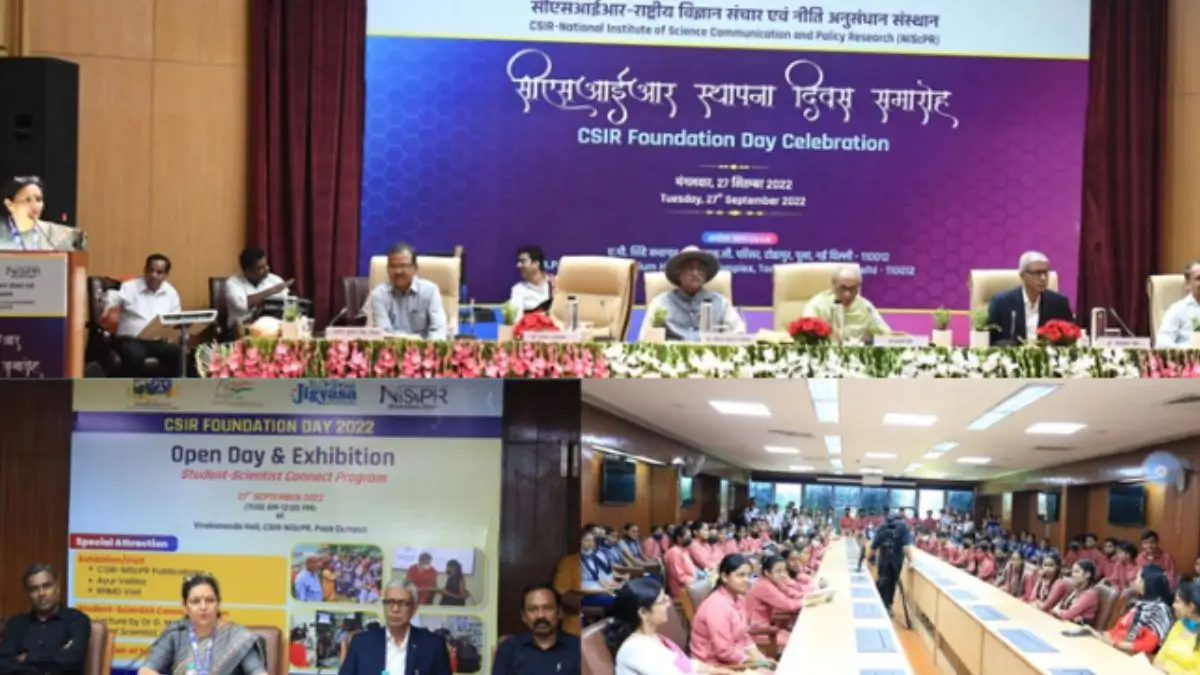
The CSIR-National Institute of Science Communication and Policy Research (CSIR-NIScPR) celebrated its Fifth Foundation Day on 14 January 2026, reaffirming its pivotal role in strengthening science communication, evidence-based policy research, and the dissemination of India’s traditional knowledge.
The program featured distinguished guests from science, policy, and innovation domains. Dr. Geetha Vani Rayasam, Director of CSIR-NIScPR, delivered the welcome address, highlighting the institute’s rich legacy and future vision for inclusive science communication. She emphasized the need to leverage artificial intelligence (AI) to communicate scientific knowledge in regional languages, making science accessible to diverse socio-linguistic communities.
A major highlight of the event was the launch of the SVASTIK web portal — Scientifically Validated Societal Traditional Knowledge. This portal is designed to make India’s scientifically validated traditional knowledge widely available by offering content in English, 19 Indian languages, and five foreign languages, significantly enhancing outreach, engagement and understanding at both national and global levels.
Dr. Viswajanani J. Sattigeri, Head of the CSIR-Traditional Knowledge Digital Library (TKDL) Unit, stressed that TKDL — a fully digitized and globally recognized repository — plays a valuable role in preserving and validating India’s traditional wisdom through science. She further noted the vast potential of policy research to inform decision-making across sectors, from healthcare to technology adoption.
The event also saw vibrant poster presentations by CSIR-NIScPR PhD scholars and scientists, showcasing cutting-edge research in science communication and policy studies. A formal vote of thanks was offered by Dr. Kanika Malik, Senior Principal Scientist at NIScPR, wrapping up the celebration with renewed commitment toward innovation, outreach, and societal impact.
Overall, the 5th Foundation Day celebrated CSIR-NIScPR’s journey of becoming a key driver in connecting science, society, and policy, while setting milestones for future initiatives that expand the frontiers of scientific communication in India and beyond.

Why This News is Important for Government Exam Aspirants
Relevance to Exam Syllabus
Understanding the role and contributions of research institutions like CSIR-NIScPR is vital for competitive exams such as PSC, UPSC, SSC, Banking, Railways, and Defence. Questions in General Awareness, Science & Technology, and Government Policies often test knowledge about national research bodies, their recent initiatives, and impact on society.
Science Communication & Policy Research: Key Concepts
CSIR-NIScPR plays a significant role in promoting scientific temper and rational thinking among the public, aligning with the Government of India’s vision for an Atmanirbhar Bharat and knowledge-based economy. Its emphasis on AI integration for regional language communication intersects with current policy priorities regarding digital inclusion and science literacy — important topics in GS papers and interview rounds.
Traditional Knowledge Dissemination
The launch of the SVASTIK portal underscores India’s efforts to preserve and popularize scientifically validated traditional knowledge, a growing area of focus in policy documents and innovation initiatives. This aligns with government mandates for Digital India and leveraging technology to reach wider audiences.
Policy Making & Governance
The institute’s contribution to policy research and evidence-based decision-making positions it as a critical stakeholder in shaping future science and technology policies — a key dimension for essay writing, policy-based MCQs, and current affairs discussions in exams like UPSC CSE.
Skill Enhancement for Aspirants
Awareness about institutes like NIScPR helps aspirants prepare for interviews, group discussions, and descriptive papers, where examples from real-world science communication and policy research initiatives strengthen answers and demonstrate deeper understanding.
Historical Context of CSIR-NIScPR
The CSIR-National Institute of Science Communication and Policy Research (NIScPR) is a premier scientific institute under the Council of Scientific and Industrial Research (CSIR), India’s largest R&D organization. It emerged as a vital institution focused on strengthening the interface between science, society, and policy.
Over the years, CSIR-NIScPR has evolved into a leading think-tank for science communication, research dissemination, and science and technology policy analysis. Its mandates include publishing peer-reviewed scientific journals, conducting evidence-based policy studies, and operating digital platforms for wider science outreach.
The institute’s initiatives, such as the Traditional Knowledge Digital Library (TKDL), highlight India’s commitment to preserving its diverse traditional knowledge base through rigorous scientific validation and global dissemination. This aligns with national goals of integrating indigenous knowledge with modern research frameworks.
In recent years, CSIR-NIScPR has accentuated the importance of AI tools for science communication, regional language outreach, and strengthening international collaboration — a reflection of India’s broader policy focus on science diplomacy and inclusive innovation.
Key Takeaways from CSIR-NIScPR Celebrates 5th Foundation Day
| Sr. No. | Key Takeaway |
|---|---|
| 1 | CSIR-NIScPR celebrated its 5th Foundation Day on 14 January 2026. |
| 2 | The SVASTIK portal was launched to disseminate scientifically validated traditional knowledge. |
| 3 | The institute focuses on science communication, policy research, and AI-enabled regional language outreach. |
| 4 | CSIR-NIScPR’s TKDL unit is globally recognized for validating traditional knowledge. |
| 5 | Poster presentations and scholarly engagement highlighted research excellence within the institute. |
FAQs: Frequently Asked Questions
1. What is CSIR‑NIScPR?
CSIR‑NIScPR stands for the Council of Scientific and Industrial Research – National Institute of Science Communication and Policy Research. It focuses on science communication, policy research, and dissemination of India’s traditional knowledge.
2. When was the 5th Foundation Day of CSIR‑NIScPR celebrated?
The 5th Foundation Day was celebrated on 14 January 2026.
3. What is the SVASTIK portal?
The SVASTIK portal (Scientifically Validated Societal Traditional Knowledge) is a digital platform launched by CSIR‑NIScPR to make India’s scientifically validated traditional knowledge available in multiple Indian and foreign languages.
4. What role does TKDL play in India’s traditional knowledge preservation?
The Traditional Knowledge Digital Library (TKDL) digitizes and validates India’s traditional knowledge for global recognition and policy protection.
5. How does CSIR‑NIScPR contribute to science communication?
The institute promotes evidence-based science communication using AI tools, regional language outreach, publications, research, and policy advisory services.
6. Why is CSIR‑NIScPR important for policy research?
It provides data-driven insights to policymakers, ensuring that decisions on technology, healthcare, and innovation are based on scientific evidence.
7. Which languages are included in the SVASTIK portal?
The portal offers content in English, 19 Indian languages, and five foreign languages to promote accessibility.
Some Important Current Affairs Links