





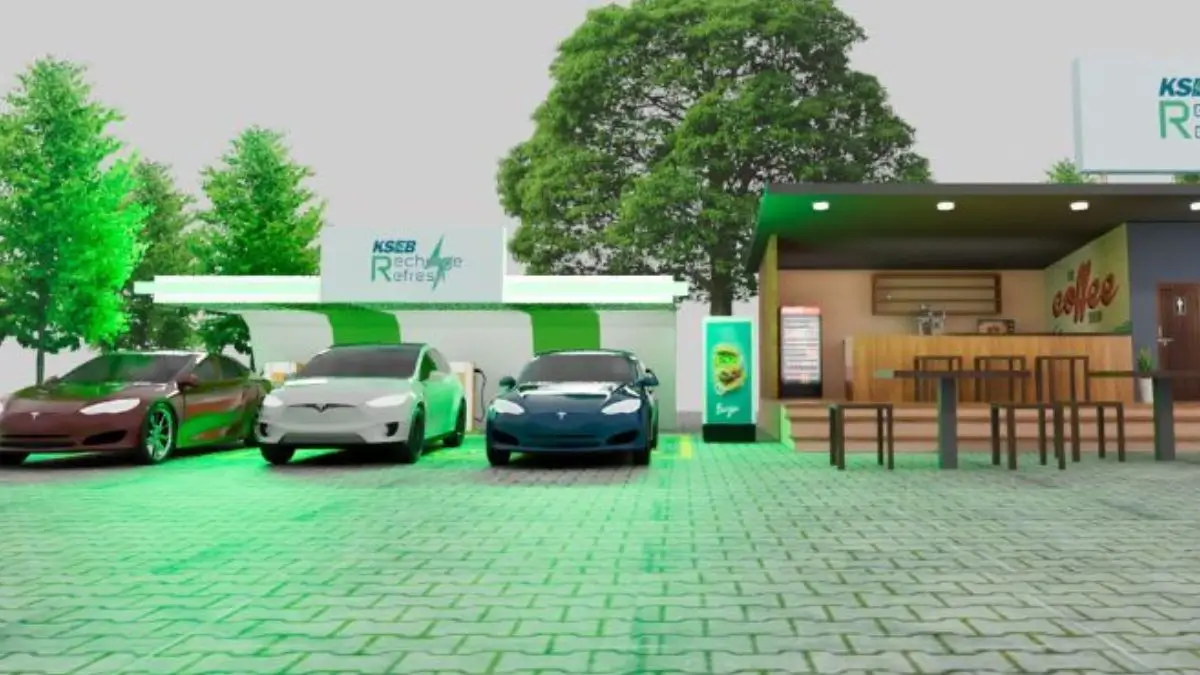
Kerala electric vehicle adoption 2025 leads India with rapid growth in personal EVs. Explore Kerala’s EV policies, infrastructure, and trends for government exam preparation.
Kerala Surges Ahead in Personal EV Adoption in 2025: A Major Shift in Green Mobility
Kerala Leads the EV Revolution in India
Kerala has emerged as a national leader in personal electric vehicle (EV) adoption in 2025, outperforming larger and traditionally industrialised states in India. Despite its smaller size, the southern state has made remarkable progress in embracing electric mobility, especially in personal four-wheelers and two-wheelers, showing that progressive adoption is possible through supportive policies and increasing public awareness.
According to recent registrations data, Kerala recorded the highest share of personal EV adoption among the top states in India in 2025. While states like Karnataka and Uttar Pradesh witnessed significant EV usage, Kerala’s EV penetration rate stands second only to Delhi, underscoring its rapid transition towards sustainable transportation.
Policy & Infrastructure Driving Growth
Kerala’s journey in electric mobility began with proactive policy initiatives like its 2019 EV policy, which laid the groundwork for expanding charging infrastructure and boosting consumer interest in EVs. Middle-class households have increasingly installed home charging points and utilised the expanding public charging network across cities and towns.
The surge in EV numbers was visible in registration figures where electric vehicles formed over 12% of all new vehicle registrations in 2025—marking a 28.5% increase compared to the previous year. State transport data revealed that 1,06,993 EVs were registered in Kerala in 2025, a significant jump from 83,268 EVs registered in 2024.
Two-Wheelers and Four-Wheelers Fuel the Momentum
While two-wheelers continue to dominate EV adoption across India, Kerala has also shown impressive growth in personal four-wheeler EVs. Major EV manufacturers such as Tata Passenger Electric Mobility led in the four-wheeler segment, whereas Ather Energy, Bajaj Auto and TVS Motor reported higher two-wheeler sales in the state.
This broad penetration across vehicle types highlights the diversity of EV acceptance in Kerala—reflecting both environmental consciousness and shifts in consumer preferences among different income groups.
Challenges on the Road Ahead
Though Kerala’s performance in EV adoption is commendable, policy challenges and infrastructure gaps remain areas of focus. Some industry experts point to issues such as limited high-speed charging stations in rural regions or slower EV incentives compared to other states. However, ongoing infrastructure planning and civic awareness programs are expected to address these concerns in due course.
Implications for India’s EV Ecosystem
Kerala’s success story in the EV domain holds broader implications for India’s green mobility goals. It showcases how a combination of state policy support, rising environmental awareness, urban infrastructure development, and consumer demand can accelerate the transition from traditional combustion engines to cleaner electric alternatives.

Why This News Is Important for Exam Aspirants
Relevance to Environment & Economy
This news is significant for government exam aspirants because it touches upon core topics like environmental sustainability, climate change mitigation, and government policies on clean energy—all of which are frequently asked in exams like UPSC Prelims/Mains, SSC, Banking, and other state PSCs. Electric mobility is a key component of India’s strategy to reduce carbon emissions and achieve its commitments under international agreements like the Paris Climate Accord.
Connects With Government Initiatives
Kerala’s EV surge reflects the impact of government policies (like state EV policies and infrastructure incentives) on adoption rates. Aspirants preparing for exams must understand such examples to answer questions on policy effectiveness, sustainable development, and state contributions to national goals.
Current Affairs & Static General Knowledge
This news offers insights into current affairs (latest EV adoption trends) and links with static GS subjects like economics (infrastructure growth, market trends), geography (regional adoption patterns), and science & technology (electric mobility, clean technology). This makes it a high-yield topic for objective and subjective questions in competitive exams.
Historical Context: Growth of Electric Vehicles in India
Electric vehicle adoption in India began gaining momentum in the early 2010s with the launch of the FAME (Faster Adoption and Manufacturing of Hybrid and Electric Vehicles) scheme by the Government of India. Subsequent phases of FAME focused on subsidies for EV buyers and investments in charging infrastructure.
Kerala’s own EV policy was introduced in 2019, making it one of the early states to have a dedicated roadmap for EV development. Over time, rising fuel prices, greater environmental awareness, and technological advancements in battery performance catalysed EV adoption across the nation. Southern states, including Kerala, Tamil Nadu, and Karnataka, consistently contributed to EV growth, with Kerala’s strong middle-class consumer base and urban density supporting faster penetration.
By 2025, electric vehicles began accounting for measurable percentages of total vehicle registrations in several states—signifying a paradigm shift from fossil fuel dependency to cleaner electric alternatives. Kerala’s achievement in overtaking larger states represents a milestone in India’s broader electric mobility transition.
Key Takeaways from “Kerala Surges Ahead in Personal EV Adoption”
| S. No. | Key Takeaway |
|---|---|
| 1 | Kerala leads in personal electric vehicle adoption in India in 2025. |
| 2 | EVs accounted for over 12% of new vehicle registrations in Kerala in 2025. |
| 3 | Kerala’s EV penetration rate was second only to Delhi among top states. |
| 4 | Two-wheelers and four-wheelers both showed strong growth, led by major EV brands. |
| 5 | State policies, infrastructure build-out, and environmental awareness pushed EV adoption. |
FAQs: Frequently Asked Questions on Kerala EV Adoption 2025
1. What is the significance of Kerala leading in EV adoption in 2025?
Kerala becoming a leader in personal EV adoption reflects the state’s effective policies, consumer awareness, and infrastructure growth, which align with India’s green mobility and climate goals. This trend is important for understanding regional contributions to sustainable development.
2. Which types of vehicles contributed most to Kerala’s EV adoption?
Both two-wheelers and four-wheelers contributed significantly. Two-wheelers dominate in numbers, while four-wheelers showed substantial growth, led by manufacturers like Tata Passenger Electric Mobility, Ather Energy, Bajaj Auto, and TVS Motor.
3. What policies helped Kerala achieve high EV adoption?
Kerala’s 2019 EV policy provided incentives for buyers, expanded charging infrastructure, and promoted environmental awareness. These measures encouraged individuals and households to transition to electric mobility.
4. How does Kerala’s EV adoption compare with other states in India?
Kerala’s EV penetration is second only to Delhi, surpassing larger states such as Karnataka and Uttar Pradesh. The state has recorded over 12% of new vehicle registrations as electric vehicles in 2025.
5. Why is this news important for government exam aspirants?
This news connects to environmental sustainability, government policies, and infrastructure development, which are frequently asked in exams like UPSC, SSC, Banking, Railways, and State PSCs. Understanding regional EV adoption trends helps answer questions on policy impact, climate action, and technological developments.
6. What challenges does Kerala face in EV adoption?
Challenges include limited high-speed charging stations in rural areas and slower incentive programs compared to other states. However, ongoing infrastructure planning aims to address these gaps.
Some Important Current Affairs Links




