


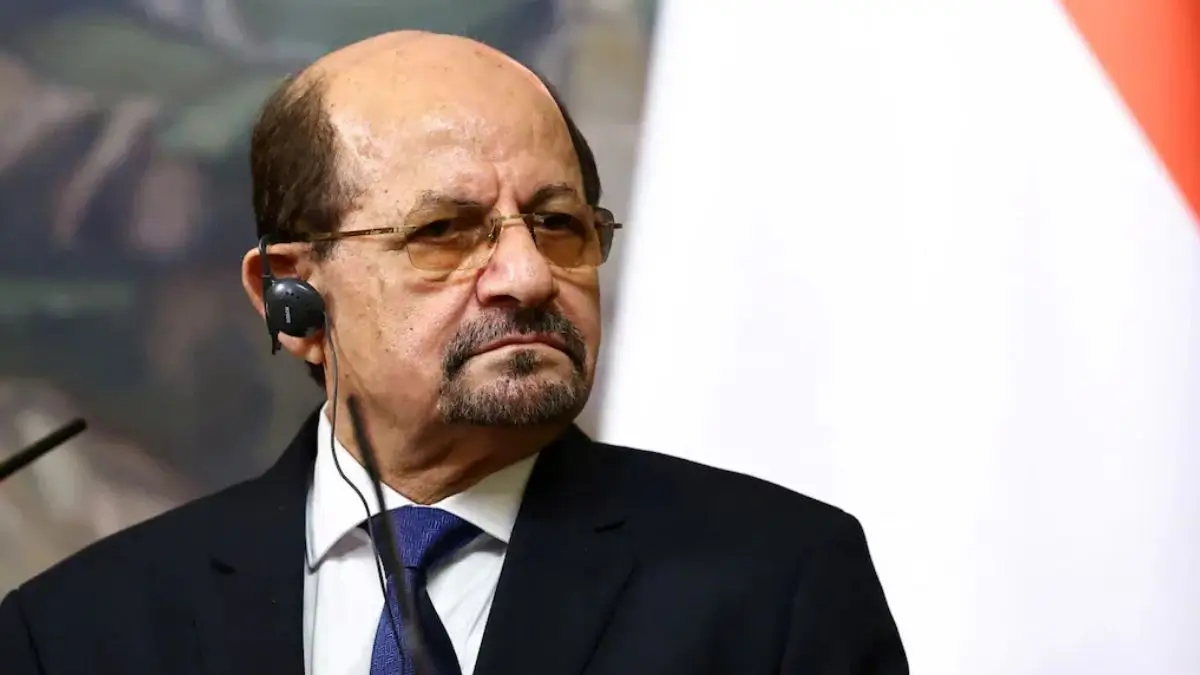
Yemen Prime Minister resignation news: Salem bin Breik resigns, and Foreign Minister Shaya Mohsen Zindani appointed as the new Prime Minister, highlighting Yemen’s political crisis and regional implications.
Yemen’s Prime Minister Resigns; Foreign Minister Appointed as New Prime Minister
Overview of the Leadership Change in Yemen
On January 15–16, 2026, Yemen’s internationally recognised Prime Minister Salem bin Breik resigned from his post, and the country’s Foreign Minister Shaya Mohsen Zindani was appointed as the new Prime Minister by the Saudi-backed Presidential Leadership Council (PLC).
Bin Breik submitted his resignation formally to the PLC, which was then accepted by the council. Following this, Zindani was entrusted with the task of forming the next government and cabinet.
This leadership transition takes place amid ongoing political and security instability in Yemen, driven by continuing conflict involving the Houthi rebels, internal divisions, and regional geopolitical influence.
Who Is Shaya Mohsen Zindani — Yemen’s New Prime Minister?
Shaya Mohsen Zindani, previously Yemen’s Foreign Minister, has now stepped into the role of Prime Minister. In his new capacity, he will be expected to steer the country’s civil administration, work toward political stability, and engage in diplomatic efforts to manage both internal and external pressures on the government.
Zindani’s appointment signals continuity in Yemen’s leadership even as the country faces complex challenges, including power struggles within the ruling council, tensions between regional powers like Saudi Arabia and the UAE, and ongoing conflict with the Iran-aligned Houthi movement.
Political Context Behind the Resignation
Yemen’s ruling body, the Presidential Leadership Council, backed by Saudi Arabia, has been grappling with internal differences and security concerns. The resignation of the outgoing Prime Minister reflects not only routine political reshuffles, but also attempts to strengthen governance in the face of internal rifts, especially as various factions vie for influence within the country.
This shift in leadership comes at a time when Yemen continues to suffer from one of the world’s most devastating humanitarian crises, as well as internal pressures from separatist movements in the south and the longstanding civil war involving Houthi forces.
Regional Implications of the New Appointment
The appointment of a new prime minister is not merely a domestic affair but carries regional and strategic significance, particularly because Yemen’s civil war and politics have been heavily influenced by Saudi Arabia and the United Arab Emirates (UAE).
Recent developments saw the Southern Transitional Council, backed by the UAE, expand control over southern regions—triggering tensions. Saudi Arabia’s support for the internationally recognised government means leadership changes often reflect broader regional dynamics as well.
Expected Priorities for the New Government
As Yemen’s new Prime Minister, Zindani’s responsibilities will include:
- Establishing a new cabinet to manage state affairs effectively.
- Addressing ongoing security challenges related to the civil war and insurgent activity.
- Working toward political reconciliation among rival factions within Yemen.
- Enhancing diplomatic engagement with regional powers for support.
These priorities will be crucial for Yemen’s path toward stability and peace.

Why This News Is Important for Government Exam Aspirants
Relevance to Exam-Focused Current Affairs
This development in Yemen holds significance for students preparing for government exams for several reasons:
- International Relations and Geopolitics: Yemen’s leadership change reflects the role of regional power dynamics, especially between Saudi Arabia and the UAE—an essential topic in global geopolitics sections.
- Conflict and Governance: Understanding Yemen’s political instability, ongoing civil war, and governance challenges is important for questions on international conflict resolution and humanitarian issues.
- Diplomacy and Strategic Interests: Zindani’s rise from foreign minister to prime minister underlines the importance of diplomatic experience in government leadership—a critical point for essays and interview discussions.
Historical Context: Background to Yemen’s Political Crisis
The Civil War and Power Struggles in Yemen
Yemen has been embroiled in a devastating civil war since 2014, when the Iran-backed Houthi rebels seized the capital, Sana’a. In response, a Saudi-led coalition intervened in 2015 to restore the internationally recognised government, resulting in widespread conflict and immense humanitarian suffering.
Over the years, the Yemeni government has witnessed numerous leadership changes due to internal disputes, governance challenges, and external pressures. These shifts reflect broader struggles for control among rival factions and regional influencers such as Saudi Arabia, the UAE, and Iran.
Leadership restructurings like the recent one represent ongoing attempts to adapt governance to evolving political landscapes and strengthen internal cohesion.
Key Takeaways from “Yemen’s Leadership Transition”
| S.No | Key Takeaway |
|---|---|
| 1 | Yemen’s Prime Minister Salem bin Breik resigned from his post in January 2026. |
| 2 | Foreign Minister Shaya Mohsen Zindani was appointed as the new Prime Minister. |
| 3 | The Presidential Leadership Council backed by Saudi Arabia approved the leadership change. |
| 4 | The shift occurs amid ongoing conflict and political instability in Yemen. |
| 5 | The change reflects regional geopolitical factors, especially Saudi-UAE tensions affecting Yemen’s governance. |
FAQs: Frequently Asked Questions
1. Who resigned as Yemen’s Prime Minister in January 2026?
- Salem bin Breik resigned as Yemen’s Prime Minister in January 2026.
2. Who has been appointed as the new Prime Minister of Yemen?
- Foreign Minister Shaya Mohsen Zindani was appointed as the new Prime Minister.
3. Which governing body approved the appointment of the new Prime Minister?
- The Presidential Leadership Council (PLC), backed by Saudi Arabia, approved the appointment.
4. Why is Yemen politically unstable?
- Yemen faces ongoing civil war, internal divisions, Houthi insurgency, and regional interference by Saudi Arabia, UAE, and Iran.
5. What are the key responsibilities of the new Prime Minister?
- Forming a new cabinet, addressing security challenges, political reconciliation among rival factions, and strengthening diplomatic relations.
6. How does Yemen’s leadership change affect the region?
- It influences regional geopolitics, especially regarding Saudi‑UAE relations and Iran-backed Houthi influence in Yemen.
7. Since when has Yemen been experiencing civil war?
- Yemen’s civil war began in 2014 when the Houthi rebels seized the capital Sana’a.
8. What role does the foreign minister’s experience play in governance?
Diplomatic experience helps in managing international relations and garnering regional support for Yemen’s government.
Some Important Current Affairs Links




