


Exercise Sanjha Shakti 2026 enhances civil–military coordination and disaster preparedness. Learn about participating agencies, objectives, and significance for national security.
Exercise Sanjha Shakti Held at Dighi Hills: Enhancing Disaster Response Preparedness
Overview of Exercise Sanjha Shakti
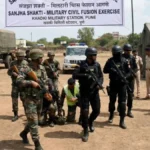
The Indian Army recently conducted Exercise Sanjha Shakti, a major Military–Civil Fusion (MCF) exercise from 8–9 January 2026 at the Dighi Hills (Diggi) Range, Khadki Military Station, Pune, Maharashtra. This drill was organised under the Maharashtra, Gujarat and Goa (MG & G) Area of the Southern Command with the primary aim of enhancing coordination between the armed forces and civilian agencies.
More than 350 personnel from 16 key civilian agencies actively participated alongside Army units. Agencies included the Maharashtra Police, Force One (elite counter-terror unit), fire and emergency services, disaster response teams, and various other civil administration stakeholders. The two-day exercise simulated complex security and emergency scenarios to test interoperability, communication systems, joint preparedness, and rapid response mechanisms.
Objectives and Strategic Significance
Exercise Sanjha Shakti was designed to strengthen civil–military coordination and joint operational readiness during both disaster situations and evolving security challenges. It focused on enhancing the ability of all participating agencies to operate under a unified command structure — particularly during emergency scenarios such as natural disasters, terrorist attacks, and large-scale public safety events.
The exercise aimed at:
- Improving communication protocols and shared response strategies
- Testing Standard Operating Procedures (SOPs) under real-life conditions
- Refining decision-making capabilities across agencies
- Enhancing rapid response and evacuation procedures
- Reinforcing public safety and disaster management frameworks
By simulating realistic crisis scenarios, Sanjha Shakti evaluated how quickly and effectively different agencies can coordinate, communicate, and save lives under pressure. Such joint preparedness is crucial for India’s internal security and disaster resilience.
Participating Agencies and Execution
The drill witnessed robust participation from civil administration units and specialised forces. Along with the Indian Army, agencies like the Maharashtra Police, Force One, fire departments, and disaster response teams contributed personnel and resources. This whole-of-government approach ensured a comprehensive training environment for state and central forces to work seamlessly together.
Realistic simulations were created to test emergency response time, communication links, and field decision-making structures. Participants verified their readiness to handle crises ranging from natural calamities to counter-terrorism emergencies, fostering greater trust and institutional familiarity among agencies.
Future Implications
Exercises like Sanjha Shakti underscore the growing importance of Military–Civil Fusion in India’s internal security strategy. By reinforcing inter-agency collaboration, the nation enhances its capability to respond swiftly and efficiently to both man-made and natural disasters. These drills are expected to be conducted regularly with updated SOPs and increased participation from more civil and central organisations.

Why This News Is Important for Competitive Exams
Relevance for Exam Syllabus
For aspirants of UPSC/PCS, SSC, Banking, Defence (NDA/CDS), Police and Railway exams, current affairs like Exercise Sanjha Shakti are significant under topics such as:
- Internal Security & Disaster Management
- Role of Armed Forces in Aid to Civil Authorities
- Civil–Military Coordination in National Preparedness
- Government Policies & Strategic Initiatives
Many competitive exams include questions on how the Indian Army collaborates with civilian agencies to ensure internal security and effective disaster management. Sanjha Shakti serves as a contemporary example of this evolving framework.
Skill & Knowledge Application
Understanding such exercises helps in:
- Improving comprehension of how the government strengthens disaster response
- Analysing inter-agency communication and planning
- Evaluating India’s preparedness for natural and human-made emergencies
- Applying this knowledge in essay papers, GS papers, interviews, and quizzes
The exercise highlights the importance of holistic security — requiring synergy between military forces and civilian infrastructure — an often asked topic in general studies examinations.
Historical Context: Civil–Military Coordination in India
India has a long history of collaboration between the armed forces and civil institutions to manage emergencies and maintain internal security. The Indian Army frequently assists civil authorities during:
- Natural disasters like cyclones, floods, and earthquakes
- Public safety emergencies
- Large-scale accidents or industrial incidents
The concept of Military–Civil Fusion (MCF) stems from the need for rapid, coordinated actions that no single agency could achieve alone. Over the years, India’s disaster response mechanism has evolved from reactive relief to pre-planned, integrated drills like Sanjha Shakti. These exercises improve joint decision-making, resource sharing, and communication interoperability between military and civil agencies.
Such integrated drills align with India’s broader disaster management policies and the National Disaster Management Authority’s vision of a whole-of-government and whole-of-society approach to resilience and preparedness.
Key Takeaways from Exercise Sanjha Shakti
| S. No. | Key Takeaway |
|---|---|
| 1 | Exercise Sanjha Shakti was conducted from 08–09 January 2026 at Dighi Hills Range. |
| 2 | It was organised under the Maharashtra, Gujarat & Goa Area of Southern Command. |
| 3 | The exercise focused on strengthening civil–military coordination and disaster preparedness. |
| 4 | 16 key civilian agencies and over 350 personnel participated alongside the Indian Army. |
| 5 | It tested interoperability, communication, SOPs, and rapid response mechanisms during emergency simulations. |
FAQs: Frequently Asked Questions
1. What is Exercise Sanjha Shakti?
Answer: Exercise Sanjha Shakti is a joint Military–Civil Fusion (MCF) drill conducted by the Indian Army along with multiple civilian agencies to enhance disaster preparedness, internal security, and civil–military coordination.
2. When and where was Exercise Sanjha Shakti conducted?
Answer: The exercise was held on 8–9 January 2026 at the Dighi Hills Range, Khadki Military Station, Pune, Maharashtra.
3. Which agencies participated in the exercise?
Answer: Over 350 personnel from 16 key civilian agencies, including Maharashtra Police, Force One, fire and emergency services, and disaster response teams, participated along with the Indian Army units.
4. What were the main objectives of Exercise Sanjha Shakti?
Answer: The main objectives were:
- Enhancing coordination between military and civilian agencies
- Testing SOPs and communication systems
- Rapid response to disasters or emergencies
- Improving decision-making in complex scenarios
5. Why is Exercise Sanjha Shakti important for India?
Answer: It strengthens civil–military coordination, boosts disaster response preparedness, and ensures the country can respond efficiently to natural disasters, terrorist attacks, or large-scale emergencies.
6. What is Military–Civil Fusion (MCF)?
Answer: MCF is a concept where the military and civilian agencies work in tandem to address national security and disaster management challenges, ensuring faster response and resource optimization.
7. How does Exercise Sanjha Shakti help students preparing for exams?
Answer: Questions about internal security, disaster management, and civil–military coordination often appear in UPSC, SSC, banking, police, railways, and defence exams. Knowledge of Sanjha Shakti helps answer current affairs and general studies questions.
Some Important Current Affairs Links