

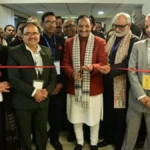


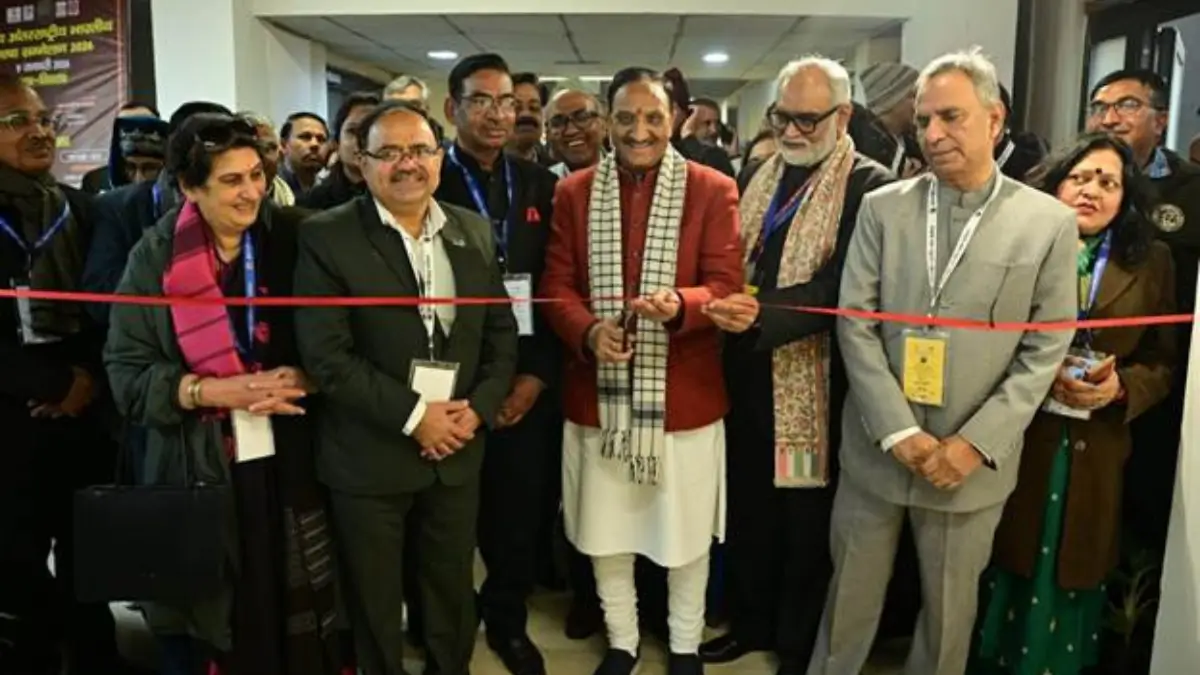
Indian Languages Conference 2026 inaugurated by VP C.P. Radhakrishnan highlights language preservation, cultural heritage, and international collaboration.
Vice-President Shri C.P. Radhakrishnan Inaugurates International Conference on Indian Languages
The Third International Conference on Indian Languages was inaugurated by Vice-President of India, Shri C. P. Radhakrishnan, in New Delhi on 9th January 2026. The event was organised under the joint aegis of the Indira Gandhi National Centre for the Arts (IGNCA), Ministry of Culture, Government of India, Antarashtriya Sahyog Parishad, Vaishwik Hindi Parivar, and the Department of Indian Languages and Literary Studies, University of Delhi.
This conference brought together linguists, scholars, policy makers, and language enthusiasts from across India and abroad to deliberate on the preservation, promotion, and global recognition of Indian languages. During the inaugural session, Shri Radhakrishnan emphasised the integral role of Indian languages in sustaining cultural heritage and civilisational values, noting that languages contribute to unity and harmony rather than division.
Celebrating India’s Linguistic Diversity
India is one of the most linguistically diverse nations in the world, with hundreds of languages spoken across its states and regions. The conference aimed to provide a platform for knowledge exchange, research collaborations, and policy discussions to strengthen multilingualism in education, governance, and digital communication. Key topics included language preservation strategies, translation and technology integration, and the role of Indian languages in the global arena.
Vice-President’s Vision on Languages
In his address, Shri Radhakrishnan highlighted that Indian languages are living repositories of India’s civilisational wisdom—carrying forward traditions, literature, philosophy, and artistic expression. He stressed that Indian languages are not merely tools of communication but foundations for societal development and national identity. This helps reinforce the cultural ethos of a multilingual India while encouraging learners to embrace linguistic diversity.
International Engagement and Collaboration
With delegates participating from various countries, the conference served as an international forum to explore how Indian languages can gain prominence on global platforms. Discussions were held on creating cross-cultural linkages, fostering research partnerships, and integrating Indian languages into digital and academic networks worldwide.

Why This News Is Important for Government Exams
Relevance to Polity and Governance
The initiative reflects the Government of India’s cultural and linguistic policy framework aimed at preserving and promoting India’s rich linguistic heritage. Understanding such policies is important for aspirants preparing for exams like UPSC Civil Services, State PSCs, and education service examinations, where questions related to cultural plurality and language policy frequently appear.
Cultural Significance
Indian languages are deeply tied to identity, culture, and history. This conference spotlights the value accorded to linguistic diversity at the national level and underscores how policy initiatives help integrate cultural preservation with nation-building efforts. Aspirants can use this in answers on national unity, cultural heritage, and social cohesion topics.
International Focus
The participation of international delegates highlights India’s efforts to promote soft power through language and culture, which is significant for international relations and diplomacy sections in competitive exams. This news offers material for descriptive answers related to cultural diplomacy and global cooperation in education and research.
Link to Education and Technology
Discussions on integrating Indian languages with digital platforms are relevant to current affairs sections in banking, railways, and defence exams, where tech-based language solutions increasingly matter. Candidates preparing for exams with general awareness sections can benefit from understanding how language intersects with technology and societal development.
Historical Context: Indian Languages and National Conferences
India’s multilingual tradition dates back centuries and forms the core of its civilisational identity. Over the years, multiple initiatives have been undertaken to promote indigenous languages at national and global levels. One such example is the World Hindi Conference, which began in 1975 in Nagpur to celebrate Hindi’s global presence and foster linguistic collaboration across nations.
Conferences like these build on earlier efforts where language forums, literary societies, and cultural bodies were created to document, preserve, and promote Indian languages. Institutions such as the Sahitya Akademi and the Central Institute of Indian Languages have played pivotal roles in research, language policy formulation, and educational integration. The current international conference continues this legacy by expanding the scope beyond individual languages to include multilingual cooperation and global recognition of Indian languages.
Key Takeaways from “International Conference on Indian Languages”
| S.No. | Key Takeaway |
|---|---|
| 1 | The Third International Conference on Indian Languages was inaugurated by Vice-President C.P. Radhakrishnan in New Delhi on 9 Jan 2026. |
| 2 | The event was held under the joint aegis of IGNCA, Ministry of Culture, and various academic and cultural bodies. |
| 3 | The conference aimed to promote linguistic research, preservation, and global cooperation in Indian languages. |
| 4 | Shri Radhakrishnan emphasised the role of languages in cultural heritage, unity, and societal development. |
| 5 | International delegates participated to explore global dialogues on language promotion and collaboration. |
FAQs: Frequently Asked Questions
Q1. Who inaugurated the Third International Conference on Indian Languages in 2026?
A: Vice-President of India, Shri C.P. Radhakrishnan.
Q2. Where was the International Conference on Indian Languages held?
A: In New Delhi, India.
Q3. Which organisations jointly organised the conference?
A: IGNCA, Ministry of Culture, Antarashtriya Sahyog Parishad, Vaishwik Hindi Parivar, and the Department of Indian Languages and Literary Studies, University of Delhi.
Q4. What was the main objective of the conference?
A: To promote Indian languages, encourage research, preserve linguistic diversity, and foster international collaboration.
Q5. Why are Indian languages important according to the Vice-President?
A: They are repositories of civilisational wisdom, cultural heritage, and play a key role in societal development and national identity.
Q6. Which topics were discussed at the conference?
A: Language preservation strategies, translation and technology integration, multilingualism in education, and global promotion of Indian languages.
Q7. How does this news relate to competitive exams?
A: It is relevant for questions on cultural policies, language preservation, national unity, soft power diplomacy, and education initiatives in exams like UPSC, PSCs, banking, railways, and defence services.
Some Important Current Affairs Links