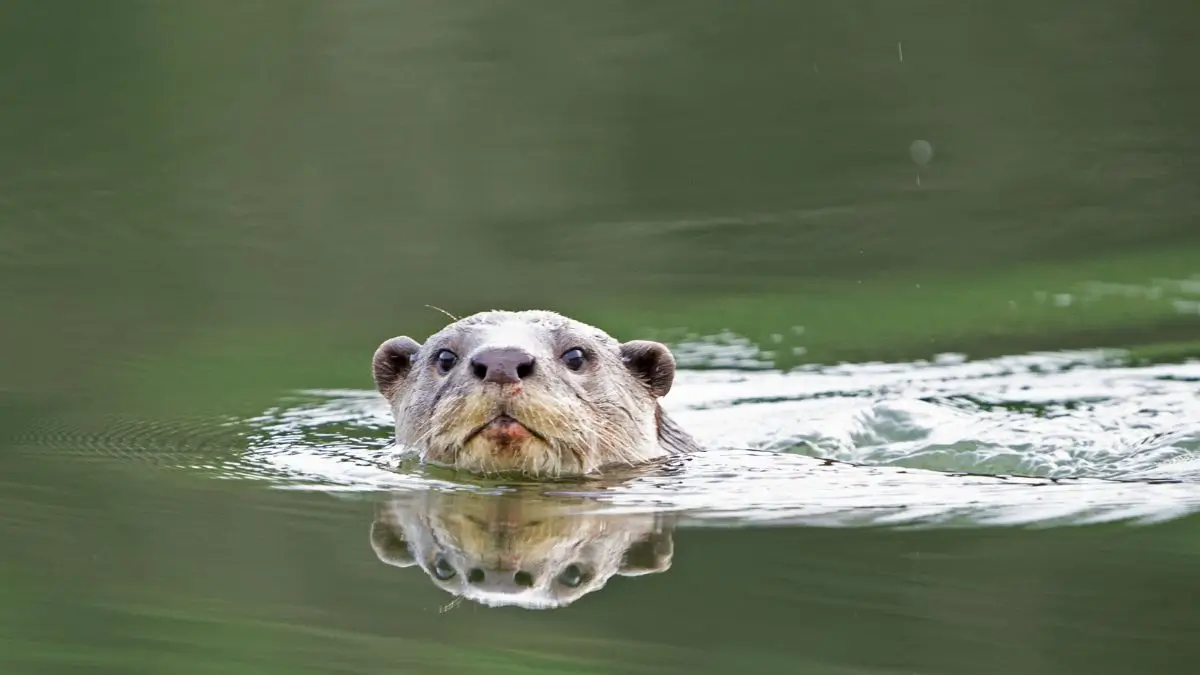
Tamil Nadu otter conservation initiative launched to protect smooth-coated otters in Cauvery Basin, focusing on habitat restoration, population studies, and biodiversity preservation.
🦦 Tamil Nadu Government Launches Otter Conservation Initiative in Cauvery Basin
The Tamil Nadu government has recently launched a dedicated conservation programme aimed at protecting the smooth-coated otter (Lutrogale perspicillata) in the Cauvery River delta, covering parts of Thanjavur, Tiruvarur, and Cuddalore districts. This initiative reflects growing awareness over the decline of freshwater ecosystems in the state and the urgent need to preserve vulnerable wildlife species living in them.
Announced during a Tamil Nadu Assembly session on endangered species protection, the project is officially titled the ‘Conservation initiative to study the population dynamics, behavioural pattern, and habitat improvement of smooth-coated otters’. The programme will run for one year with field research and study activities meticulously planned to understand various ecological dynamics of the otter population.
Under this initiative, officials will estimate otter population numbers, map critical habitats, study threats such as human conflict and pollution, and undertake habitat restoration activities like planting reeds and constructing fish ladders to improve the ecosystem. The project has received administrative approval of ₹20 lakh, with ₹10 lakh allocated for the 2025–26 financial year.
Leading the effort is the Tamil Nadu Forest Department’s research wing, the Advanced Institute for Wildlife Conservation (AIWC) based in Vandalur, Chennai. Fieldwork and surveys will be conducted in collaboration with wildlife biology experts at AVC Autonomous College in Mayiladuthurai under forest department supervision. Additionally, the Endangered Wildlife and Environmental Trust (EWET) has been conducting habitat mapping, field surveys, and awareness drives in support of this mission.

📌 Why This News Is Important for Government Exams
Ecological Significance
This conservation initiative is significant because it focuses on biodiversity preservation and ecosystem health, which are important parts of the Environment and Ecology syllabus in exams like UPSC Civil Services, SSC, IBPS, and state PSCs. Smooth-coated otters are considered indicator species, meaning their presence reflects the overall health of freshwater systems. Conserving them helps protect broader wetland ecosystems, which are critical for environmental balance.
Policy and Government Action
Understanding how state governments implement species protection programmes provides valuable context for questions related to government schemes, environmental laws, and wildlife protection. This initiative is linked to the Wildlife Protection Act, 1972, under which the otters are listed, emphasizing the legal side of environmental conservation in India.
Human-Wildlife Conflict Awareness
The programme also addresses human-wildlife conflict, particularly with local fishing communities, a topic relevant to social studies and public policy sections of competitive exams focusing on governance challenges and sustainable development.
🧬 Historical Context: Otter Conservation and Policy Framework in India
Smooth-Coated Otters & Conservation Status
The smooth-coated otter is the largest otter species in Asia and is commonly found in rivers, wetlands, mangroves, and canals. The species is classified as Vulnerable on the IUCN Red List and is legally protected under Schedule I of the Wildlife Protection Act, 1972, which offers the highest level of protection to endangered fauna in India.
Past Wildlife Protection Efforts in Tamil Nadu
Tamil Nadu has a history of active wildlife protection measures. For instance, the state earlier notified the Cauvery South Wildlife Sanctuary, which is home to several species including smooth-coated otters, as part of its commitment to conserving biodiversity.
Biodiversity & Legal Framework
India’s Wildlife Protection Act, 1972 and various state wildlife action plans form the backbone of wildlife conservation policy. Conservation projects like this one in Tamil Nadu align with national and international efforts to address habitat degradation, human-animal conflicts, and species decline — topics frequently featured in environmental policy questions in competitive exams.
📊 Key Takeaways from “Tamil Nadu Otter Conservation Initiative”
| S. No. | Key Takeaway |
|---|---|
| 1 | Tamil Nadu launched a conservation programme for smooth-coated otters in the Cauvery delta. |
| 2 | The initiative will study population dynamics, behaviour, and habitat quality. |
| 3 | It covers Thanjavur, Tiruvarur, and Cuddalore districts. |
| 4 | The project received administrative approval of ₹20 lakh for 2025–26. |
| 5 | Smooth-coated otters are listed as Vulnerable and protected under Schedule I of the Wildlife Protection Act. |
FAQs: Frequently Asked Questions
1. What is the Tamil Nadu Otter Conservation Initiative?
The initiative is a state government programme to conserve and study smooth‑coated otters in the Cauvery River delta, including population dynamics, habitat improvement, and behavioural studies.
2. Which species is the focus of this conservation project?
The project focuses on the smooth‑coated otter (Lutrogale perspicillata), classified as Vulnerable on the IUCN Red List.
3. Which districts are covered under this project?
The initiative covers Thanjavur, Tiruvarur, and Cuddalore districts in Tamil Nadu.
4. How much budget has been allocated for the otter conservation programme?
The project has received an administrative approval of ₹20 lakh, with ₹10 lakh earmarked for the 2025–26 financial year.
5. Under which legal framework are smooth‑coated otters protected?
Smooth‑coated otters are protected under Schedule I of the Wildlife Protection Act, 1972, which provides the highest level of protection for endangered species in India.
6. Which organizations are involved in implementing the project?
The Tamil Nadu Forest Department, Advanced Institute for Wildlife Conservation (AIWC), and Endangered Wildlife and Environmental Trust (EWET) are involved in research, surveys, and awareness drives.
7. Why are smooth‑coated otters important for the ecosystem?
They are indicator species, meaning their population health reflects the overall condition of freshwater ecosystems, wetlands, and biodiversity in the Cauvery delta.
8. How long will the conservation initiative run?
The project is planned for one year with surveys, research, and habitat restoration activities.
9. How does this initiative help in human‑wildlife conflict mitigation?
The programme includes awareness drives for local communities and habitat improvement measures to reduce conflicts between otters and fishing activities.
10. Why is this news important for competitive exams?
It relates to Environment & Ecology, Wildlife Protection Acts, government schemes, and biodiversity conservation, all of which are common topics in exams like UPSC, PSCs, SSC, Banking, Railways, and Defence.
Some Important Current Affairs Links