



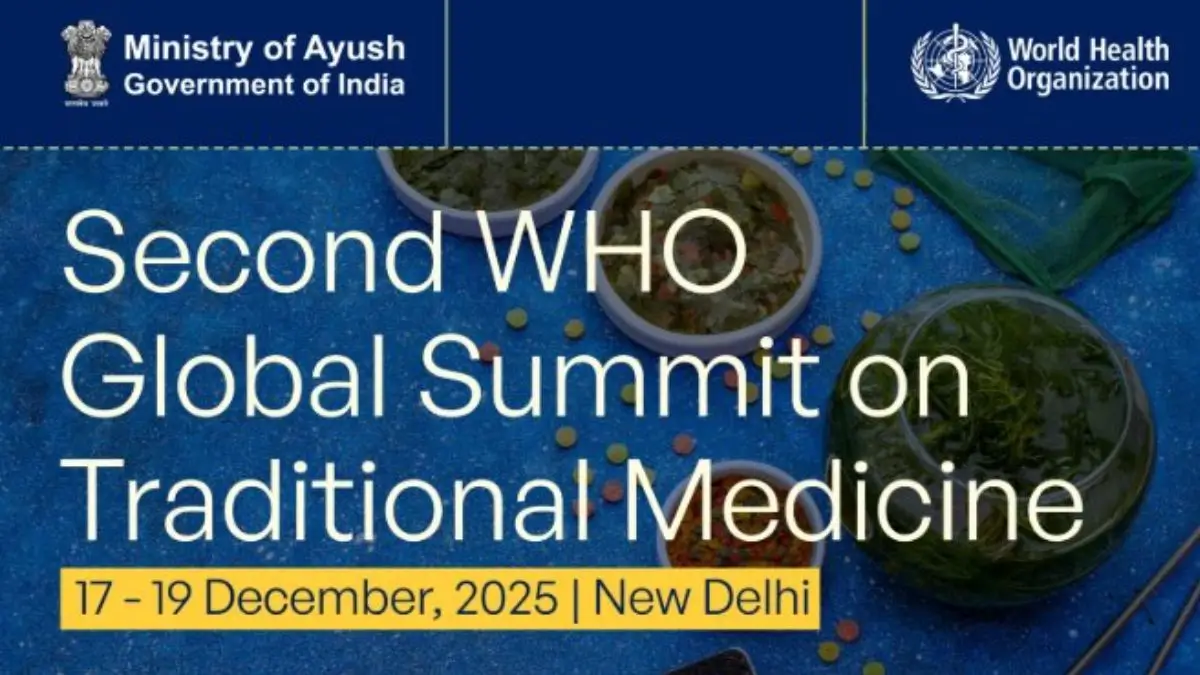
WHO Global Summit 2025 on Traditional Medicine kicked off in New Delhi, highlighting India’s AYUSH systems, international collaboration, and evidence-based healthcare initiatives.
2nd WHO Global Summit on Traditional Medicine Kicks Off in New Delhi
Introduction: WHO Summit on Traditional Medicine
The 2nd World Health Organization (WHO) Global Summit on Traditional Medicine commenced in New Delhi, highlighting the growing importance of traditional medicine systems worldwide. The summit brings together global health experts, policymakers, and practitioners to discuss strategies for integrating traditional and modern healthcare practices, emphasizing safety, efficacy, and accessibility. India, with its rich heritage in Ayurveda, Yoga, Unani, Siddha, and Homeopathy (AYUSH), played a pivotal role in hosting this international event.
Objectives of the Summit
The summit aims to:
- Strengthen global cooperation on traditional medicine.
- Promote research and evidence-based practices in traditional healthcare.
- Discuss policies for sustainable development and integration of traditional medicine into national health systems.
- Address challenges such as quality control, regulation, and public awareness.
Key Participants and Stakeholders
Prominent WHO officials, representatives from member countries, and leaders from international health organizations attended the summit. Indian AYUSH Ministry officials, researchers, and academicians shared best practices and innovative approaches in traditional medicine. This collaboration encourages knowledge exchange and policy alignment for global healthcare enhancement.
Focus Areas Discussed
During the summit, participants focused on:
- The integration of traditional medicine in primary healthcare.
- Evidence-based research to support traditional practices.
- Strategies to ensure quality, safety, and accessibility of traditional medicines.
- Promoting public awareness campaigns and training programs for healthcare professionals.
India’s Role in Promoting Traditional Medicine
India showcased its rich heritage in Ayurveda and Yoga, highlighting global initiatives like WHO’s global center for traditional medicine in Jamnagar, Gujarat. The summit underlined India’s commitment to leading international efforts in traditional medicine and supporting scientific validation of these practices.

Why This News is Important
Relevance for Government Exams
The summit is significant for students preparing for government exams, especially for General Studies (GS) Paper 2 & 3 in UPSC, current affairs sections in SSC, Banking, and Teaching exams, and science and health-related topics. Understanding India’s role in global health diplomacy and traditional medicine provides insight into policy, international relations, and healthcare innovations.
Connection to Public Health Policy
Traditional medicine has global relevance for healthcare systems. The summit emphasizes integration with modern medicine, promoting holistic healthcare approaches. Knowledge of such events helps candidates answer questions on public health policy, international collaborations, and national health initiatives.
Historical Context: Background of Traditional Medicine in India and WHO Collaboration
- Traditional medicine has been practiced in India for thousands of years, including Ayurveda, Yoga, Siddha, Unani, and Homeopathy.
- India established the AYUSH Ministry in 2014 to promote these systems both nationally and internationally.
- WHO recognized the importance of traditional medicine and initiated global summits to encourage research, regulation, and collaboration.
- The first WHO Global Summit on Traditional Medicine took place previously, focusing on global standardization and integration. The second summit builds on these discussions, emphasizing India’s leadership role.
Key Takeaways from 2nd WHO Global Summit on Traditional Medicine
| S.No | Key Takeaway |
|---|---|
| 1 | The 2nd WHO Global Summit on Traditional Medicine was hosted in New Delhi, India. |
| 2 | The summit focused on integration of traditional and modern medicine globally. |
| 3 | India highlighted its AYUSH systems and global healthcare initiatives. |
| 4 | Discussions included research, safety, accessibility, and regulation of traditional medicine. |
| 5 | The event strengthens India’s role in international health diplomacy and global collaboration. |
FAQs: Frequently Asked Questions
1. What is the 2nd WHO Global Summit on Traditional Medicine?
The 2nd WHO Global Summit on Traditional Medicine is an international event held in New Delhi, India, focused on promoting integration of traditional and modern medicine, sharing research, and enhancing global collaboration in traditional healthcare systems.
2. Which traditional medicine systems of India were highlighted at the summit?
India showcased Ayurveda, Yoga, Siddha, Unani, and Homeopathy (AYUSH) as part of its heritage and global initiatives in traditional medicine.
3. Why is the summit important for global healthcare?
The summit emphasizes evidence-based research, regulation, and accessibility of traditional medicine, aiming to integrate traditional practices into national healthcare systems for holistic public health solutions.
4. Who participated in the summit?
Participants included WHO officials, representatives from member countries, policymakers, researchers, and Indian AYUSH Ministry officials, fostering knowledge exchange and global collaboration.
5. How does this summit relate to India’s international role?
The event reinforces India’s position as a global leader in traditional medicine, strengthening its role in international health diplomacy and WHO collaborations.
6. What were the key topics discussed during the summit?
Key topics included integration of traditional medicine, scientific validation, safety, regulation, public awareness, and quality control of traditional medicine globally.
7. Where is the WHO global center for traditional medicine located in India?
The WHO global center for traditional medicine is located in Jamnagar, Gujarat, India.
8. What is the significance of traditional medicine for government exams?
It is relevant for current affairs, GS Paper 2 & 3, public health, and international relations questions in exams like UPSC, SSC, Banking, and Teaching.
9. When did India establish the AYUSH Ministry?
The Ministry of AYUSH was established in 2014 to promote traditional medicine nationally and internationally.
10. How does the summit help in public healthcare?
It promotes safe, evidence-based, and accessible traditional healthcare, complementing modern medicine and improving global healthcare outcomes.
Some Important Current Affairs Links