










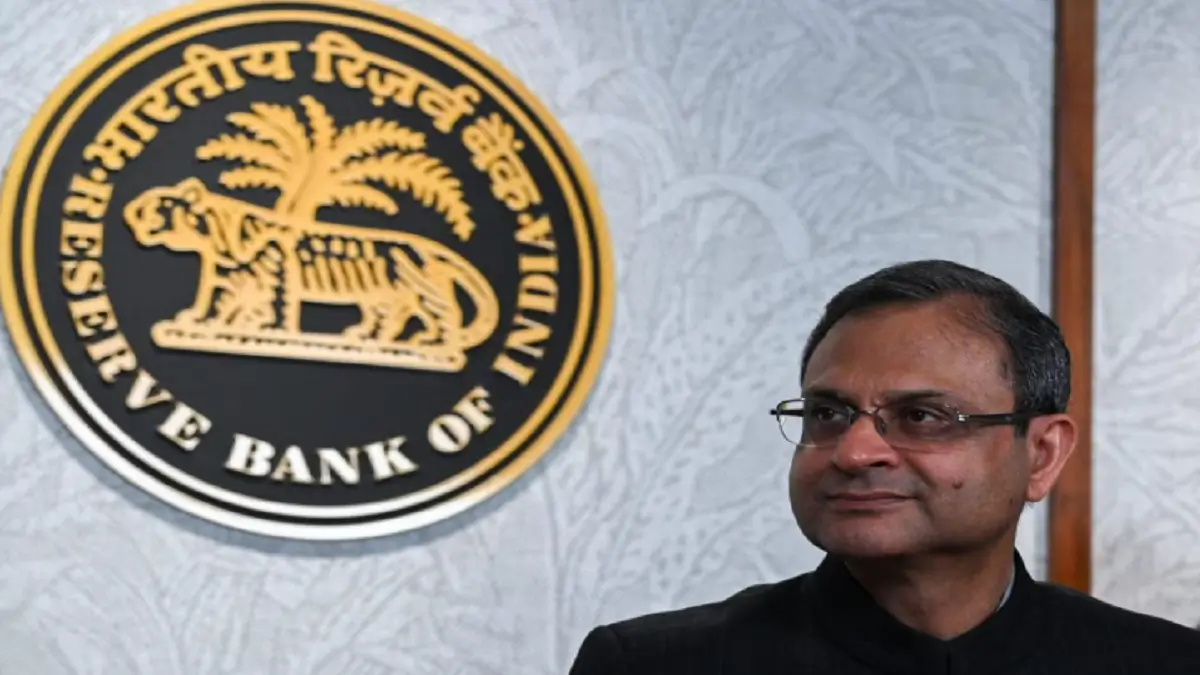
India Goldilocks economy 2025 shows strong GDP growth and low inflation. Learn how RBI rate cuts and economic stability impact government exams aspirants and public policy.
India’s “Rare Goldilocks Phase” — Why the Economy Is Strong Despite Global Turmoil
What Is the “Goldilocks Phase”?
The term “Goldilocks phase” refers to an economic situation that is “just right” — neither overheating nor stagnating. In simple terms, it denotes a balance: robust growth, low inflation, and stable macroeconomic conditions that allow sustainable expansion without triggering inflationary pressures.
What Is Happening Now: Key Macro Indicators
Recently, the Reserve Bank of India (RBI) declared that India has entered a “rare Goldilocks period.” Several macroeconomic indicators support this view:
- Real GDP growth surged to 8.2% in the second quarter (July–September 2025–26).
- For the first half (H1) of 2025–26, growth averaged around 8.0%.
- Inflation — measured by headline Consumer Price Index (CPI) — has dropped sharply. For Q2:2025–26, average quarterly inflation was 1.7%, below the lower tolerance threshold of 2% under the inflation-targeting framework of RBI.
- In October 2025, retail inflation reportedly dropped as low as 0.3%.
These twin conditions — high growth + low inflation — are rare, especially when the global economy is facing headwinds like trade tensions, geopolitical uncertainty, and external volatility. This balance has provided the RBI with “policy space” to act in favor of growth.
RBI’s Recent Policy Move: Rate Cut and Liquidity Support
Leveraging this favourable backdrop, the RBI’s Monetary Policy Committee (MPC) recently cut the policy repo rate by 25 basis points (i.e. 0.25 percentage point), bringing it down to 5.25%.
Total rate cuts in 2025 now amount to 125 basis points, reflecting an aggressive easing cycle aimed at supporting demand.
In addition, the RBI announced liquidity-boosting measures, including open market operations and forex swaps, to ensure smooth monetary transmission and adequate funds in the banking system.
Why Growth and Low Inflation Are Coinciding — Underlying Drivers
Several structural and cyclical factors explain why India is benefitting from this “Goldilocks” window:
- Domestic demand resilience: Consumer demand remains healthy, supported by steady income growth, festive-season spending and broader consumption surge.
- Rationalisation of indirect taxes (like GST) and recent tax rationalization efforts — which have contributed to easing cost pressures for consumers and businesses.
- Favourable global commodity prices (including oil), which have reduced input costs and inflationary pressure.
- Front-loaded government capital expenditure (capex) — increased public spending on infrastructure and other public projects, which has helped boost demand and economic activities.
- Healthy balance sheets of banks and corporates along with supportive monetary conditions, aiding credit flow and investments.
What It Means for India Amid Global Turmoil
At a time when many economies globally are struggling due to protectionist trade policies, geopolitical conflicts, or high inflation — India’s balanced economic state offers a cushion. The favourable macroeconomic environment not only enables sustained growth but also enhances confidence among investors, borrowers, and consumers.
For job-seekers preparing for government exams (teachers, police, banking, civil services etc.), this phase is particularly significant: stable economic growth often leads to increased government revenues, higher public spending (including on social welfare, infrastructure, defence), better investments — potentially opening up more opportunities.
The low inflation environment also helps in keeping the cost of living and essential commodities under control, which indirectly influences real wages, purchasing power and social welfare schemes — all relevant from a civil-service exam perspective.

Why This News Is Important (for Exam-Aspirants)
Macro-economic Context for Competitive Exams
Many government exams (teaching, banking, railways, civil services, defence) include current-affairs and economy sections. Understanding that India is in a rare “Goldilocks” moment — with strong GDP growth and low inflation — helps aspirants frame relevant answers in essay-type questions, economy-based MCQs, or general studies sections.
Implications for Governance, Policy and Public Sector
- The rate cut and liquidity support by the RBI may lead to easier borrowing, credit expansion, and possibly increased funding for public projects and social programmes. This could be reflected in upcoming budgets or policy initiatives — important for banking, railways, civil services exam aspirants to note.
- Stable inflation and healthy growth support consumer confidence, private investments, and job creation — a context useful for questions on economic development, employment, and government policies.
Relevance for Socio-Economic Indicators and Welfare
Low inflation benefits everyday citizens, especially lower- and middle-income groups — which often becomes a theme in civil services, banking exam essays or descriptive answers (impact on economy, welfare, rural-urban divide, inflation, purchasing power).
Moreover, when the economy is growing steadily, government revenue tends to improve, potentially leading to better allocation for social sectors (education, health, infrastructure), which can be relevant for teacher-exam aspirants or civil-services aspirants discussing welfare and development issues.
Helps Build Analytical & Critical Thinking
Being aware of this “ideal macro window” allows aspirants to critically analyse whether the phase is sustainable — and to consider possible risks (global headwinds, trade tensions, external debt, etc.). This is helpful for essay questions or dynamic sections in exams where they must evaluate both prospects and challenges.
Hence, this news gives a strong macro-economic backdrop that is likely to influence multiple sectors and exam-relevant topics over the next few months.
Historical Context
The Idea of Goldilocks in Economics
The concept of a “Goldilocks economy” is not new — economists have long used it to describe a sweet spot in macroeconomic cycles where growth and inflation are in ideal balance. Historically, such phases have been rare and usually followed periods of economic stress or high volatility.
India’s Economic Journey: From 1991 Crisis to 2025 Stability
- After the economic crisis of 1991, India adopted wide-ranging reforms — liberalisation, financial sector reform, trade reforms, fiscal consolidation — which set the foundation for long-term growth.
- Over the decades, India has emerged as one of the fastest-growing major economies globally, driven by structural reforms, increasing domestic consumption, infrastructure development, and a growing services/manufacturing base.
- However, India — like many developing economies — often faced trade-offs: high growth came with high inflation, or stable prices came with slow growth. Periods of both growth and price stability at the same time have been infrequent. The current “rare Goldilocks phase” thus stands out as a notable moment in India’s macroeconomic trajectory.
Why the Current Phase Is Different
The present combination of low inflation and high growth is remarkable given the global backdrop of trade tensions, geopolitical uncertainties, volatile commodity prices and worldwide economic slowdown. That India is managing such a balanced state speaks to both structural strength (demographics, domestic demand, reforms) and timely policy responses (rate cuts, fiscal support, liquidity measures).
In past cycles, external shocks (oil price spikes, global recessions, currency crises) often derailed this balance. The fact that India is navigating through such global headwinds while maintaining stability underscores the uniqueness of the current phase.
Key Takeaways from This News — India’s Rare Goldilocks Phase
| # | Key Takeaway |
|---|---|
| 1 | India’s real GDP grew by 8.2% in Q2 2025–26, signalling strong economic momentum. |
| 2 | Headline CPI inflation dropped to as low as 0.3% in October 2025; average for Q2 was ~1.7%, below the RBI’s lower target threshold. |
| 3 | The RBI cut the repo rate by 25 basis points to 5.25%, as part of cumulative 125 bps cuts in 2025 — leveraging the favorable macroeconomic balance. |
| 4 | Underlying drivers include strong domestic consumption, GST rationalisation, government capex, stable commodity prices, and healthy financial sector balance sheets. |
| 5 | This “Goldilocks phase” provides a stable macroeconomic backdrop — beneficial for public sector growth, welfare policies, job creation, and exam-relevant economic stability themes. |
FAQs — India’s Rare Goldilocks Phase
Q1. What does “Goldilocks economy” mean?
A Goldilocks economy is a period when economic growth is robust, inflation is low, and macroeconomic conditions are stable — essentially “just right” for sustainable expansion.
Q2. What is the current GDP growth rate of India in Q2 2025–26?
India’s GDP growth in Q2 2025–26 was 8.2%, indicating strong economic performance.
Q3. Why has RBI cut the repo rate recently?
The RBI cut the repo rate by 25 basis points to support growth and maintain liquidity during the rare Goldilocks phase, taking advantage of low inflation and high growth.
Q4. What factors are contributing to India’s low inflation?
Key factors include rationalisation of GST and indirect taxes, stable commodity prices, easing input costs, and government policies supporting supply chain efficiency.
Q5. How does the Goldilocks phase impact government exams aspirants?
It provides context for questions on the economy, fiscal policy, inflation, and government schemes in exams like UPSC, PSC, banking, railways, and defence.
Q6. Has India experienced such a Goldilocks phase before?
Yes, but it is rare. Historically, India’s economy either faced high inflation with growth or low inflation with slow growth. The current combination of high growth and low inflation is unique in recent decades.
Q7. What role does domestic consumption play in this economic phase?
Healthy domestic consumption, backed by rising incomes and festive spending, fuels demand and supports GDP growth while keeping inflation under control.
Some Important Current Affairs Links




