


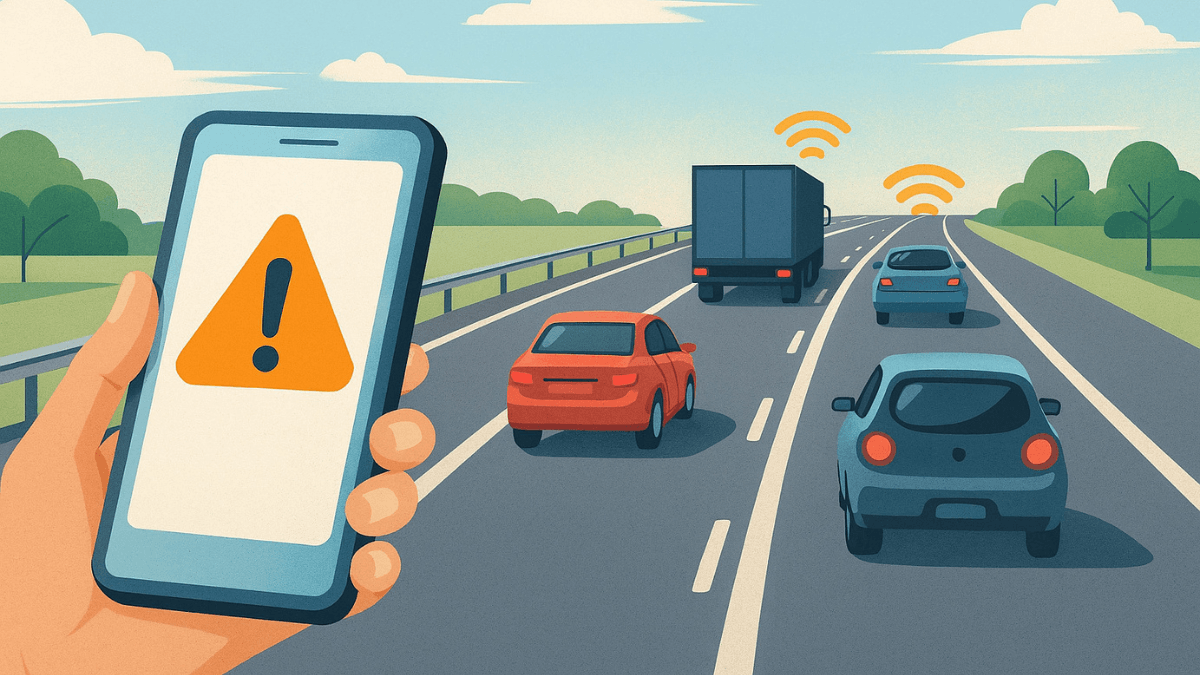
Mobile-based highway safety alerts by NHAI and Reliance Jio provide real-time risk zone warnings via SMS, WhatsApp, and calls to commuters on national highways, enhancing road safety and smart travel.
NHAI–Jio Tie-up to Launch Mobile-Based Safety Alerts on National Highways
Introduction: What is the New Initiative
The NHAI has signed a Memorandum of Understanding (MoU) with Reliance Jio to introduce a telecom-based highway safety alert system across India’s National Highways. Under this initiative, travellers on national highways will receive real-time alerts on their mobile phones — via SMS, WhatsApp or high-priority calls — as they approach sections identified as hazardous.
This system leverages Jio’s existing 4G and 5G network infrastructure, enabling rapid deployment without requiring additional hardware or roadside installations. The alert system will be gradually integrated with NHAI’s existing digital platforms such as the mobile app Rajmargyatra and the emergency helpline number 1033.
How the Safety Alert System Works: Modes of Alert & Coverage
- When a Jio subscriber travels along national highways, the system will constantly monitor their location relative to identified “risk zones.” These risk zones include accident-prone stretches, stray-cattle zones, foggy / low-visibility stretches, and areas of emergency diversions or temporary obstructions.
- As a driver approaches any such zone, an automatic alert will be sent: either via SMS, WhatsApp message, or a priority voice call — thereby giving sufficient time to slow down or adapt driving behaviour.
- Importantly, this system uses existing telecom towers, so there is no need for setting up additional roadside hardware — enabling a faster, scalable rollout.
- In phase one, the system will be available to Jio users; over time, similar collaborations are expected with other telecom operators to expand coverage to all highway users.
Significance of the Initiative: Safety, Technology and Scalability
This collaboration between NHAI and Jio represents a significant push toward digital-driven road safety. It not only harnesses modern telecom infrastructure (4G/5G) but also aligns with the broader nationwide goals of smart mobility, safer travel, and reduction of accidents on highways. For a vast and growing highway network like India’s — where risk zones often change with weather, traffic, and other factors — a dynamic, real-time alert system is a crucial upgrade over static signage or manual alerts.
Moreover, by using ubiquitous mobile phones and widely used digital communication channels (SMS, WhatsApp, calls), the system ensures maximum reach and minimal barriers to user adoption. The absence of additional roadside hardware also means lower costs and faster deployment — thus making it a scalable, cost-effective solution.
Finally, integration with platforms like the Rajmargyatra app and emergency helpline 1033 offers a unified digital framework to manage highway safety, making it easier for commuters and authorities alike.

Why This News Is Important
Enhances Road Safety on a Large Scale
India’s national highways cover thousands of kilometres, and road accidents — especially in accident-prone zones, foggy areas, stretches with stray cattle, or sudden diversions — remain a major challenge. The NHAI–Jio alert system, by providing real-time warnings to commuters, can significantly reduce the risk of accidents and casualties.
Useful for Government-Exam Aspirants (Especially for Civil Services, Railways, Police)
For candidates preparing for civil services, defence, railways, or police services, awareness of government’s new initiatives — especially those blending infrastructure, technology, governance, and public safety — is crucial. This news reflects the government’s focus on leveraging technology for public welfare, which is often the kind of policy-level awareness that interviewers or exam questions look for.
Sign of Smart Infrastructure and Digital Governance
The initiative demonstrates a shift from traditional infrastructure solutions to smart, technology-enabled governance. It shows how existing telecom infrastructure can be leveraged to improve public safety and service delivery — a key example of digital governance which is becoming a frequent theme in government exam syllabi and current-affairs sections.
Scalable and Economical Model — Implications for Highway Policy
Because the system uses existing telecom towers and mobile networks, it is easier to deploy and scale compared to hardware-based alerts (like sensors, road signs, etc.). This makes it a cost-effective model for nationwide rollout — a point worth noting for aspirants studying infrastructure policy, transport reforms, and public administration.
Historical Context: Road Safety Efforts & Digital Initiatives in India
- Over the years, the government and NHAI have implemented various measures to improve highway safety: signage, speed breakers, zebra crossings, strict enforcement of traffic rules, and awareness campaigns. However, static measures often fall short in dynamic risk conditions like fog, sudden cattle crossings, or emergency diversions.
- With rapid expansion of National Highways and increasing vehicular traffic, authorities have been exploring digital and tech-based solutions for better safety, monitoring, and management. The current NHAI–Jio partnership is part of that evolution toward “smart highways.”
- In recent years, India has seen other technology-driven initiatives like digital toll collection (e.g. FASTag), GPS-based route tracking, traffic cameras — yet real-time hazard alerts via mobile networks had been relatively rare. This new system therefore marks a noteworthy milestone in integrating telecom with transport safety.
- The collaboration also reflects broader governmental emphasis on leveraging public–private partnerships and existing digital infrastructure to improve citizen services — in line with national visions for smart, connected, and safer transport networks.
Key Takeaways from This News
| S. No. | Key Takeaway |
|---|---|
| 1 | NHAI has signed an MoU with Reliance Jio to deploy a telecom-based safety alert system across national highways. |
| 2 | Using Jio’s 4G/5G network, the system will send real-time warnings (SMS, WhatsApp, priority calls) to travellers approaching risk zones (accident-prone zones, stray-cattle areas, fog-affected stretches, diversions). |
| 3 | The system does not require additional roadside hardware — it leverages existing telecom towers, making deployment fast and scalable. |
| 4 | It will be integrated with NHAI’s digital platforms like the “Rajmargyatra” mobile app and emergency helpline 1033 for cohesive highway safety management. |
| 5 | Over time, NHAI aims to extend similar alert mechanisms to users of other telecom service providers — moving toward a nationwide, inclusive road-safety alert system. |
FAQs: Frequently Asked Questions
1. What is the NHAI–Reliance Jio highway safety alert system?
The NHAI–Reliance Jio partnership has launched a mobile-based safety alert system on national highways. It sends real-time alerts to travellers via SMS, WhatsApp, or priority calls when approaching risk zones like accident-prone areas, foggy stretches, or areas with stray cattle.
2. How does the mobile safety alert system work?
The system uses Jio’s 4G/5G network to detect when a traveller is approaching a hazardous zone. Automated alerts are sent to the traveller’s mobile, allowing them sufficient time to slow down or drive cautiously.
3. Is additional roadside hardware required for this system?
No. The system leverages existing telecom towers and does not require any additional infrastructure along highways. This makes it fast to deploy and cost-effective.
4. Which digital platforms will the alert system be integrated with?
The system will integrate with NHAI’s existing platforms such as the Rajmargyatra mobile app and the emergency helpline 1033, providing unified monitoring and emergency support.
5. Who will initially receive the safety alerts?
Initially, the alerts will be sent to Jio mobile subscribers. In the future, similar systems may be extended to other telecom networks to cover all highway users.
6. Why is this initiative important for public safety?
India has a high number of highway accidents. Real-time alerts can prevent accidents by warning drivers in advance of risk zones, helping reduce fatalities and injuries.
7. How does this initiative reflect smart governance?
It demonstrates the government’s push toward technology-driven solutions for public safety, integrating telecom infrastructure with highway management to deliver faster, scalable services.
8. Which areas are considered “risk zones” under this system?
Accident-prone stretches, foggy areas, zones with stray cattle, temporary diversions, and areas of low visibility are classified as risk zones for alerts.
9. How does this system contribute to India’s digital highway infrastructure?
It represents a step toward smart highways by combining digital communications, mobile apps, and emergency services for safer road travel.
10. Can this initiative help in exams for government jobs?
Yes. Questions on digital governance, smart highways, and public safety measures are often asked in civil services, banking, police, defence, and railways exams. Knowledge of such initiatives enhances current affairs awareness.
Some Important Current Affairs Links




