


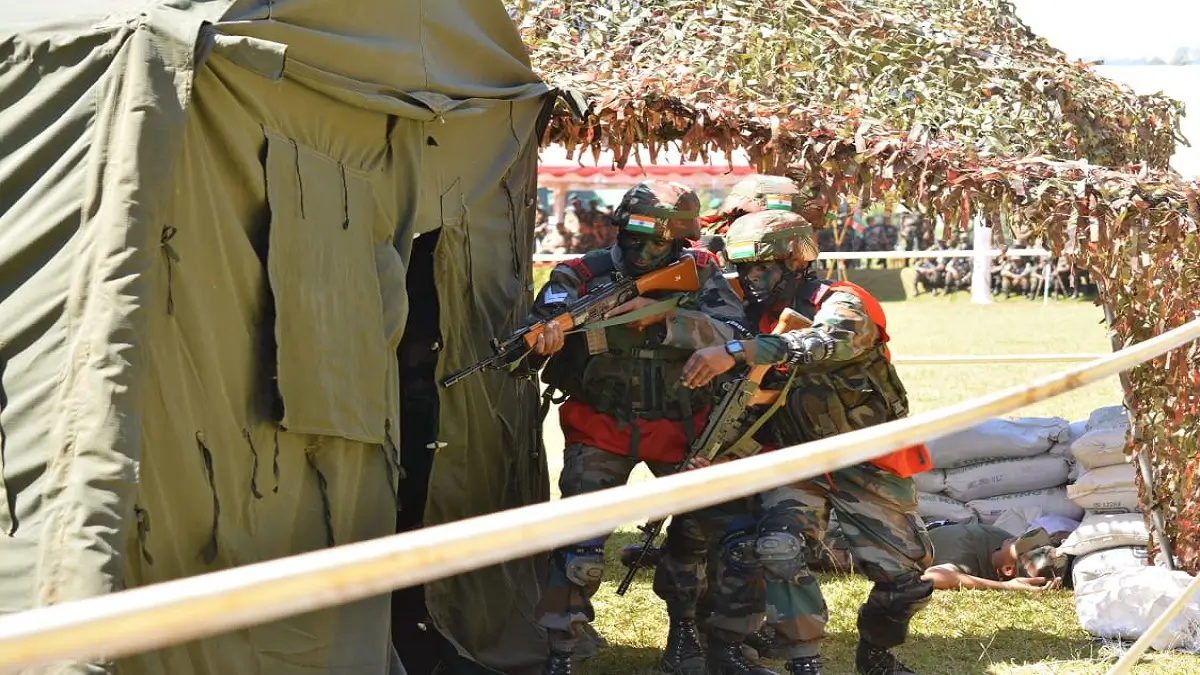
Operation Pawan Army martyrs honoured: Indian Army to pay historic tribute to IPKF soldiers on 25 November 2025 at National War Memorial, marking recognition after 38 years.
Army to Officially Honour Operation Pawan Martyrs After 38 Years
What Happened
For the first time in nearly four decades, Indian Army will officially honour the soldiers who sacrificed their lives during Operation Pawan — the mission carried out in Sri Lanka between 1987 and 1990. On 25 November 2025, Army Chief Upendra Dwivedi will lead a wreath-laying ceremony at the National War Memorial, New Delhi. The tribute will be attended by veterans, families of martyrs, and former personnel who served under the Indian Peace Keeping Force (IPKF).
According to official sources, around 1,171 Indian soldiers were killed and over 3,500 wounded during Operation Pawan. This official ceremony marks the first time the Indian Army is publicly and formally recognizing the sacrifices of those who lost their lives during the operation.
Background of Operation Pawan
Operation Pawan began in October 1987, following the signing of the Indo–Sri Lanka Accord on 29 July 1987. Under the accord, India deployed the Indian Peace Keeping Force (IPKF) to Sri Lanka with the intention of stabilising conflict-affected Tamil-majority regions (northern and eastern provinces) and disarming militant organisations including the Liberation Tigers of Tamil Eelam (LTTE).
At first, the mission was declared as peacekeeping — aimed at restoring order and implementing the accord. However, the peace accord was rejected by the LTTE, and the situation quickly escalated. The IPKF found itself engaged in intense guerrilla-style warfare, operating in dense forests and hostile terrain. What began as peace enforcement morphed into full-scale combat.
Why the Mission Turned Difficult
Several factors contributed to the complexity and eventual collapse of the operation’s objectives:
- The LTTE’s determination: The rebels refused to disarm and immediately launched guerrilla attacks.
- Terrain and unfamiliarity: The IPKF troops were operating in terrain they were not accustomed to — including jungles and urban areas with civilian populations, complicating both operations and humanitarian concerns.
- Rise in violent clashes: The operation witnessed frequent ambushes, close-quarter battles, and other intense combat scenarios, leading to heavy casualties for the Indian side.
Acts of Bravery and Sacrifice
One of the most widely remembered acts of valour during Operation Pawan is of Major Ramaswamy Parameswaran. On 25 November 1987, during an ambush, Major Parameswaran led a counter-attack despite being critically wounded. He eliminated several militants, recovered weapons, and motivated his troops until his last breath. For his gallantry, he was posthumously awarded the country’s highest wartime decoration, the Param Vir Chakra.
Beyond individual heroics, the sheer scale of loss—over a thousand martyrs and thousands injured—had deeply impacted the morale of troops and left an emotional scar on families across India.
Decades Without Formal Recognition
Despite the massive loss of life and sacrifice, the operation did not receive any formal commemoration for decades. Veterans, families of martyrs and former IPKF personnel privately observed remembrance days at various memorials or personal gatherings. Meanwhile, the host country, Sri Lanka, built a memorial for IPKF personnel in Colombo, acknowledging the operation’s impact. India, on the other hand, remained officially silent until now.
There were no designated plaques or official events at the National War Memorial to honour Operation Pawan martyrs — a longstanding grievance among veterans and families.
The 2025 Ceremony: Historic and Overdue
The scheduled wreath-laying on 25 November 2025 at the National War Memorial is historic in more ways than one. It represents the first time the Indian Army, officially and publicly, will acknowledge the sacrifice of its personnel in Operation Pawan. The ceremony is expected to include veterans, families of fallen soldiers, and dignitaries.
Military leadership has termed the commemoration as “long overdue,” signalling a shift in institutional sentiment toward recognising painful chapters of military history.

Why This News Is Important
Significance for Aspirants in Defence and Civil Services Exams
For students preparing for defense, civil services, or other government exams — this announcement is noteworthy because it reflects how nations remember and acknowledge military history. Historical military operations and their outcomes frequently form part of static/general-knowledge and current affairs sections. The formal recognition of Operation Pawan martyrs adds fresh relevance to discussions around India’s military engagements abroad, foreign policy, and lessons from past interventions.
Implications for Military Policy, National Memory and Veteran Welfare
This move is more than ceremonial: it signifies institutional acknowledgment of a contested chapter in India’s defence history. Through such commemoration, the Indian Army signals a willingness to recognise sacrifices — even in missions that didn’t yield unequivocal success. It may also influence future policies regarding veteran welfare, remembrance practice, and transparency about past operations.
Broader Relevance in Indo-Sri Lanka Relations and Peacekeeping Narratives
Operation Pawan remains a controversial mission in India–Sri Lanka relations and India’s peacekeeping history. Official remembrance may stir renewed debate on the consequences, successes, failures, and lessons of that operation. For aspirants studying international relations, geopolitics, or security studies (especially for civil services), this news can serve as a good case point to analyse India’s external military involvements, limits of peacekeeping, and ethical-strategic dilemmas in foreign interventions.
Historical Context: Operation Pawan and IPKF’s Role
Roots in the Indo–Sri Lanka Accord
The backdrop to Operation Pawan lies in the ethnic conflict in Sri Lanka between the Sinhalese majority and the Tamil minority — particularly the Tamil-dominated northern and eastern provinces. On 29 July 1987, under pressure to end civil strife and international concern over rising violence against Tamils, the governments of India and Sri Lanka signed the Indo–Sri Lanka Accord. Under this agreement, India committed to sending the Indian Peace Keeping Force (IPKF) to Sri Lanka to implement disarmament and restore peace in Tamil majority regions.
Shift from Peacekeeping to Combat
Soon after deployment in October 1987, the mission’s scope changed dramatically. The militant group LTTE rejected the peace process and launched a violent armed resistance against IPKF. What was meant to be a peace enforcement became a full-scale military intervention. The IPKF, unfamiliar with guerrilla warfare and Sri Lankan terrain, faced fierce resistance from LTTE fighters. The initial hope of quickly stabilizing the region evaporated into years of attritional warfare marked by ambushes, jungle combat, urban warfare, and high casualties.
Impact and Aftermath
By the time the operation ended in March 1990 — when IPKF withdrew — the human cost had been enormous. Official records and independent sources estimate around 1,171 Indian soldiers martyred and over 3,500 wounded during the period. Many soldiers’ bodies were never recovered due to the nature of combat.
Also, the intervention strained India–Sri Lanka relations, left bitter memories among affected communities, and raised critical questions about the effectiveness, preparedness, and ethics of military peacekeeping in foreign internal conflicts. Though Sri Lanka eventually built a memorial acknowledging IPKF’s presence and losses, within India there was no formal remembrance until 2025 — a silence that veterans, families, and supporters often criticized as neglect.
Key Takeaways from This News
| S. No. | Key Takeaway |
|---|---|
| 1 | In 2025, the Indian Army formally honours martyrs of Operation Pawan for the first time, signalling institutional recognition after 38 years. |
| 2 | Operation Pawan was executed by the Indian Peace Keeping Force between 1987–1990 under the Indo–Sri Lanka Accord. |
| 3 | The mission resulted in approximately 1,171 Indian soldiers killed and over 3,500 wounded, marking it among India’s costliest overseas deployments. |
| 4 | Major Ramaswamy Parameswaran, the only Param Vir Chakra awardee from the operation, exemplified extraordinary bravery during a 1987 ambush. |
| 5 | The formal commemoration at the National War Memorial reflects a shift in how India acknowledges its military history — important for aspirants of defence, civil services and public policy exams. |
FAQs: Frequently Asked Questions
1. What is Operation Pawan?
Operation Pawan was the Indian Peace Keeping Force (IPKF) mission in Sri Lanka from 1987 to 1990, aimed at enforcing peace under the Indo–Sri Lanka Accord and disarming militant groups, particularly the LTTE.
2. When is the Indian Army officially honouring Operation Pawan martyrs?
The Indian Army is commemorating the martyrs on 25 November 2025 at the National War Memorial in New Delhi.
3. How many Indian soldiers were martyred during Operation Pawan?
Official records estimate around 1,171 Indian soldiers were killed, and over 3,500 wounded during the mission.
4. Who was Major Ramaswamy Parameswaran?
Major Parameswaran was an officer in the Indian Army who displayed exceptional bravery during Operation Pawan. He was posthumously awarded the Param Vir Chakra.
5. Why did Operation Pawan become so challenging for the Indian Army?
The mission faced guerrilla attacks from LTTE militants, challenging terrain, urban and jungle warfare, and complexities in peace enforcement, transforming it into a full-scale combat operation.
6. Why is the 2025 commemoration significant?
It is the first official recognition of the sacrifices of IPKF soldiers, reflecting institutional acknowledgment of India’s military history and valor.
7. What lessons can be learned from Operation Pawan?
The mission highlights the importance of proper strategic planning, understanding foreign terrain, and preparedness for peacekeeping missions turning into combat scenarios.
8. Did Sri Lanka commemorate the Indian soldiers before India did?
Yes, Sri Lanka built a memorial in Colombo to acknowledge the losses of IPKF personnel, while India had no official recognition until 2025.
9. How does this news matter for exam aspirants?
The commemoration connects to Indian military history, international relations, and defense strategy — important for UPSC, PSC, CDS, and other government exam preparations.
10. What was the role of IPKF under the Indo–Sri Lanka Accord?
The IPKF’s mandate was to enforce disarmament of militant groups, stabilize conflict zones, and assist in implementing the accord between India and Sri Lanka.
Some Important Current Affairs Links




