





Nitric oxide wound dressing India: DAE launches ColoNoX, India’s first NO-based collagen dressing for diabetic foot ulcers, boosting wound healing and public health.
Revolution in Wound Care: DAE Unveils Nitric‑Oxide Dressing for Diabetic Foot Ulcers
Introduction
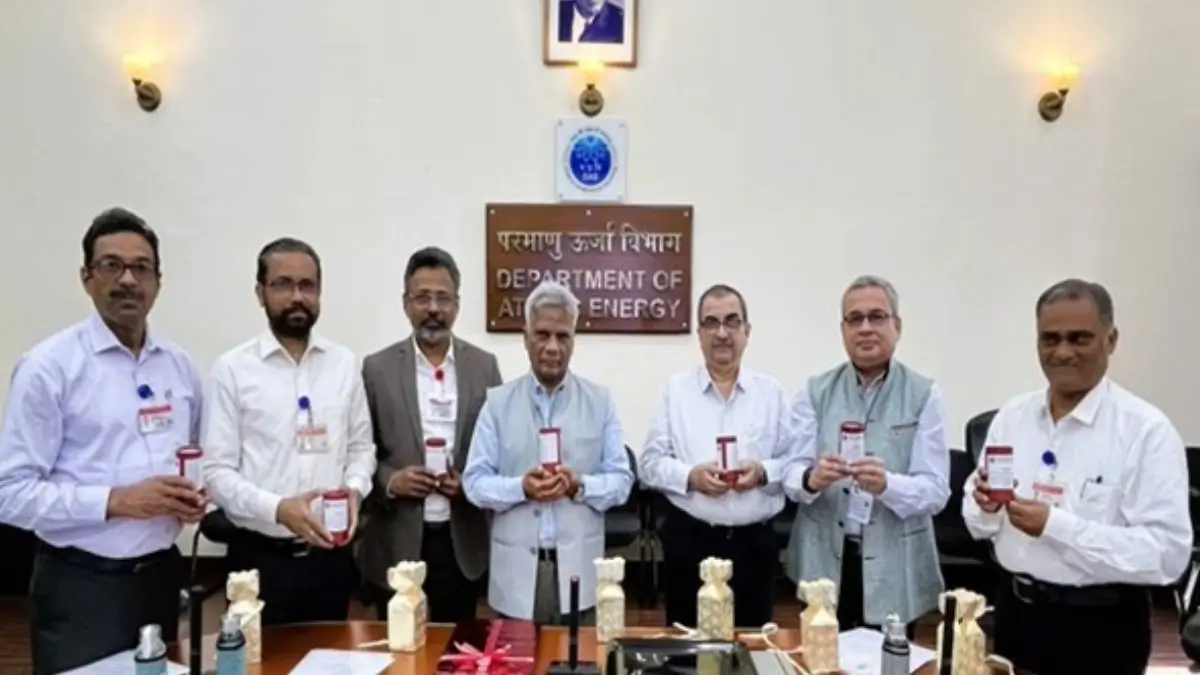
The Department of Atomic Energy (DAE) has made a breakthrough by launching ColoNoX, India’s first nitric-oxide (NO)–releasing wound dressing. Developed by the Bhabha Atomic Research Centre (BARC) in collaboration with Cologenesis Pvt. Ltd., this innovative dressing is designed specifically to treat diabetic foot ulcers (DFU) — a serious complication of diabetes that can lead to amputations. Alongside this, DAE also introduced a Certified Reference Material (CRM) for rare-earth element (REE) research, marking a dual achievement in health and strategic mineral sciences.
What Is ColoNoX & How It Works
Design and Development
- ColoNoX was developed through a technology transfer from BARC to Cologenesis under BARC’s Technology Transfer Program.
- The dressing is built on a collagen hydrogel matrix, which helps absorb wound exudate (fluid) and offers a scaffold for tissue regeneration.
Mechanism of Action
- The key active component is nitric oxide (NO or NOx), a gaseous signaling molecule.
- NO is released in a controlled manner at the wound site, which supports multiple healing processes:
- Antimicrobial activity: NO penetrates biofilms and kills bacteria/fungi, reducing infection.
- Angiogenesis & Granulation: It stimulates the formation of new blood vessels (microvascularization) and promotes the growth of granulation tissue — essential for healing.
- Collagen deposition: The collagen scaffold attracts fibroblasts, keratinocytes, and other cells, helping tissue rebuild.
Stability & Cost-Effectiveness
- The dressing is stable: it can be stored for up to two years at room temperature and humidity without losing its activity.
- It is relatively inexpensive to produce, making it accessible for widespread adoption.
- Because of the NO-based mechanism, there is less risk of microbial resistance, an important advantage over traditional antibiotic dressings
Regulatory & Clinical Validation
- ColoNoX has successfully undergone Phase II and Phase III clinical trials, demonstrating its safety and efficacy for DFU treatment.
- It has received approval from the Drugs Controller General of India (DCGI) for commercial manufacturing.
- This regulatory milestone means the product can now be manufactured and made available to the healthcare system.
Significance for Public Health
- Diabetic foot ulcers are a major health burden in India, given the high prevalence of diabetes.
- By combining antimicrobial action, blood-flow improvement, and tissue regeneration, ColoNoX can potentially reduce healing time, lower risk of infections, and minimise amputation risk.
- Moreover, by being affordable and effective, it aligns with DAE’s mission to translate nuclear science into societal benefits. DAE Secretary Dr. Ajit Kumar Mohanty emphasized this point, calling it a “meaningful step” in serving national health.
Strategic Mineral Science Innovation
- Aside from ColoNoX, the DAE also launched Ferrocarbonatite (FC) – BARC B140, India’s first Certified Reference Material (CRM) for rare-earth elements.
- Developed by BARC’s National Centre for Compositional Characterisation of Materials (NCCCM) and the Atomic Minerals Directorate (AMD), Hyderabad, this CRM provides certified values for 13 REEs and 6 other major elements.
- This is only the fourth CRM of its kind globally, and the first to be developed in India.
- The CRM will help improve accuracy in rare-earth mineral exploration, extraction, and process control, reinforcing India’s capabilities in strategic mineral research.

Why This News Is Important
Significance for Healthcare
This development is a major win for public health — diabetic foot ulcers (DFUs) are notoriously difficult to treat and often lead to severe complications, including amputations. An affordable and effective NO‑releasing dressing like ColoNoX can transform wound care for diabetic patients, especially in resource-limited settings.
Innovation from Nuclear Science
It underscores how nuclear science isn’t just about energy or weapons; institutions like BARC are applying their deep scientific expertise to create medically relevant technologies. This aligns with governmental goals of “Atoms in the service of the nation.”
Strategic Mineral Capability
On the mineral science front, the certified reference material (CRM) for rare-earth elements boosts India’s mining and processing capabilities. Rare earths are critical for modern technologies — from electronics to defense systems — so having an indigenous standard helps strengthen strategic autonomy.
Policy & Self-Reliance
The launch also supports Make in India and Atmanirbhar Bharat agendas. By commercializing home-grown innovations (both in healthcare and mineral sciences), India is reducing reliance on foreign tech and improving its scientific sovereignty.
Historical Context
BARC & NO‑Releasing Technology
The idea of using nitric oxide (NO) in wound healing is not entirely new. BARC had previously developed and patented a NOx (nitrogen oxides) releasing wound dressing for chronic, non-healing wounds (such as diabetic foot ulcers, pressure ulcers, venous stasis wounds).
Nitric oxide is a natural signaling molecule in the body that plays multiple roles — controlling infection, regulating blood vessel formation, and encouraging tissue repair. BARC’s version also uses a collagen scaffold, which has been shown to support cell-based tissue repair, making it particularly suitable for skin regeneration.
Clinical Validation & Collaboration
Over the years, BARC collaborated with Cologenesis Pvt. Ltd. to translate lab-scale NO-releasing dressing into a clinically usable product. Clinical trials (Phase II & III) validated its efficacy and safety.
The Technology Transfer Program of BARC helped in licensing the technology to Cologenesis for mass manufacture.
Regulatory Pathway
After successful clinical trials, DCGI approval was secured, enabling commercial production.
This journey—from lab to clinic to market—is a good example of scientific research being translated into real-world solutions, particularly in a public health context.
Strategic Minerals and CRM
In parallel, BARC’s NCCCM and AMD worked on creating a Certified Reference Material (CRM) for rare-earth elements. Such CRMs are crucial for ensuring accuracy and consistency in mineral exploration and processing — especially for rare-earth elements, which are strategic for many modern technologies.
Before this, India did not have an indigenous CRM for REEs; this new CRM (BARC B140) places India among a select few countries globally that have such certified materials.
Key Takeaways from This News
| # | Key Takeaway |
|---|---|
| 1 | ColoNoX is India’s first nitric-oxide‑releasing wound dressing, developed for diabetic foot ulcers (DFU). |
| 2 | The dressing combines nitric oxide and collagen hydrogel to boost healing, fight infection, and improve blood flow. |
| 3 | It has been clinically validated (Phase II & III trials) and has DCGI approval for commercial manufacturing. |
| 4 | The dressing is stable at room temperature for up to two years, cost-effective, and less likely to drive microbial resistance. |
| 5 | DAE also launched BARC B140 Ferrocarbonatite CRM, India’s first indigenous Certified Reference Material for rare-earth elements, supporting strategic mineral research. |
FAQs: Frequently Asked Questions
1. What is ColoNoX?
ColoNoX is India’s first nitric-oxide (NO) releasing wound dressing designed to treat diabetic foot ulcers (DFU). It uses a collagen hydrogel matrix to promote wound healing and prevent infections.
2. Who developed ColoNoX?
It was developed by Bhabha Atomic Research Centre (BARC) in collaboration with Cologenesis Pvt. Ltd., under the Department of Atomic Energy (DAE) technology transfer program.
3. How does nitric oxide help in wound healing?
Nitric oxide (NO) acts as a signaling molecule to fight infections, stimulate blood vessel formation, and encourage tissue regeneration, speeding up wound healing.
4. Is ColoNoX approved for clinical use?
Yes. ColoNoX has successfully passed Phase II and III clinical trials and received DCGI approval for commercial manufacturing in India.
5. How long can ColoNoX be stored?
The dressing is stable for up to two years at room temperature and humidity without losing its efficacy.
6. What is BARC B140 CRM?
BARC B140 is India’s first Certified Reference Material (CRM) for rare-earth elements (REEs), used to ensure accuracy in mineral research and processing.
7. Why is this innovation important for India?
It supports public health by providing an affordable, effective solution for DFU, strengthens strategic mineral research, and aligns with Atmanirbhar Bharat initiatives.
Some Important Current Affairs Links