


Raulane Festival cultural significance explained with details on Sauni fairies, Kinnaur rituals, Nagin Narayan Temple ceremony, and key facts important for competitive exams.
Raulane Festival: A Mystic Tribute to Kinnaur’s Winter Fairies
In the snow-capped valleys of Kinnaur, Himachal Pradesh, the ancient Raulane Festival is celebrated each year as a deeply spiritual tradition. This festival is a symbolic farewell to the Sauni fairies — ethereal beings believed to descend during winter and protect the villagers during the harsh cold.
The Sauni: Guardians of the Winter
According to local folklore, the Sauni fairies are gentle, celestial entities who arrive from high meadows when winter sets in. Though they are unseen, their presence is felt in subtle ways — through sudden warmth, whispering winds, or in the comforting dream-like stories passed down to children.
By the time spring approaches, these mystical beings are believed to retreat back to their heavenly abodes — and the Raulane Festival marks their ceremonial departure.
Raula and Raulane: A Sacred Performance
At the heart of the festival are two ceremonial figures: Raula and Raulane. Though called “bride” and “groom,” both roles are traditionally played by men.
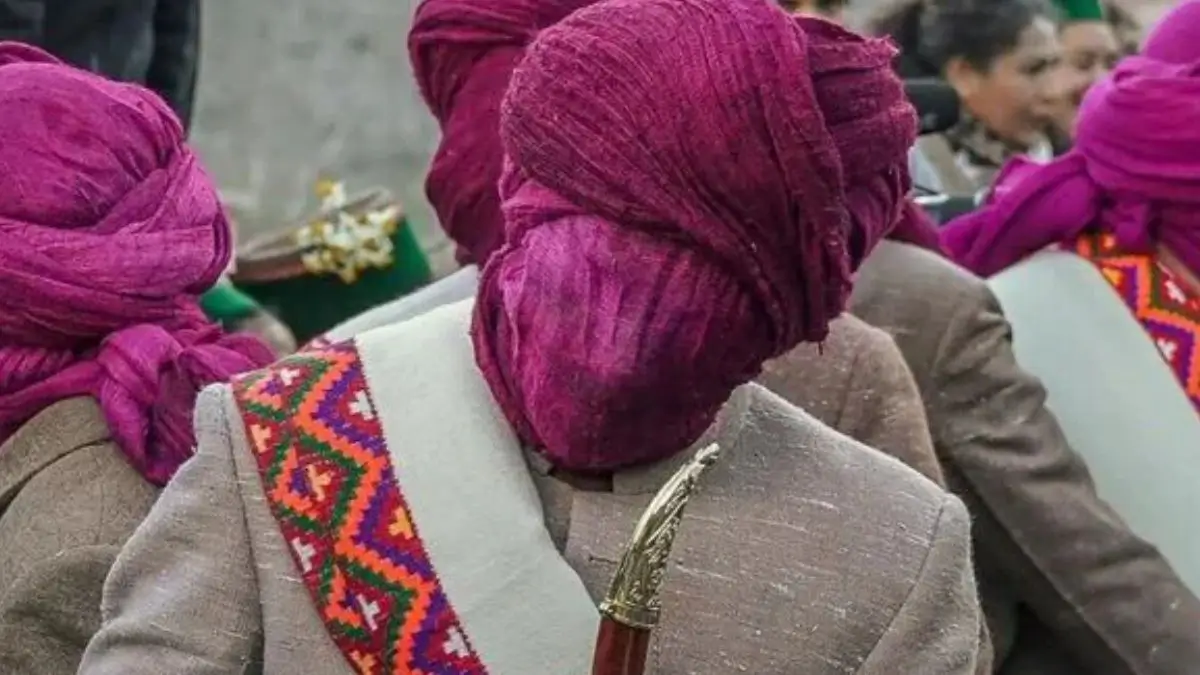
They don elaborate Kinnauri wool robes, heavy jewelry, and distinctive masks that completely conceal their identities — face, hands, everything. This isn’t just costume: it’s a spiritual act of transformation, allowing them to become vessels for divine energy.
One ritual belief says that the louder the Raula laughs during the procession, the more bountiful the coming harvest will be — blending humor, prophecy, and hope.
Rituals at the Nagin Narayan Temple
The central rituals take place at the Nagin Narayan Temple, a sacred space for the Kinnauri community.
Here, the Raula and Raulane enter in full regalia and perform a slow, meditative dance. Rather than a synchronized or choreographed performance, this is an intuitive, symbolic dance — seen as a bridge between the human world and the spirit realm of the Sauni.
Villagers often join in, humming or clapping softly; the ritual transcends theatre, becoming an act of devotion and ancestral remembrance.
Symbolism & Cultural Significance
The Raulane Festival is more than just a folklore event — it’s laden with symbolic meaning:
- Seasonal Transition: It marks the end of winter and an embrace of spring.
- Community Bonding: The entire village participates, fostering unity across generations and tribes.
- Spiritual Connection: It’s a moment to honor the unseen guardians (Sauni) and express gratitude for their protection.
- Cultural Preservation: The tradition survives through oral history, untouched by mass tourism or commercialization.

Why This News Is Important
Relevance for Competitive Exams
For students preparing for civil service, state public service, or teacher recruitment, the Raulane Festival is an excellent example of India’s rich intangible cultural heritage. Understanding such festivals helps in the culture & heritage portion of General Studies papers, especially for UPSC or State PSC exams.
Reflection of Tribal & Indigenous Traditions
The festival illustrates how indigenous Himalayan communities preserve their beliefs and identity. It shows the intersection of spirituality, folklore, and communal life, which is very important when discussing social diversity in India.
Symbolism & Environmental Link
Raulane is deeply tied to seasonal cycles — winter, spring — and reflects a harmonious worldview where nature, spirits, and humans interact. This aligns with topics in environment & ecology and cultural geography, both of which feature in many government exam syllabuses.
Historical Context
The Raulane Festival has been observed for centuries in Kinnaur, though its exact origin is lost in oral traditions.
In Kinnaur’s remote Himalayan terrain, these kinds of rituals served multiple functions historically:
- Spiritual Protection: Harsh winters made life precarious; belief in Sauni offered psychological comfort.
- Social Cohesion: The selection of Raula and Raulane fosters community decision-making and shared identity.
- Agricultural Prophecy: Rituals like the Raula’s laughter being linked to harvest outcomes reflect a traditional way of predicting and praying for prosperity.
- Preservation of Oral Heritage: Long before written records, the tales of Sauni and rituals were passed down verbally.
Over time, even with modernization, the festival has persisted largely unchanged — no loudspeakers, no commercial tourist performances — highlighting its authentic character.
Key Takeaways from Raulane Festival
| S. No. | Key Takeaway |
|---|---|
| 1 | The Raulane Festival is celebrated in Kinnaur, Himachal Pradesh to bid farewell to Sauni fairies, believed to protect villagers during winter. |
| 2 | Central performers are Raula and Raulane, both men dressed in woollen robes, masks, and ornaments to symbolically represent spiritual beings. |
| 3 | Main rituals occur at the Nagin Narayan Temple, where the pair perform a slow, meditative dance to invoke connection between humans and spirits. |
| 4 | The festival reflects deep symbolism — seasonal transition, spiritual gratitude, community bonding, and cultural preservation. |
| 5 | Raulane has remained largely traditional, avoiding commercialization, and continues to be passed down through oral history and community participation. |
Frequently Asked Questions (FAQs)
1. What is the Raulane Festival?
The Raulane Festival is a traditional cultural festival celebrated in Kinnaur, Himachal Pradesh. It marks the ceremonial farewell to the Sauni fairies — mythical winter guardians believed to protect villagers during the harsh cold season.
2. Where is the Raulane Festival celebrated?
It is celebrated in the Kinnaur district of Himachal Pradesh, specifically in villages like Kalpa and surrounding regions known for strong tribal and cultural heritage.
3. Who are the Sauni fairies in Kinnauri folklore?
The Sauni are mythical winter fairies believed to descend from the high mountains to protect villagers during winter and leave as spring approaches. The festival symbolizes their departure.
4. Who performs the main rituals of the Raulane Festival?
Two key performers, known as Raula and Raulane, both played by men, perform symbolic rituals wearing masks, woollen robes, and heavy ornaments.
5. What is the significance of the masks worn during the festival?
The masks hide the performers’ identities, turning them into spiritual vessels rather than individuals. This reflects the belief that divine energies can temporarily inhabit them during the ritual.
6. Where is the central ceremony of the festival performed?
The main ceremony takes place at the Nagin Narayan Temple, an important religious site for the Kinnauri community.
7. What does the laughter of the Raula signify?
According to tradition, the louder the Raula laughs during the festival procession, the more prosperous and abundant the upcoming harvest will be.
8. Why is the Raulane Festival important for competitive exams?
It is important for cultural, tribal, and social diversity sections of exams like UPSC, PSCs, SSC, CDS, CAPF, banking exams, and teacher recruitment tests.
9. What does the festival represent culturally?
The festival represents seasonal transition, community unity, spiritual gratitude, indigenous belief systems, and the preservation of oral traditions.
10. Has the festival been commercialized?
No. The Raulane Festival has largely remained untouched by commercialization and continues to be practiced in its authentic, traditional form.
Some Important Current Affairs Links




