






Jal Jeevan Mission has achieved 80% rural tap water coverage with 15.71 crore households connected. Learn about states’ achievements, sustainability, and exam-relevant details.
Jal Jeevan Mission Achieves 80% Rural Tap Water Coverage
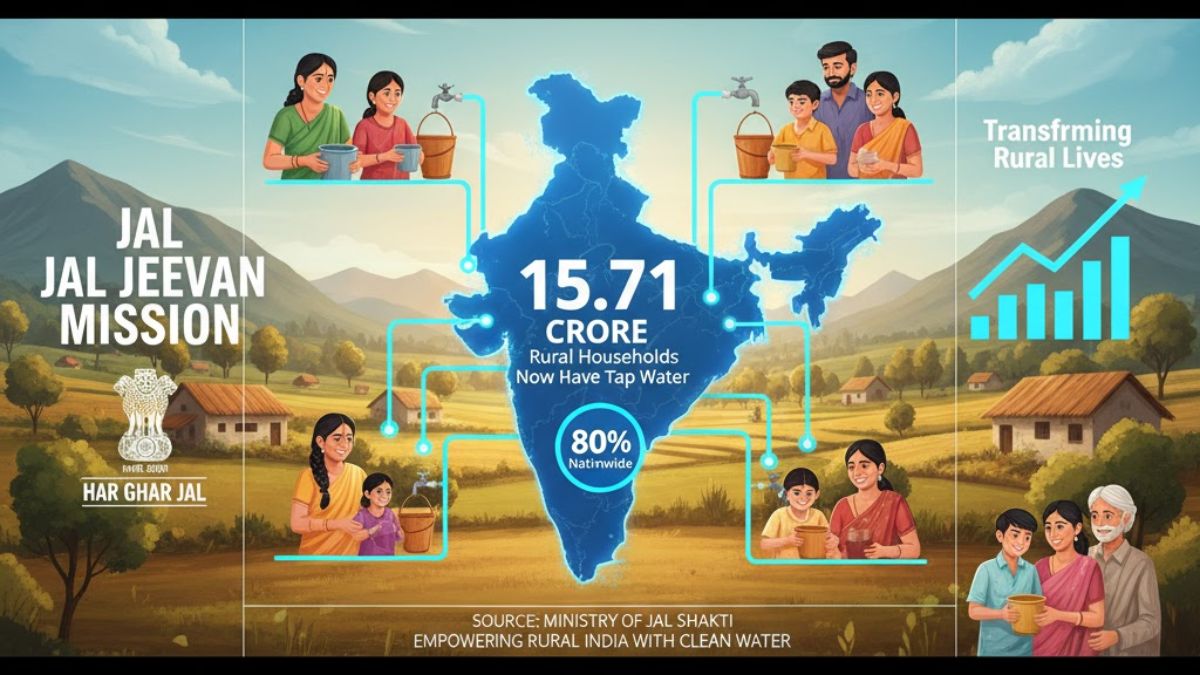
India’s flagship water initiative, the Jal Jeevan Mission (JJM), has reached a significant milestone by providing tap water connections to over 15.71 crore rural households, covering more than 80% of the country’s rural homes. Launched on August 15, 2019, the mission aimed to ensure Functional Household Tap Connections (FHTCs) in every rural household by 2024. However, with the mission’s extension until 2028, the government is focusing on sustainability, functionality, and uninterrupted service delivery
Progress and Regional Achievements
As of July 2025, several states and Union Territories have achieved 100% tap water coverage for rural households. These include Goa, Andaman & Nicobar Islands, Dadra & Nagar Haveli & Daman and Diu, Haryana, Telangana, Puducherry, Gujarat, Himachal Pradesh, Punjab, Mizoram, and Arunachal Pradesh . Other states like Bihar, Uttar Pradesh, and Madhya Pradesh have also made significant progress, with coverage exceeding 90% in many regions.
Focus on Sustainability and Functionality
With the increased coverage, the mission is now emphasizing the long-term sustainability and functionality of water supply systems. This includes ensuring adequate water quantity, regular supply, and adherence to water quality standards. District administrations play a pivotal role in monitoring and maintaining these standards to ensure uninterrupted service delivery
Impact on Rural Communities
The provision of tap water has had a transformative impact on rural communities. It has alleviated the burden on women and children who previously spent significant time collecting water, allowing them to engage in education and economic activities. Moreover, access to clean water has improved public health outcomes by reducing waterborne diseases.
Challenges and Future Directions
Despite the significant progress, challenges remain in ensuring the sustainability of water supply systems, especially in remote and underserved areas. The government is focusing on strengthening local governance structures, enhancing community participation, and implementing advanced water management technologies to address these challenges.

Why This News Is Important
Significance for Rural Development
The achievement of 80% rural tap water coverage under the Jal Jeevan Mission marks a transformative step in India’s rural development agenda. Access to clean and reliable water is fundamental to improving public health, education, and economic opportunities in rural areas.
Implications for Government Exams
For students preparing for government exams, understanding the objectives, implementation strategies, and outcomes of the Jal Jeevan Mission is crucial. This topic is relevant for various competitive exams, including those for civil services, banking, railways, and teaching positions. Questions related to national flagship programs, their progress, and impact are commonly featured in these exams.
Relevance to Current Affairs
The ongoing developments and achievements of the Jal Jeevan Mission make it a pertinent topic for current affairs sections in competitive exams. Staying updated on such initiatives demonstrates awareness of government policies and their implementation, a key aspect evaluated in many examinations.
Historical Context
Genesis of the Jal Jeevan Mission
The Jal Jeevan Mission was launched by the Government of India on August 15, 2019, with the objective of providing Functional Household Tap Connections (FHTCs) to every rural household by 2024. At the time of its inception, only 3.23 crore rural households had access to tap water, representing approximately 16.7% of the rural population.
Evolution and Expansion
Over the years, the mission has expanded its reach through collaborative efforts between the central and state governments. The extension of the mission until 2028 reflects the government’s commitment to ensuring sustainable and equitable water supply across all rural areas.
Impact on Rural Communities
The mission has significantly improved the quality of life in rural communities by reducing the time spent on water collection, improving health outcomes, and empowering women and children to engage in educational and economic activities.
Key Takeaways from “Jal Jeevan Mission Achieves 80% Rural Tap Water Coverage”
| No. | Key Takeaway |
|---|---|
| 1. | Over 15.71 crore rural households now have tap water connections, covering more than 80% of rural homes in India. |
| 2. | The mission has been extended until 2028, focusing on sustainability and uninterrupted service delivery. |
| 3. | Several states and Union Territories, including Goa, Haryana, and Telangana, have achieved 100% tap water coverage. |
| 4. | The initiative has significantly improved public health, education, and economic opportunities in rural areas. |
| 5. | Emphasis is now on ensuring the functionality and sustainability of water supply systems through local governance and community participation. |
FAQs: Frequently Asked Questions
1. What is the Jal Jeevan Mission (JJM)?
The Jal Jeevan Mission is a flagship program launched by the Government of India on August 15, 2019, aimed at providing Functional Household Tap Connections (FHTCs) to every rural household by 2024, later extended until 2028.
2. How many rural households in India have received tap water under JJM?
As of July 2025, over 15.71 crore rural households, covering more than 80% of rural homes, have received tap water connections.
3. Which states have achieved 100% rural tap water coverage?
States and Union Territories like Goa, Haryana, Telangana, Puducherry, Gujarat, Himachal Pradesh, Punjab, Mizoram, Arunachal Pradesh, and Andaman & Nicobar Islands have achieved full coverage.
4. Why is the Jal Jeevan Mission important for rural development?
JJM improves public health, reduces waterborne diseases, saves time for women and children, and enhances educational and economic opportunities in rural areas.
5. What are the current priorities of the mission?
The current focus is on sustainability, functionality, uninterrupted water supply, adherence to water quality standards, and community participation in water management.
6. How does the Jal Jeevan Mission impact women in rural India?
Women spend less time fetching water, allowing them to participate in education, work, and other productive activities, empowering them socially and economically.
7. What challenges remain in the Jal Jeevan Mission?
Challenges include ensuring sustainability of water supply in remote areas, maintaining water quality, and strengthening local governance for efficient management.
Some Important Current Affairs Links