









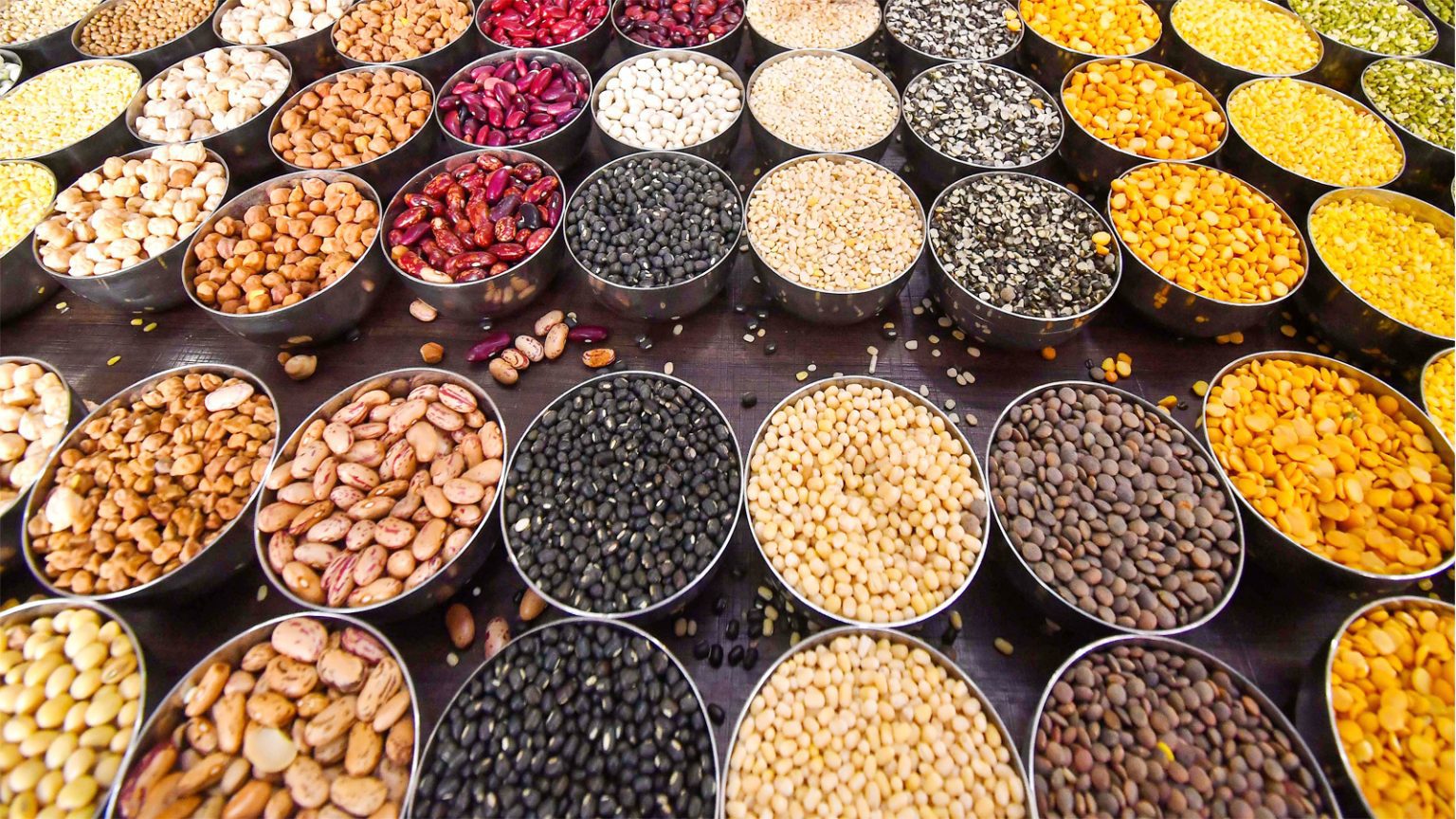
Mission for Aatmanirbharta in Pulses approved by Union Cabinet in 2025 with ₹11,440 crore to increase pulse production, support farmers, and reduce imports.
🥣 Union Cabinet Approves ₹11,440 Crore Mission for Aatmanirbharta in Pulses
📌 Introduction: A Landmark Initiative in Agricultural Policy
On October 1, 2025, the Union Cabinet, chaired by Prime Minister Narendra Modi, approved the “Mission for Aatmanirbharta in Pulses.” This six-year initiative, spanning from 2025-26 to 2030-31, aims to enhance domestic pulse production and reduce India’s reliance on imports. With a financial outlay of ₹11,440 crore, the mission targets a production of 350 lakh tonnes of pulses by the end of the period.
🌾 Objectives and Strategic Components
1. Seed Distribution and Research Initiatives
The mission plans to distribute 88 lakh free seed kits to farmers, promoting the use of high-yielding, pest-resistant, and climate-resilient pulse varieties. Additionally, 126 lakh quintals of certified seeds will be provided, covering 370 lakh hectares by 2030-31. Multi-location trials will be conducted to ensure the suitability of these varieties across different agro-climatic zones.
2. Procurement and Price Stability
To ensure fair prices for farmers, the government will implement 100% procurement of Tur, Urad, and Masoor pulses at Minimum Support Price (MSP) for the next four years. This initiative aims to stabilize market prices and provide financial security to approximately 2 crore farmers.
3. Infrastructure Development
The mission includes the establishment of 1,000 processing units to minimize post-harvest losses and enhance value addition. These units will focus on improving storage facilities and processing technologies, thereby increasing the shelf life and marketability of pulses.
4. Area Expansion and Crop Diversification
Efforts will be made to bring 35 lakh hectares of rice fallow and underutilized land under pulse cultivation. The mission promotes intercropping and crop diversification, aligning with regional agro-climatic conditions to optimize land use and productivity.
📊 Financial Allocation and Implementation
The ₹11,440 crore allocated for this mission will be utilized over six years, focusing on research, seed distribution, infrastructure development, and procurement mechanisms. The implementation will involve collaboration between central and state agencies, including the Indian Council of Agricultural Research (ICAR), Krishi Vigyan Kendras (KVKs), and state agricultural departments.
✅ Why This News is Important
1. Enhancing Food Security
India’s growing population and changing dietary patterns have led to increased demand for pulses. This mission aims to bridge the gap between demand and domestic production, thereby strengthening the nation’s food security.
2. Boosting Farmer Incomes
By ensuring MSP-based procurement and providing access to quality seeds and modern farming practices, the mission seeks to enhance the income levels of farmers, particularly those engaged in pulse cultivation.
3. Reducing Import Dependency
India’s reliance on pulse imports has been rising, leading to trade imbalances. The mission’s focus on self-sufficiency aims to reduce this dependency, contributing to a more balanced agricultural trade scenario.
4. Promoting Sustainable Agriculture
The emphasis on climate-resilient and pest-resistant pulse varieties aligns with sustainable agricultural practices, ensuring long-term productivity and environmental conservation.
5. Aligning with National Agricultural Policies
This initiative complements other national programs like the Soil Health Management Scheme and the National Mission on Agricultural Extension and Technology, fostering a holistic approach to agricultural development.
🕰️ Historical Context
India has a rich history of pulse cultivation, with pulses being integral to the country’s cropping systems and diets. Despite being the world’s largest producer and consumer of pulses, India has faced challenges in meeting domestic demand, leading to increased imports. The government’s focus on achieving self-sufficiency in pulses aligns with the broader objectives of the Aatmanirbhar Bharat initiative, which aims to promote self-reliance in various sectors, including agriculture.
📌 Key Takeaways from “Union Cabinet Approves ₹11,440 Crore Mission for Aatmanirbharta in Pulses”
| S.No | Key Takeaway |
|---|---|
| 1 | Mission Duration: 2025-26 to 2030-31 |
| 2 | Financial Outlay: ₹11,440 crore |
| 3 | Production Target: 350 lakh tonnes of pulses |
| 4 | Seed Distribution: 88 lakh free seed kits and 126 lakh quintals of certified seeds |
| 5 | Procurement Assurance: 100% MSP-based procurement of Tur, Urad, and Masoor for four years |
FAQs: Frequently Asked Questions
1. What is the “Mission for Aatmanirbharta in Pulses”?
The mission is a six-year initiative (2025-26 to 2030-31) approved by the Union Cabinet with a financial outlay of ₹11,440 crore, aiming to increase domestic pulse production and reduce import dependency.
2. What are the main objectives of the mission?
The mission focuses on increasing pulse production, distributing high-quality seeds, ensuring MSP-based procurement, developing processing infrastructure, and promoting sustainable and diversified cropping systems.
3. How many farmers will benefit from the seed distribution under this mission?
Approximately 2 crore farmers will benefit through the distribution of 88 lakh free seed kits and 126 lakh quintals of certified seeds.
4. Which pulses are covered under 100% MSP-based procurement?
The mission guarantees 100% MSP procurement for Tur, Urad, and Masoor pulses for the next four years.
5. How does this mission align with Aatmanirbhar Bharat?
The mission contributes to India’s self-reliance in pulses by reducing import dependency, promoting domestic production, and increasing farmers’ income.
6. What is the production target of pulses under this mission?
The mission aims to achieve 350 lakh tonnes of pulse production by 2030-31.
7. What kind of infrastructure development is included?
1,000 processing units will be established to reduce post-harvest losses, improve storage, and add value to pulses.
8. Which organizations are involved in the implementation?
Central and state agencies, including ICAR, Krishi Vigyan Kendras (KVKs), and state agricultural departments, will implement the mission.
9. How will the mission promote sustainable agriculture?
By distributing climate-resilient, pest-resistant pulse varieties and promoting intercropping and crop diversification, the mission supports environmentally sustainable farming.
10. Why is this mission important for students preparing for government exams?
It covers current government policy, agriculture, food security, and self-reliance initiatives, which are frequently asked topics in UPSC, PSC, banking, railways, and other exams.
Some Important Current Affairs Links