






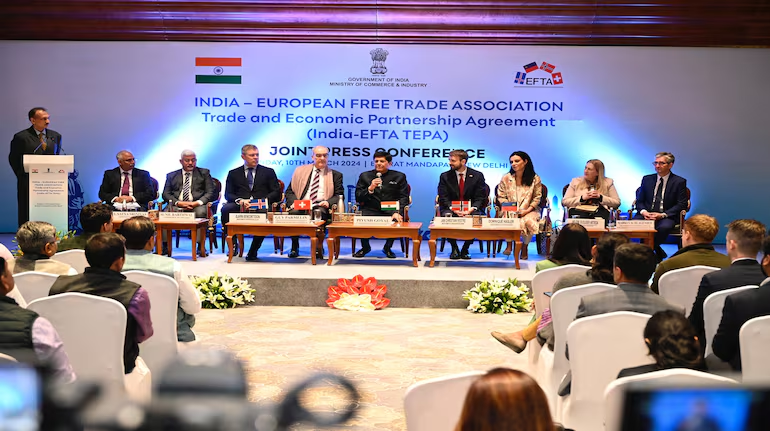
India EFTA trade agreement 2025 comes into effect on October 1, creating one million jobs, boosting $100 billion investments, and enhancing bilateral trade and sustainable development.
India’s Historic Free Trade Agreement with EFTA Comes into Effect
On October 1, 2025, India’s Trade and Economic Partnership Agreement (TEPA) with the European Free Trade Association (EFTA) officially came into force, marking a significant milestone in India’s trade relations. The EFTA bloc comprises four countries: Switzerland, Norway, Iceland, and Liechtenstein. This agreement is India’s first-ever trade pact with a European grouping, reflecting its growing global economic stature.
Key Provisions of the TEPA
The TEPA encompasses a comprehensive framework aimed at enhancing bilateral trade and investment. Under the agreement, EFTA countries have committed to investing $100 billion in India over the next 15 years. In return, India will gradually phase out customs duties on specific imported goods, including Swiss chocolates and watches, over a 10-year period. This move is expected to lead to reduced prices for these luxury European items in the Indian market, fostering increased trade and economic collaboration between India and the EFTA nations.
Impact on Employment and Economic Growth
The TEPA is projected to create approximately one million direct jobs in India, significantly boosting employment in various sectors. The agreement is also expected to unlock new opportunities for cooperation in investment, innovation, technology, and people-to-people ties. Union Minister of Commerce and Industry, Piyush Goyal, emphasized that the pact will bring capital, technology, and jobs to India, strengthening its position in the global economy.
Sectoral Benefits
The agreement is poised to benefit several sectors, including life sciences, clean energy, artificial intelligence, education, and tourism. Swiss companies, in particular, have shown considerable interest in exploring opportunities in India, viewing the TEPA as a pathway to transformative change in bilateral trade and investment dynamics. The pact also includes provisions for sustainable development, with legally binding commitments on environmental protection and labor standards, marking a first for India in such agreements.
Strategic Significance
The implementation of the TEPA underscores India’s proactive approach to expanding its trade relations with developed nations. It complements India’s aspirations for broader trade deals with the European Union and the United States, particularly amid current global trade disruptions. The agreement positions India as a key player in the global trade arena, fostering deeper economic integration with the EFTA countries.
Why This News is Important
Enhancement of Bilateral Trade Relations
The TEPA signifies a substantial enhancement of trade relations between India and the EFTA countries. By eliminating or reducing tariffs on a majority of goods traded between the two parties, the agreement facilitates smoother and more efficient trade flows. This is particularly beneficial for Indian exporters seeking access to the EFTA markets, which are known for their high purchasing power.
Attraction of Foreign Investment
The $100 billion investment commitment from EFTA countries is a testament to the growing confidence in India’s economic prospects. This influx of capital is expected to spur infrastructure development, technological advancements, and industrial growth across various sectors in India. The investment is also anticipated to enhance India’s competitiveness in the global market.
Job Creation and Economic Development
The creation of one million direct jobs as a result of the TEPA is a significant boost to India’s employment landscape. The agreement is expected to stimulate economic development by fostering growth in key sectors such as manufacturing, services, and technology. This aligns with India’s objectives of inclusive growth and poverty reduction.
Strengthening India’s Global Position
By entering into a trade agreement with the EFTA, India demonstrates its commitment to strengthening economic ties with developed nations. The TEPA enhances India’s position in the global trade hierarchy, showcasing its role as a major emerging economy. This strategic move is likely to open doors for future trade agreements with other countries and economic blocs.
Promotion of Sustainable Development
The inclusion of a chapter on trade and sustainable development in the TEPA reflects India’s commitment to balancing economic growth with environmental and social considerations. The legally binding commitments on environmental protection and labor standards set a precedent for future trade agreements, ensuring that economic development does not come at the expense of sustainability.
Historical Context
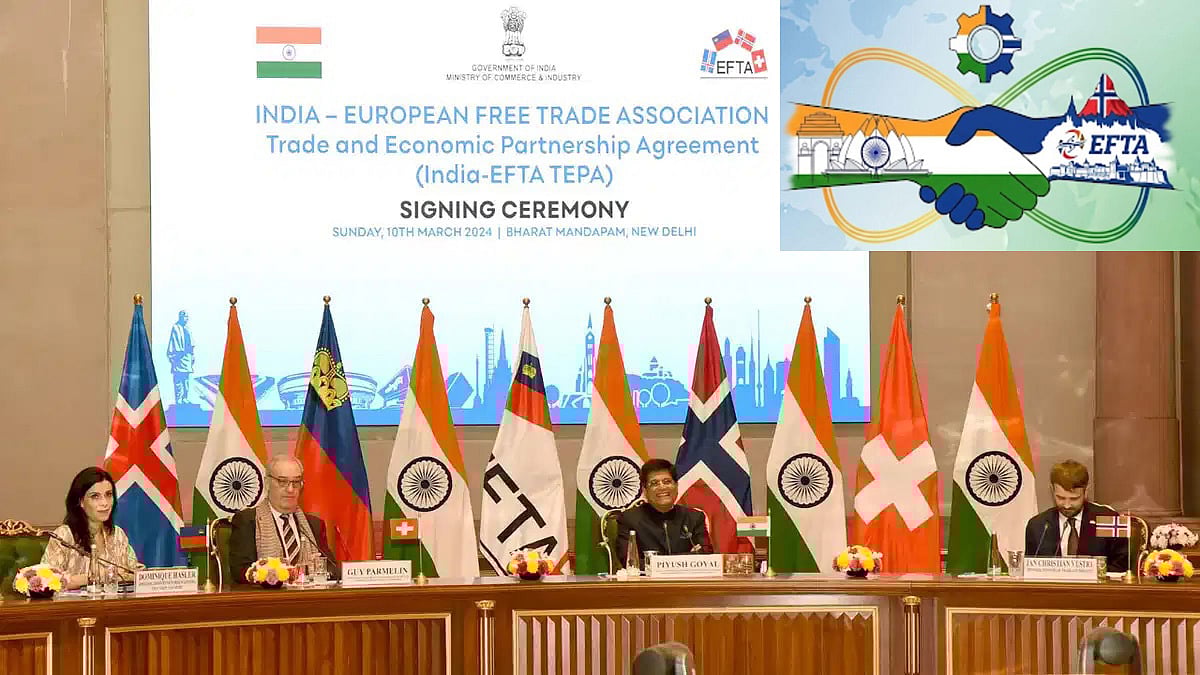
The journey towards the India-EFTA Trade and Economic Partnership Agreement began over 16 years ago, with negotiations commencing in the early 2000s. After years of intermittent discussions, the agreement was finally signed on March 10, 2024, in New Delhi. The pact was the result of extensive deliberations aimed at addressing the trade interests and concerns of both India and the EFTA countries.
India’s previous trade agreements, such as those with the United Arab Emirates, Australia, and the United Kingdom, laid the groundwork for this landmark deal. The TEPA is part of India’s broader strategy to integrate more deeply into the global economy and diversify its trade partnerships. The agreement with the EFTA is particularly significant as it is India’s first trade pact with a European grouping, marking a new chapter in its international trade relations.
The implementation of the TEPA also reflects India’s evolving approach to trade, emphasizing not only economic gains but also sustainable development and social responsibility. This holistic approach is expected to serve as a model for future trade agreements, balancing economic objectives with environmental and social considerations.
Key Takeaways from India-EFTA Trade Pact
| S.No | Key Takeaway |
|---|---|
| 1 | First-ever trade pact with a European bloc: India signs its inaugural trade agreement with the EFTA, comprising Switzerland, Norway, Iceland, and Liechtenstein. |
| 2 | $100 billion investment commitment: EFTA countries pledge $100 billion in investments to India over 15 years, aiming to boost economic growth and job creation. |
| 3 | Creation of one million jobs: The agreement is projected to generate approximately one million direct jobs in various sectors across India. |
| 4 | Tariff reductions on key imports: India agrees to gradually phase out customs duties on specific imported goods, including Swiss chocolates and watches, over a 10-year period. |
| 5 | Focus on sustainable development: The TEPA includes legally binding commitments on environmental protection and labor standards, marking a first for India in such agreements. |
FAQs: Frequently Asked Questions
1. What is the India-EFTA Trade and Economic Partnership Agreement (TEPA)?
The India-EFTA TEPA is a free trade agreement between India and the European Free Trade Association (EFTA), which includes Switzerland, Norway, Iceland, and Liechtenstein. It aims to enhance trade, investment, and economic cooperation between India and EFTA countries.
2. When did the India-EFTA trade agreement come into effect?
The agreement officially came into force on October 1, 2025.
3. How much investment have EFTA countries committed to India under TEPA?
EFTA countries have committed $100 billion in investments to India over the next 15 years.
4. Which sectors are expected to benefit from the TEPA?
Key sectors include life sciences, clean energy, artificial intelligence, education, tourism, and technology, as well as manufacturing and services.
5. How many jobs are expected to be created by the TEPA?
The agreement is projected to create approximately one million direct jobs in India.
6. What are some key goods impacted by tariff reductions under TEPA?
India will gradually phase out customs duties on Swiss chocolates, watches, and other luxury European goods over a 10-year period.
7. Why is the TEPA significant for India’s global trade strategy?
It is India’s first trade pact with a European grouping, strengthening economic ties with developed nations and enhancing India’s position in global trade.
8. Does the TEPA include sustainable development commitments?
Yes, it includes legally binding commitments on environmental protection and labor standards, marking a first for India in such agreements.
9. How does TEPA affect Indian exporters?
It provides greater access to EFTA markets, which are known for high purchasing power, potentially boosting exports and trade volumes.
10. What was the duration of negotiations for TEPA?
Negotiations for the India-EFTA TEPA started in the early 2000s and were signed on March 10, 2024, taking over 16 years to finalize.
Some Important Current Affairs Links