








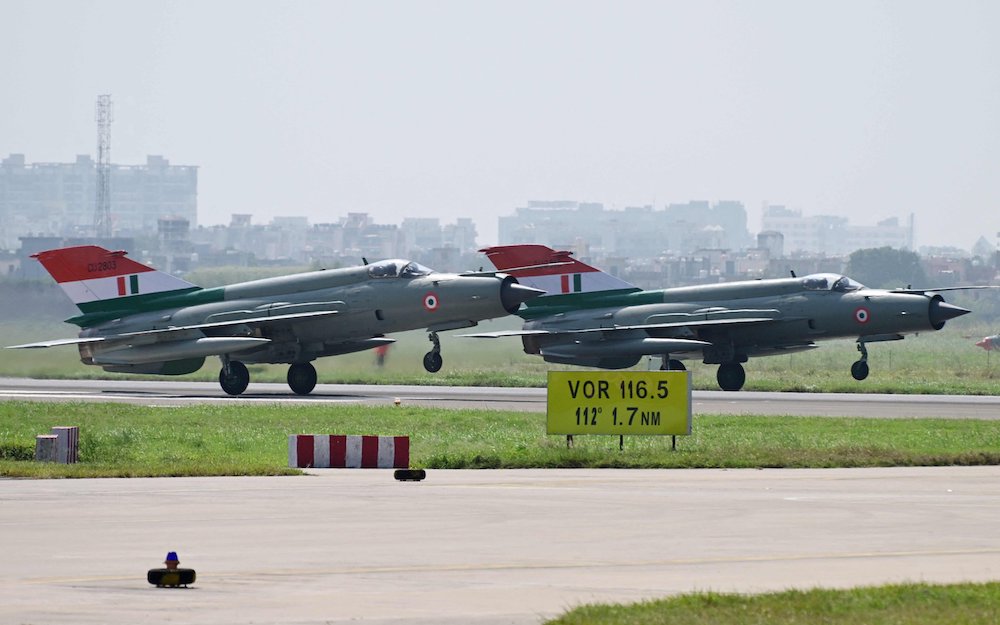
MiG-21 retirement India 2025 marks the end of over 60 years of service. Learn about the farewell ceremony, Tejas Mk-1A induction, and IAF modernization efforts.
India Bids Farewell to the Iconic MiG-21 Fighter Jet
Introduction: The End of an Era
On September 26, 2025, the Indian Air Force (IAF) officially retired its last fleet of MiG-21 Bison fighter jets, marking the end of over six decades of service for the Soviet-era aircraft. The farewell ceremony took place at the Air Force Station in Chandigarh, attended by Defence Minister Rajnath Singh, Chief of Defence Staff General Anil Chauhan, and Air Force Chief Air Marshal AP Singh. The MiG-21, often dubbed the “flying coffin” due to its safety record, played a pivotal role in India’s defense strategy.
A Storied Legacy
Introduced in the 1960s, the MiG-21 was India’s first supersonic jet and significantly enhanced the nation’s air combat capabilities. It participated in several major military operations, including the 1965 and 1971 wars, the 1999 Kargil conflict, and the 2019 Balakot air strikes. Despite its pivotal role, the aircraft earned a controversial reputation in later years due to frequent crashes, raising concerns about flight safety.
The Farewell Ceremony
The retirement ceremony featured a ceremonial flypast, with MiG-21s flying in two formations, forming a cloud-like pattern. Paratroopers from the Air Force’s Akash Ganga Team saluted the MiG-21 by jumping from an altitude of approximately 8,000 feet. Aerial combat scenes were displayed between Jaguar and MiG-21 aircraft, symbolizing the aircraft’s combat prowess. The final operations were carried out by the No. 23 Squadron, nicknamed “Panthers,” which operated the last MiG-21s.
Transition to Modern Aircraft
With the MiG-21’s retirement, India is focusing on modernizing its air force fleet. The Indian government has approved a significant defense contract worth ₹62,000 crore for the supply of 97 Tejas Mk-1A fighter aircraft to the IAF. This move aligns with India’s push for self-reliance in defense production and aims to replace the aging MiG-21 fleet. Additionally, India is exploring foreign acquisitions, including potential locally built Rafales through collaboration with Dassault Aviation, and possible F-35 purchases from the U.S., though no formal commitment has been made.

Why This News Is Important
Modernization of India’s Air Force
The retirement of the MiG-21 signifies a crucial step in modernizing India’s air force. The induction of advanced aircraft like the Tejas Mk-1A will enhance the IAF’s operational capabilities and ensure it remains prepared to address contemporary security challenges.
Boost to Indigenous Defense Production
The Tejas Mk-1A program underscores India’s commitment to “Make in India” and self-reliance in defense manufacturing. By investing in indigenous aircraft development, India aims to reduce dependency on foreign suppliers and strengthen its defense industry.
Strategic Defense Planning
The phased retirement of the MiG-21 and its replacement with modern aircraft reflect a strategic approach to defense planning. This transition ensures that the IAF maintains a technologically advanced and capable fleet to safeguard national security.
Historical Context:
Introduction of the MiG-21
The MiG-21 was introduced to the Indian Air Force in the 1960s as the first supersonic jet. It was produced locally by Hindustan Aeronautics Limited under license and became the backbone of the IAF’s fleet for several decades.
Role in Major Conflicts
The MiG-21 played a significant role in India’s military operations, including the 1965 and 1971 wars with Pakistan, the 1999 Kargil conflict, and the 2019 Balakot air strikes. Its versatility and speed made it a formidable asset in various combat scenarios.
Safety Concerns and Nickname
Despite its combat success, the MiG-21 earned the nickname “flying coffin” due to its safety record. The aircraft was involved in numerous crashes over the years, leading to concerns about its reliability and prompting calls for its retirement.
Transition to Modern Aircraft
The need to replace the MiG-21 became evident as the aircraft aged and newer, more advanced threats emerged. The induction of the Tejas Mk-1A and other modern aircraft is part of India’s efforts to maintain a technologically superior air force.
Key Takeaways from “India Bids Farewell to the Iconic MiG-21 Fighter Jet”
| S.No | Key Takeaway |
|---|---|
| 1 | The MiG-21 was India’s first supersonic jet, introduced in the 1960s. |
| 2 | It participated in major conflicts, including the 1965 and 1971 wars, Kargil, and Balakot. |
| 3 | The aircraft earned the nickname “flying coffin” due to its safety record. |
| 4 | The IAF retired the MiG-21 after 62 years of service on September 26, 2025. |
| 5 | The MiG-21 is being replaced by the Tejas Mk-1A under the “Make in India” initiative. |
FAQs: Frequently Asked Questions
1. When was the MiG-21 fighter jet retired in India?
The Indian Air Force officially retired its last MiG-21 Bison jets on September 26, 2025.
2. Why is the MiG-21 called the “flying coffin”?
The MiG-21 earned the nickname “flying coffin” due to its high accident and crash rate over decades of service.
3. Which squadron operated the last MiG-21 jets in India?
The No. 23 Squadron, nicknamed “Panthers,” operated the last MiG-21 aircraft.
4. Which new fighter aircraft will replace the MiG-21 in the Indian Air Force?
The MiG-21 is being replaced by the indigenously developed Tejas Mk-1A fighter jets.
5. How long did the MiG-21 serve in the Indian Air Force?
The MiG-21 served India for over 62 years, from the 1960s until its retirement in 2025.
6. Who attended the MiG-21 farewell ceremony?
The farewell ceremony was attended by Defence Minister Rajnath Singh, Chief of Defence Staff General Anil Chauhan, and Air Force Chief Air Marshal AP Singh.
7. In which wars and operations did the MiG-21 participate?
The MiG-21 participated in the 1965 and 1971 wars, the 1999 Kargil conflict, and the 2019 Balakot air strikes.
8. What is the value of the contract for 97 Tejas Mk-1A aircraft approved by India?
The contract for 97 Tejas Mk-1A aircraft is valued at ₹62,000 crore.
9. What is the significance of retiring the MiG-21 for India’s defense strategy?
The retirement marks a major step in modernizing the Air Force, strengthening indigenous defense manufacturing, and ensuring advanced operational readiness.
10. Has India considered acquiring other foreign aircraft after MiG-21 retirement?
Yes, India is exploring foreign acquisitions, including collaboration for locally built Rafales and potential F-35s, though no formal decision has been made yet.
Some Important Current Affairs Links