







Swachh Vayu Sarvekshan 2025 winners announced: Indore tops, NCAP cities show air quality improvements, and Indore & Udaipur recognized as Wetland Cities. Key initiatives and ward-level guidelines explained for exam aspirants.
Cities Shine Under Swachh Vayu Sarvekshan & Wetland Cities Recognition Ceremony 2025
Swachh Vayu Sarvekshan Awards 2025: Overview and Winners
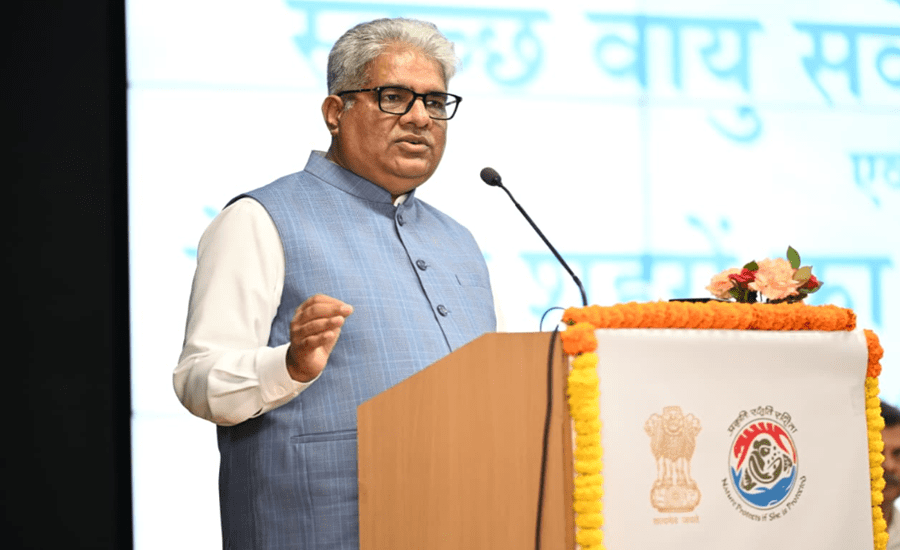
On September 9–10, 2025, the Ministry of Environment, Forest & Climate Change (MoEF&CC) held the Swachh Vayu Sarvekshan Awards & Wetland Cities Recognition Ceremony 2025 in New Delhi. Union Environment Minister Bhupender Yadav conferred awards to the best-performing cities among 130 cities participating under the National Clean Air Programme (NCAP). The competition aims to assess and incentivize clean air initiatives in Indian cities.
In the largest category (cities with population over 10 lakh), Indore (Madhya Pradesh) emerged as the top city, scoring 200 out of 200 and earning a cash prize of ₹1.5 crore. Key achievements included planting over 16 lakh trees and running a fleet consisting of 120 electric buses and 150 CNG buses.
Jabalpur (MP) came second with a score of 199, supported by efforts such as an 11 MW waste-to-energy plant and expanded green cover. Agra (UP) and Surat (Gujarat) shared third place, earning ₹25 lakh each; Agra was recognised for remediation of legacy waste dump sites and Surat for EV policy incentives and maintaining about 38% green cover.
Performance in Category II & III Cities (Smaller Populations)
For cities with 3-10 lakh population, Amravati (Andhra Pradesh) topped the list, also with a perfect score, and won a cash prize of ₹75 lakh. Its achievements included upgrading road infrastructure (340 km of end-to-end pavement), transforming barren lands, and expanding green cover via gardens and plantations.
Jhansi (UP) and Moradabad (UP) jointly secured second place, while Alwar (Rajasthan) earned third place, with Alwar being a first-time winner in this scheme.
In the smallest category (population under 3 lakh), Dewas (MP) came first with 193 points, Parwanoo (Himachal Pradesh) second (191.5), and Angul (Odisha) third (191). These cities were recognised for efforts such as cleaner fuel use, road and public infrastructure improvements, community outreach, and restricting polluting traffic.
Wetland Cities Recognition & New Policy Instruments
Alongside the Swachh Vayu Awards, Indore and Udaipur were given Wetland City Accreditation under the Ramsar Convention. This international recognition underlines their efforts in managing and preserving urban wetlands, integrating ecological factors into urban planning and maintaining biodiversity.
During the ceremony, the government also launched Ward-Level Swachh Vayu Sarvekshan Guidelines, aiming to decentralize and localize clean air actions, increasing accountability and participation at ward level. A Compendium of Best Practices under NCAP was released to facilitate replication of successful measures across cities.
Clean Air Improvements & Financial Allocations
Under NCAP, it was reported that 103 out of 130 cities showed improvement in PM10 (particulate matter) pollution levels compared to baseline data of 2017-18. Among them, 64 cities achieved a 20% reduction, and 25 cities crossed even more ambitious targets of 40% reduction.
Financially, the Government has mobilised substantial resources: ₹20,130 crore allocated to 130 cities under NCAP; an air quality performance-linked grant of ₹13,237 crore; and additional investments through convergence of central schemes (Swachh Bharat Mission Urban, AMRUT, Smart Cities, etc.) amounting to ₹1.55 lakh crore when central, state, and local contributions are combined.
Why This News Is Important
Significance for Environmental Policy and Urban Health
This event and its outcomes are crucial as they show the Indian government’s concerted push to improve urban air quality—one of the major public health challenges in the country. Clean air reduces respiratory illnesses, cardiovascular problems and overall mortality, particularly in polluted urban areas. The recognition of cities doing well incentivizes further action.
Implications for Governance and Grass-roots Action
The introduction of ward-level guidelines for Swachh Vayu Sarvekshan means that clean air measures can become more localized. This helps ensure accountability at the lowest level of urban administration, boosts citizen participation, and makes environmental governance more democratic and effective.
Relevance for Exam Aspirants (Teachers, Banking, Civil Service, etc.)
For students preparing for government exams (such as UPSC, State PSC, banking, teaching, defence etc.), this news covers multiple relevant themes:
- National Clean Air Programme (NCAP): know the mandate, structure, targets.
- Swachh Vayu Sarvekshan: its categories, assessment criteria, winners.
- Ramsar Wetland Recognition: international conventions, wetland city accreditation.
- Government schemes & fund mobilization: budgets, convergence of schemes.
- Environmental policy developments: ward-level implementation, public participation.
These are frequent topics in general studies, environment, governance, public policy etc.
Historical Context: Background to Swachh Vayu Sarvekshan & Related Initiatives
National Clean Air Programme (NCAP) Origins
Launched in 2019-20 by MoEF&CC, NCAP is a flagship initiative designed to reduce air pollution (especially PM2.5, PM10) across Indian cities. It sets city-level clean air action plans, periodic monitoring, and performance assessment. The programme aims for 20-40% reduction in particulate matter by 2025 relative to baseline levels.
Swachh Vayu Sarvekshan: Clean Air Survey & Competitive Model
Inspired by similar city rankings (e.g. Swachh Survekshan for sanitation), Swachh Vayu Sarvekshan stimulates healthy competition, rewards implementation of mitigation measures (road dust control, vehicular pollution, waste management, construction & demolition (C&D) waste, industrial emissions etc.). It evaluates cities on a score of 200. Categories are defined based on city population size to ensure fairness.
Wetland Cities & Ramsar Convention
India is a party to the Ramsar Convention on Wetlands, which promotes the conservation and wise use of wetlands. Wetland City Accreditation is a newer instrument recognizing cities which are protecting urban wetlands, integrating their management into planning, and preserving the biodiversity and ecological functions wetlands provide. This complements air quality efforts—wetlands act as natural purifiers, flood buffers, and support livelihoods and biodiversity.
Previous Years & Trends
In earlier editions, many cities have been showing gradual but sometimes inconsistent improvements. The shift now is more marked: more cities meeting the reduction targets in PM10, stricter enforcement of norms, citizen engagement, improved infrastructure and greener transport. The strengthening of guidelines (e.g. ward-level) indicates a maturing of policy implementation.
Key Takeaways from This News
| S. No | Key Takeaway |
|---|---|
| 1 | Indore topped Swachh Vayu Sarvekshan 2025 (Category-1) with a perfect score 200/200 and won ₹1.5 crore. |
| 2 | Amravati and Dewas led Categories II and III (cities with 3-10 lakh & under 3 lakh pop.) respectively, with top scores and cash awards. |
| 3 | Two cities, Indore & Udaipur, were recognized as Wetland Cities under the Ramsar Convention. |
| 4 | Government released Ward-Level Guidelines and a Compendium of Best Practices to foster local action and replication of successful measures. |
| 5 | Significant air quality improvements noted: 103 out of 130 cities improved PM10 levels vs baseline; 64 cities achieved ≥20% reduction; 25 cities achieved ≥40%. |
FAQs: Frequently Asked Questions
Q1: What is the Swachh Vayu Sarvekshan?
A1: Swachh Vayu Sarvekshan is an annual assessment conducted under the National Clean Air Programme (NCAP) to evaluate Indian cities’ efforts in improving air quality and mitigating pollution. Cities are ranked based on initiatives such as cleaner transport, waste management, tree plantation, and industrial emission control.
Q2: Which city topped the Swachh Vayu Sarvekshan Awards 2025 in the largest city category?
A2: Indore (Madhya Pradesh) topped Category‑1 cities with a perfect score of 200 out of 200 and received a cash prize of ₹1.5 crore.
Q3: What are the Wetland Cities recognized in 2025?
A3: Indore and Udaipur were recognized as Wetland Cities under the Ramsar Convention for sustainable wetland management and urban ecological conservation.
Q4: What is the significance of Ward‑Level Guidelines in Swachh Vayu Sarvekshan?
A4: Ward-Level Guidelines decentralize clean air initiatives, making local administration accountable for implementing air quality measures and increasing citizen participation at the ward level.
Q5: How many cities showed improvement in PM10 levels under NCAP?
A5: Out of 130 cities, 103 cities showed improvement in PM10 levels compared to the baseline data of 2017‑18. 64 cities achieved a ≥20% reduction, and 25 cities achieved a ≥40% reduction.
Q6: Which city won the top award in the 3–10 lakh population category?
A6: Amravati (Andhra Pradesh) topped the category with a perfect score and won ₹75 lakh for its green infrastructure and road development initiatives.
Q7: What is the National Clean Air Programme (NCAP)?
A7: NCAP is a central government initiative launched in 2019 to reduce air pollution in Indian cities by 20–40% by 2025, focusing on monitoring, mitigation, and awareness programs.
Some Important Current Affairs Links