










India Deep Ocean Mission achieved a record 5,002m human dive in the North Atlantic, paving the way for the Samudrayaan mission and advancements in deep-sea exploration technology.
India’s Deep Ocean Mission Achieves Record 5,002m Human Dive in North Atlantic
Historic Milestone in Deep-Sea Exploration
India reached a remarkable milestone in its Deep Ocean Mission with the deepest-ever human dive by retired Navy Commander Jatinder Pal Singh. On August 6, 2025, Singh descended to a depth of 5,002 meters in the North Atlantic aboard the French submersible Nautile. This surpasses his previous record of 670 meters and demonstrates India’s growing capability in deep-sea exploration. The mission is a vital step toward the ambitious Samudrayaan mission, aimed at expanding India’s undersea research and technological frontiers.
Indo-French Collaboration
The dive was conducted under an Indo-French collaboration, emphasizing international cooperation in marine science. Scientist Raju Ramesh from the National Institute of Ocean Technology (NIOT) completed a 4,025-meter dive aboard the same submersible on August 5, 2025. These missions provided crucial experience in submersible piloting, buoyancy control, and acoustic communication, laying the groundwork for future manned underwater missions.
Significance for India’s Blue Economy
The Deep Ocean Mission plays a key role in India’s strategy to harness its blue economy potential. Its objectives include sustainable deep-sea mining, marine biodiversity research, and ocean-based energy projects. Success in these dives highlights India’s commitment to developing advanced technologies for deep-sea exploration, supporting long-term economic and environmental goals.
Pathway to Samudrayaan Mission
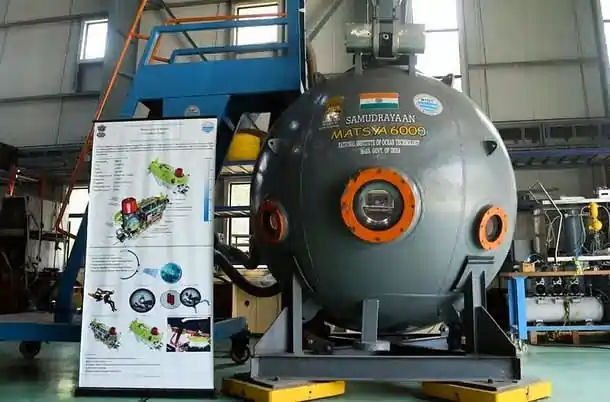
The Deep Ocean Mission acts as a preparatory phase for the Samudrayaan mission, which plans to deploy the indigenous Matsya 6000 submersible to a depth of 6,000 meters by December 2027 with a three-person crew. The lessons learned from these dives inform the design and operational protocols for Matsya 6000, ensuring safety and efficiency at extreme depths.
International Recognition
Union Earth Sciences Minister Jitendra Singh hailed this achievement as a “double conquest,” noting India’s progress in both space and deep-sea exploration. The success boosts India’s global standing in scientific research and demonstrates technological innovation on the international stage.
Why This News is Important
Advancement in Deep-Sea Exploration
This record-breaking dive highlights India’s growing expertise in operating in extreme marine environments. For students preparing for government exams, this achievement reflects India’s technological progress and strategic capabilities in science and defense sectors.
Technological Development
The dives provided essential data on submersible performance at extreme depths, crucial for the development of the Matsya 6000 submersible. It underscores India’s potential for innovation and indigenous technology in challenging environments.
Strategic Importance
The mission aligns with India’s strategic interests by securing access to undersea resources within its Exclusive Economic Zone (EEZ). It also supports sustainable exploitation of marine resources, critical for national economic and environmental goals.
International Collaboration
The Indo-French partnership illustrates the significance of international cooperation in science and technology. Such collaborations enhance India’s global scientific standing and encourage knowledge-sharing for cutting-edge research.
Inspiration for Future Generations
The mission inspires young scientists and engineers by emphasizing innovation, perseverance, and global collaboration. It reinforces the importance of scientific curiosity and research in achieving national and international milestones.
Historical Context
Early Deep-Sea Exploration
India’s journey into deep-sea research began in the late 20th century. CSIR-National Institute of Oceanography conducted dives aboard submersibles like Alvin (USA) and Nautile (France), reaching depths of 2,800 to 3,800 meters in the late 1990s and early 2000s. These missions laid the foundation for India’s current deep-sea capabilities.
Launch of Deep Ocean Mission
In 2021, the Indian government launched the Deep Ocean Mission, aiming to explore and harness ocean resources sustainably. Its focus includes deep-sea mining, biodiversity research, and ocean-based energy projects to support economic growth and technological advancement.
Development of Matsya 6000
The Matsya 6000, an indigenous submersible, is designed to carry a three-person crew to 6,000 meters. It is a flagship project under the Deep Ocean Mission and is expected to be operational by 2027, marking India’s readiness for extreme deep-sea exploration.
Key Takeaways from “India’s Deep Ocean Mission Achieves Record 5,002m Human Dive in North Atlantic”
| S.No | Key Takeaway |
|---|---|
| 1 | India’s Deep Ocean Mission achieved its deepest human dive at 5,002 meters in the North Atlantic. |
| 2 | The dive was conducted aboard the French submersible Nautile as part of an Indo-French collaboration. |
| 3 | The mission focuses on deep-sea mining, biodiversity research, and ocean-based energy projects. |
| 4 | Success of the dives provides insights for the development of the indigenous Matsya 6000 submersible. |
| 5 | Union Earth Sciences Minister Jitendra Singh described it as a “double conquest,” highlighting India’s achievements in space and deep-sea exploration. |
FAQs: Frequently Asked Questions
Q1: What is the deepest human dive achieved by India?
A1: India achieved a record 5,002-meter human dive in the North Atlantic on August 6, 2025, by retired Navy Commander Jatinder Pal Singh.
Q2: Who conducted the dives under the Deep Ocean Mission?
A2: Retired Navy Commander Jatinder Pal Singh and scientist Raju Ramesh from NIOT conducted the dives aboard the French submersible Nautile.
Q3: What is the main objective of India’s Deep Ocean Mission?
A3: The mission aims to explore and sustainably harness marine resources, including deep-sea mining, biodiversity research, and ocean-based energy projects.
Q4: What is the Samudrayaan mission?
A4: The Samudrayaan mission is an upcoming initiative under the Deep Ocean Mission, aiming to deploy the indigenous Matsya 6000 submersible to a depth of 6,000 meters with a three-person crew by 2027.
Q5: How does this achievement impact India’s global scientific standing?
A5: The achievement highlights India’s progress in deep-sea and space exploration, demonstrating technological innovation and strengthening its international reputation in scientific research.
Q6: Which countries collaborated on this mission?
A6: The dive was conducted as part of an Indo-French collaboration, emphasizing international cooperation in marine science.
Q7: What are the technologies tested during these dives?
A7: Technologies tested include submersible piloting, buoyancy control, and acoustic communication systems, essential for operating in extreme ocean depths.
Some Important Current Affairs Links