







Puducherry One-Time Regularisation Scheme 2025 explained: eligibility window, OBPS application process, fees, exclusions, and key exam takeaways for UPSC/PCS/SSC.
Puducherry’s One-Time Regularisation Scheme 2025
Puducherry Unveils One-Time Regularisation Scheme to Legalise Unauthorized Constructions
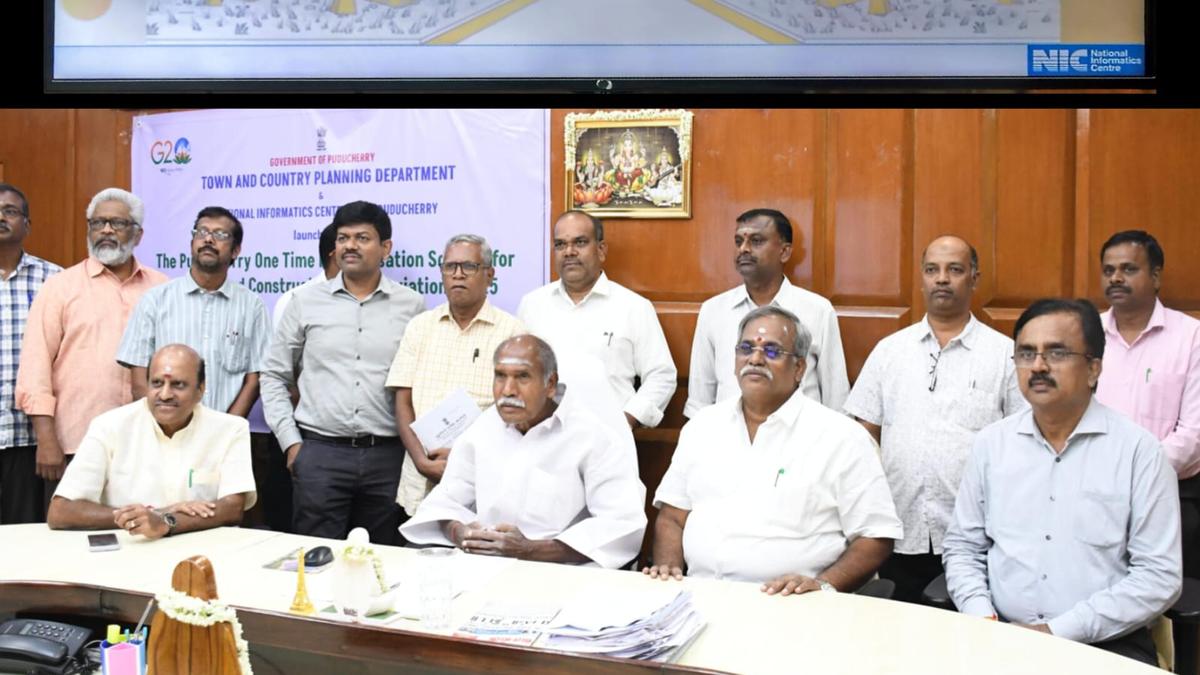
On July 22, 2025, the Government of Puducherry launched the One‑Time Regularisation Scheme 2025, a landmark initiative aimed at legalizing thousands of unauthorised constructions built between May 1, 1987, and July 16, 2025This scheme acknowledges decades of informal building activities and seeks to regularize them under a structured legal framework.
Who Can Benefit: Scope and Eligibility
The scheme covers residential, mixed‑use, commercial, and multi‑storey buildings constructed or modified without official clearance. However, it excludes constructions on encroached government land, plots lacking legal ownership, and government buildings, which are exempt from fee requirements Government‑aided schools are eligible for 50% concession on applicable regularisation fees.
Application Process via OBPS Portal
Applicants must apply online via the Online Building Permission System (OBPS) developed by the National Informatics Centre (NIC) The application window is open for one year from notification (issued on July 16, 2025). Required documents include verified building plans, ownership proofs, and compliance certificates as per Puducherry Building Bye‑laws and Zoning Regulations.
Fee and Scrutiny Structure
- Application fees: ₹ 5,000 for residential buildings; ₹ 10,000 for other structures.
- Scrutiny charges: ₹ 20 per sq.m for residential; ₹ 50 per sq.m for non‑residential buildings.
- Regularisation charges: ₹ 500 per sq.m for residential, ₹ 750 for mixed or special use, and ₹ 1,000 per sq.m for multi‑storey buildings.
These structured fee slabs ensure consistency and transparency
Safety & Compliance Requirements
All constructions must meet minimum safety norms, including adequate road width, parking, fire safety, lifts, facilities for persons with disabilities, and solar‑assisted systems. Only buildings that comply will be regularised into the legal fold
Implementation, Notices, and Infrastructure Benefits
Within six months of notification, notices will be sent to eligible but non-compliant property owners. The collected fees will constitute a corpus fund to finance urban infrastructure and civic improvements in Puducherry Authorities expect the scheme to resolve long-standing legal ambiguities, boost property values, and strengthen urban planning effectiveness.

B) Why This News Is Important
Legal Clarity and Citizen Relief
The scheme offers a one-time legal recourse for owners of structures built without formal approvals. Such regularisation ends years of legal uncertainty, allows access to loans, insurance, and sale, and safeguards against future penalties or demolition.
Urban Governance and Planning Efficiency
Bringing unregulated buildings into the legal framework enables better enforcement of zoning norms, safer infrastructure planning, and regulated growth. The scheme helps government agencies track, monitor, and plan utilities and civic amenities more effectively—a key governance element in exams covering public administration and urban policy.
Revenue Generation for the State
Through fees and scrutiny charges, Puducherry will generate significant revenue, which will be reinvested in infrastructure development. This aligns with fiscal policy questions in competitive exams concerning self-sustaining governance.
Exam-Relevant Reforms
Candidates preparing for exams like UPSC, state PCS, SSC, or Bank PO can directly cite this scheme under sections on urban development, housing regulations, and state-level policy measures. It also provides a contemporary example of balancing citizen welfare with regulatory norms.
C) Historical Context: Evolution of Regularisation Schemes in India
Since the early 2000s, several Indian states and Union Territories have periodically introduced regularisation schemes for unauthorized constructions (e.g., Delhi, Gujarat, Maharashtra). These schemes often emerge to legalise large numbers of non-compliant homes and commercial spaces, especially in rapidly urbanizing areas. While they help integrate informal settlements, critics argue they create moral hazards—encouraging future violations. In Andhra Pradesh, for instance, the government plans to reintroduce its Building Penalisation Scheme (BPS) and Layout Regularisation Scheme (LRS) from 2014‑19, citing similar challenges of unauthorised layouts and revenue loss However, courts have at times cautioned against frequent use of such schemes. Puducherry’s 2025 scheme follows this nationwide trend, while incorporating structured checks to mitigate repeat infringements.
D) Key Takeaways from “Puducherry One‑Time Regularisation Scheme 2025”
| Sl. No. | Key Takeaway |
|---|---|
| 1 | Scheme launched on July 22, 2025, covers unauthorised constructions built between 1 May 1987 and 16 July 2025 |
| 2 | Residential, commercial, mixed-use, and multi-storey buildings eligible; excluding encroachments, unauthorised layouts, and government-owned properties |
| 3 | Fee structure: ₹ 5,000 application (residential), ₹ 10,000 (others); Scrutiny at ₹ 20–₹ 50/sq.m; Regularisation ₹ 500–₹ 1,000/sq.m depending on type |
| 4 | Online portal OBPS (National Informatics Centre) used for submissions; compliance with safety norms mandatory for regularisation |
| 5 | Fees form a corpus fund for infrastructure; non-compliance may attract penalties, demolition or disconnection notices within six months |
FAQs
Why is this important for competitive exams?
It links to urban governance, land-use planning, fiscal policy, e-governance (OBPS), federal/UT administration, and regularisation vs. deterrence debates—highly relevant for UPSC/PCS/SSC/Banking current affairs.
What is the Puducherry One-Time Regularisation Scheme 2025?
It’s a one-year window to legalise unauthorised constructions made between May 1, 1987 and July 16, 2025, subject to payment of fees and compliance with safety/by-law norms.
Who launched the scheme and when was it notified?
The Government of Puducherry notified it on July 16, 2025 (launch reported on July 22, 2025).
Which types of buildings are eligible?
Residential, commercial, mixed-use and multi-storey buildings, provided they meet minimum safety and planning norms.
What is explicitly not eligible?
Constructions on encroached government land, buildings without clear title/ownership, and violations that cannot be regularised under planning norms.
Are government buildings covered?
Government buildings are generally outside the fee ambit; government-aided schools can get 50% concession on fees (as reported).
Where and how can applicants apply?
Through the Online Building Permission System (OBPS) portal developed by NIC.
What documents are typically required?
Ownership/title proof, as‑built/verified plans, structural safety certificate, fire NOC (where applicable), and compliance statement with Building Bye‑laws/Zoning Regulations.
How long will the application window remain open?
One year from the date of notification.
What are the application fees?
Indicatively, ₹5,000 for residential and ₹10,000 for other categories.
What are the scrutiny charges?
Around ₹20/sq.m for residential and ₹50/sq.m for non-residential constructions.
What are the regularisation charges?
Typically ₹500/sq.m (residential), ₹750/sq.m (mixed/special use), and ₹1,000/sq.m (multi‑storey).
Will every non-compliant building be regularised automatically?
No. Only those satisfying minimum safety, fire, accessibility, road width, parking, lift (if required), and solar provisions will qualify.
What happens if an owner doesn’t apply?
Authorities may issue notices within six months, and non-compliant buildings could face penalties, disconnection, or demolition.
How will the government use the collected fees?
They will be pooled into a corpus fund to improve urban infrastructure.
Does regularisation grant immunity from all past violations?
Only for violations covered by the scheme. Criminal liabilities, environmental violations, or litigation orders may still stand.
Is there any appeal process if an application is rejected?
Generally, schemes provide an appeal/review mechanism—candidates should check the notification/OBPS guidelines.
Is this regularisation the same as compounding of offences?
No. Compounding is penalty for minor deviations; regularisation converts unauthorised construction into a legally compliant one under a special window.
Some Important Current Affairs Links




