






ICMR Malaria Vaccine AdFalciVax to Be Commercialised, India’s first indigenous multi-stage malaria vaccine, set for commercialization. Key facts, strategy, and exam-relevant takeaways for UPSC, SSC,
ICMR to Commercialise AdFalciVax – India’s Indigenous Multi‑Stage Malaria Vaccine
Introduction to AdFalciVax
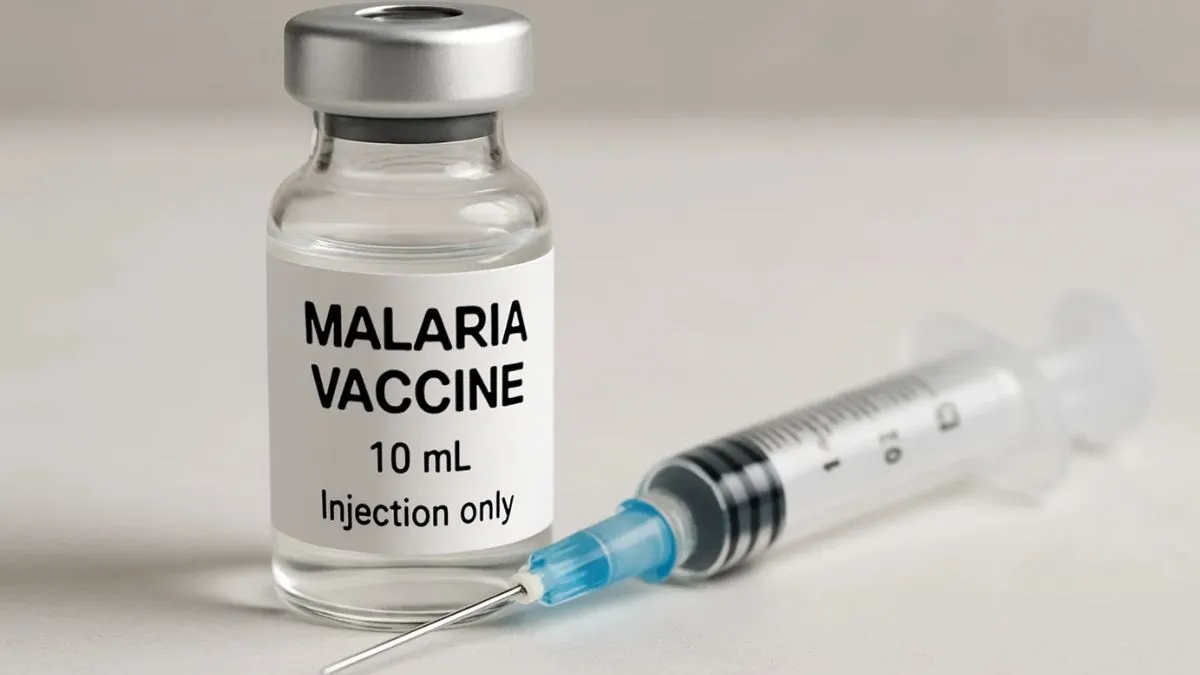
The Indian Council of Medical Research (ICMR), through its Regional Medical Research Centre in Bhubaneswar (ICMR‑RMRCBB), has announced the commercialization of AdFalciVax, a pioneering recombinant, chimeric multi‑stage malaria vaccine targeting Plasmodium falciparum. This marks a significant milestone in India’s journey toward malaria elimination, aligning with national public health goals and the Make in India initiative
Vaccine Design & Mechanism
AdFalciVax is ingeniously engineered to combat malaria at two critical stages: the pre‑erythrocytic phase (full-length PfCSP protein) to prevent human infection, and the transmission‐blocking phase (PfsPro6C antigen composed from Pfs230 and Pfs48/45 domains) to disrupt mosquito transmission cycles The vaccine is produced using Lactococcus lactis as a recombinant expression system, offering scalability, stability, and cost-efficiency
Pre‑Clinical Results & Stability
In pre-clinical animal studies, AdFalciVax demonstrated over 90% protection against infection in mice, with indications of long-lasting immunity that may translate into years in humans. It also showcases excellent thermal stability, retaining effectiveness for over nine months at room temperatures—crucial for vaccine deployment in tropical regions and rural settings
Commercialisation Strategy & Public‑Private Collaboration
In July 2025, the ICMR issued an Expression of Interest (EoI) inviting pharmaceutical companies and manufacturers to partner through non‑exclusive technology transfer agreements. The selected partners will undertake further development, regulatory approvals, clinical trials, and production, while ICMR will provide technical guidance and expert support throughout the process. ICMR will maintain intellectual property rights and will receive 2% royalties on net sales under its IP policy
Projected Timeline
Commercialization is projected to unfold over approximately seven years, divided into four defined stages, each with a built‑in six‑month buffer. This time frame spans from advanced R&D through to full development and scaling for public use
Implications for Public Health & Exam Relevance
If successfully developed and deployed, AdFalciVax could significantly reduce India’s malaria burden—especially P. falciparum cases in high-risk tribal and rural regions. Its indigenous origin may also ensure better affordability, supply resilience, and alignment with national health policy objectives including malaria elimination by 2030 This makes it a key topic in public health, bio‑technology innovation, and government policy segments of competitive exams across Banking, Railways, SSC, PCS, UPSC, Defence, and Teaching syllabuses.
B) Why This News Is Important
Strategic Advance in Malaria Elimination
India reports a substantial share of the World Health Organization’s estimated malaria cases in the South-East Asia region. AdFalciVax, uniquely designed to block both infection and transmission, represents a major strategic advance in meeting the government’s goal of eliminating malaria by 2030
Boost to Indigenous Biotech Capability
The commercialization signifies a leap in local biotechnological capability. Developed entirely in Indian laboratories under ICMR, AdFalciVax reduces dependence on imported vaccines and strengthens domestic innovation ecosystems
Model Public–Private Partnership
ICMR’s EoI-based tech-transfer model, with non-exclusive licensing and ICMR-led technical mentorship, offers a replicable framework for future public–private collaborations in health innovation—balancing IP ownership, royalties, and regulatory roles
Exam-Relevant Dimensions
This development spans key topics like science & technology, health policy, Make in India, public-private partnership, and biotechnology regulations, all of which are crucial in government exam syllabi, particularly for UPSC, State PSCs, SSC, banking, and railways.
C) Historical Context
Long History of Malaria in India
Malaria has plagued India for centuries, especially in tribal and remote regions. Over recent decades, national programmes like NVBDCP (National Vector Borne Disease Control Programme) have drastically reduced mortality—from over 1,000 deaths in the 1990s to under 100/year by 2022 according to official data (though WHO estimates higher figures)
Vaccine Development Efforts Globally
WHO-approved malaria vaccines like RTS,S/AS01 (Mosquirix) and R21/Matrix‑M offer partial protection (33–67% efficacy) and require multiple boosters. They target only the pre‑erythrocytic (CSP) stage, not transmission phases, limiting their community impact
India’s Biotech & IP Policy
Over the past decade, India has promoted indigenous R&D in healthcare, under policies like Make in India, biotechnology missions, and strengthened regulatory frameworks. ICMR’s IP policy encourages non-exclusive licensing, royalties, and Public–Private Intellectual Property collaboration
D) Key Takeaways from “ICMR to Commercialise Indigenous Malaria Vaccine”
| S. No. | Key Takeaway |
|---|---|
| 1 | AdFalciVax is an indigenously developed recombinant multi-stage malaria vaccine targeting Plasmodium falciparum, developed by ICMR‑RMRC Bhubaneswar. |
| 2 | It offers dual-stage protection: prevention of human infection using full-length CSP, and reduction of community transmission via the PfsPro6C antigen. |
| 3 | Pre-clinical trials show >90% efficacy in mice, durable immunity, and thermal stability for over nine months at room temperature. |
| 4 | ICMR has issued an Expression of Interest (EoI) in July 2025 for non-exclusive technology transfer to qualified manufacturers, who will handle further development, trials, and commercialization. |
| 5 | The development plan spans 7 years in four stages, with ICMR retaining IP rights and receiving 2% royalty on net sales under its IP policy. |
FAQs: Frequently Asked Questions
1. What is AdFalciVax?
AdFalciVax is India’s first indigenous multi-stage recombinant malaria vaccine developed by ICMR‑RMRC Bhubaneswar. It targets both the infection and transmission stages of Plasmodium falciparum malaria.
2. Who developed the AdFalciVax vaccine?
The Indian Council of Medical Research (ICMR) through its Regional Medical Research Centre, Bhubaneswar (RMRCBB) developed the vaccine.
3. What are the key proteins used in the AdFalciVax vaccine?
AdFalciVax uses two antigens: PfCSP (circumsporozoite protein) to block infection and PfsPro6C (a chimeric protein with domains from Pfs230 and Pfs48/45) to block transmission in mosquitoes.
4. How does ICMR plan to commercialize the vaccine?
ICMR has invited non-exclusive tech transfer partnerships through an Expression of Interest (EoI). Selected partners will develop and produce the vaccine with ICMR’s support.
5. How does this vaccine differ from the RTS,S/AS01 malaria vaccine?
Unlike RTS,S/AS01 which only targets the pre-erythrocytic stage, AdFalciVax targets both infection and transmission, offering a broader protection approach.
6. When is the vaccine expected to be available?
The commercialization and deployment of AdFalciVax is planned over a 7-year timeline, divided into four development stages.
7. Is this vaccine WHO-approved?
As of July 2025, AdFalciVax has shown successful pre-clinical results and awaits clinical trials and regulatory approval before seeking WHO prequalification.
Some Important Current Affairs Links