










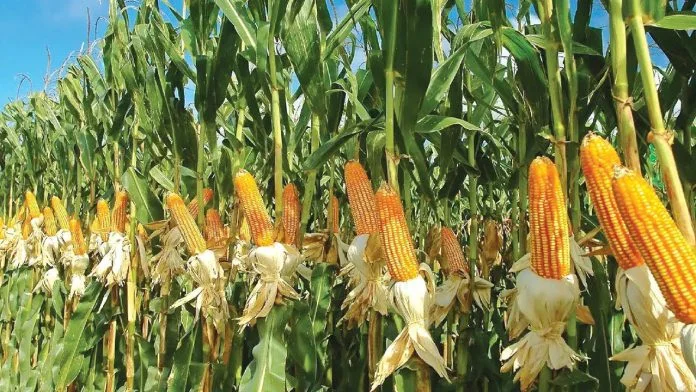
Maize production target India set to double by 2047 as the 11th India Maize Summit 2025 unveils roadmap for a sustainable maize revolution through scientific farming, ethanol use, and state-driven initiatives.
India’s 11th Maize Summit Sparks a “Maize Revolution” 🚜
Union Minister Launches Summit in New Delhi
On 7 July 2025, the 11th India Maize Summit was inaugurated in New Delhi by Union Agriculture Minister Shivraj Singh Chouhan, organized jointly by FICCI and the Indian Institute of Maize Research (IIMR). The summit laid out a multi-faceted roadmap towards a transformative “Maize Revolution” aimed at raising production, boosting farmer income, and advancing sustainable maize farming practices
Aiming for Ambitious Production Targets
India’s maize production has increased five-fold since 1990, now standing at over 42 million tonnes, with a bold target of 86 million tonnes by 2047. However, the nation still lags behind the global average of maize yield, at around 3.7 tonnes per hectare, highlighting a clear gap yet to be bridged
Lab‑to‑Land: Bridging Research and Farming
Under the Viksit Krishi Sankalp Abhiyan, the government deployed over 11,000 scientists and agriculture officers across 7,000–8,000 villages to ensure that scientific farming practices reach rural farmers—truly translating lab innovations into field-level impact
Uttar Pradesh: A State-Level Success Story
Uttar Pradesh has emerged as a case study in maize-led progress. Through the Accelerated Maize Development Program, maize is now cultivated across 540,000 hectares in 24 districts, with yields climbing to 34 quintals/ha and poised to reach 40 quintals/ha. State authorities are also encouraging maize-based industries, including fibre production and biodegradable plastic alternatives, with around 15 processing firms already active
Maize: Beyond Food Security
Experts highlighted the critical role of maize in India’s long-term goals. Dr. H.S. Jat of ICAR–IIMR says achieving 8–9% annual growth is essential to meet the E30 ethanol blending target by 2030, requiring maize production to hit 65–70 million tonnes. Hybrid maize varieties with starch content enhanced to 42%, and even up to 64–65% fermentable content, are in development to bolster ethanol output
Market Trends: Rapid Rise in Demand
According to YES Bank’s Sunjay Vuppuluri, maize cultivation area in India has expanded by 31% over the past decade, with production surging 75%. Yet, demand—driven by poultry feed (51%) and ethanol production (18%)—is growing faster than supply, with demand up 6.7% annually, outpacing the 5.8% supply growth rate

Why This News is Important
📈 Crucial for Exam Aspirants
This summit underscores India’s strategic approach to achieving food security, energy independence, and rural prosperity—central themes in UPSC, state PSCs, IBPS, and other government exam syllabi.
Policy & Economic Linkages
The “Maize Revolution” encapsulates vital policy mechanisms like MSP procurement, scientific farming outreach, public‑private partnerships, and value‑chain initiatives—perfect examples for Macro‑ and Agricultural Economics.
Science & Tech Relevance
Scientific innovations such as high‑starch hybrids, lab‑to‑land deployment, and digital agriculture reflect the intersection of Science & Technology with green growth, an important domain for upcoming exam questions.
Environmental & Sustainability Angle
The push for sustainable maize cultivation—including biodegradable alternatives, eco‑friendly farming, and climate‑smart techniques—directly ties into environmental governance and sustainable development topics.
Historical Context: Roots and Evolution of Maize Farming in India
- 1990s baseline: India’s maize output was merely 10 million tonnes, with about 2 tonnes/ha yields.
- Progress through science: The Green Revolution spread wheat and rice, while maize saw gradual inclusion through hybrid seed introduction and mechanization.
- Shifting focus: In recent years, maize was added to biofuel agendas and livestock feed industries. Government schemes like MGNREGA-linked maize plantations and ethanol mandates have enhanced its relevance.
- Current acceleration: The 11th summit continues decades of cumulative efforts from research institutions (ICAR/IIMR), state governments, and private stakeholders to establish maize as a diversified, high-demand crop.
Key Takeaways from “11th Maize Summit”
| S. No. | Key Takeaway |
|---|---|
| 1 | Production Aim: India targets to raise maize output from ~42 MT to 86 MT by 2047. |
| 2 | Yield Gap: Average yield is 3.7 t/ha, below global standards and needs enhancement. |
| 3 | Lab‑to‑Land Push: 11,000 scientists deployed to villages under VKS Abhiyan. |
| 4 | UP Model: UP’s maize cultivation spans 5.4 lakh ha; yields climbing to 34–40 q/ha. |
| 5 | Ethanol Strategy: Maize crucial for E30 blending—annual growth of 8–9% required. |
FAQs: Frequently Asked Questions
1. What is the objective of the 11th India Maize Summit 2025?
The summit aims to launch a national-level “Maize Revolution” to boost maize production, ensure food and energy security, and increase farmers’ income through sustainable practices and value chain development.
2. Who organized the 11th Maize Summit?
The summit was jointly organized by FICCI and the Indian Institute of Maize Research (IIMR).
3. What is India’s current maize production and what is the target?
India currently produces 42 million tonnes of maize and has set a target of 86 million tonnes by 2047.
4. What is the significance of maize in India’s ethanol blending goals?
Maize is projected to be a key feedstock for achieving the E30 ethanol blending target by 2030, requiring maize output of 65–70 million tonnes.
5. What government initiative is helping take agricultural research to farmers?
The Viksit Krishi Sankalp Abhiyan (VKSA) has deployed over 11,000 agriculture experts to promote scientific maize cultivation in villages.
6. Which state has become a model for maize development?
Uttar Pradesh has become a leading state under the Accelerated Maize Development Program, increasing maize yield and promoting maize-based industries.
7. What are some non-food uses of maize being promoted?
Uses include biodegradable plastics, fiber production, ethanol fuel, and animal feed, supporting sustainability and industrial expansion.
Some Important Current Affairs Links




