





Multilingual AI in Railways gains momentum as BHASHINI and Indian Railways partner to enhance digital services in 22 Indian languages. A key step under Digital India for inclusive governance.
Introduction: Multilingual AI Meets India’s Rail Network
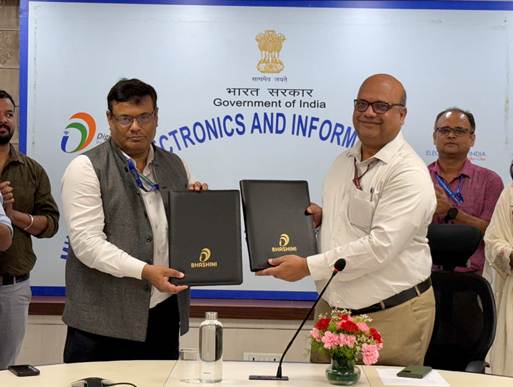
On June 9, 2025, the Digital India Bhashini Division (DIBD) and the Centre for Railway Information Systems (CRIS) entered into a landmark Memorandum of Understanding (MoU) in New Delhi. The goal: integrate BHASHINI’s advanced multilingual AI technologies—such as Automatic Speech Recognition (ASR), Text-to-Text Translation, Text-to-Speech (TTS), and Optical Character Recognition (OCR)—into key Indian Railways platforms like NTES and RailMadad, supporting 22 scheduled Indian languages
Revolutionary Impact on Passenger Engagement
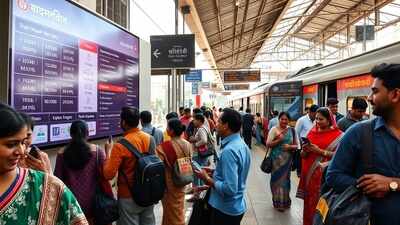
This partnership is poised to redefine how passengers interact with railway services. AI-powered chatbots and voice assistants will enable real-time query handling, ticket booking, and grievance redressal in the user’s native language. At physical counters and digital kiosks, passengers will benefit from intuitive multilingual interfaces
Enhancing Digital Rail Accessibility
The integration extends across multiple touchpoints: websites, mobile apps, inquiries at counters, call centers, and on-station kiosks. AI tools will provide live speech-based support, ensuring user convenience across diverse linguistic backgrounds
Scalable Infrastructure & Deployment Strategy
The MoU outlines a layered deployment approach: beginning with pilot launches in select regions, followed by national scale-up. Services will run on both cloud and on-premises systems to maintain performance and reliability across India’s vast railway network
Alignment with the Digital India Vision
This initiative exemplifies the Digital India mission’s objective to empower users across socioeconomic and linguistic spectrums. It reinforces inclusive governance by making public affairs accessible in all major Indian languages
Why This News is Important
Driving Accessibility in Public Services
This collaboration demonstrates how AI can dismantle barriers of communication, significantly increasing accessibility for non-Hindi and non-English users. It’s a major boost for public utility inclusivity—a vital focus area in exams like UPSC, SSC, RRB, IBPS, NTPC, and more.
Real‑World Application of AI & Innovation
Government aspirants, including those targeting Defence, Civil Services, and Railways, often test knowledge of current technology trends. This story underlines how AI and NLP are now being used in large-scale public infrastructure.
Governance & Policy Relevance
Understanding MoUs, public-private partnerships, and national initiatives under Digital India is critical for Administrative roles (e.g. PSCS, IAS, IPS). This is a practical case study in policy-driven tech adoption.
Socio‑Cultural Equity & Inclusion
Highlighting support for 22 scheduled languages underscores the importance of linguistic diversity—valuable context for teaching, civil service, and social policy examinations.
Historical Context: India’s Multilingual AI Journey
- Launch of Bhashini (Aug 2022): Developed by MeitY under the National Language Translation Mission, Bhashini seeks to democratize government services via language AI
- Early Bhashini milestones: Used to translate key speeches: PM’s address in Tamil (Dec 2023), FM’s Budget speech in 2024
- Beyond Government: MoUs with Snapdeal, Federal Bank; apps like ONDC’s Saarthi and Rajasthan’s Pehchan leveraged Bhashini for vernacular usage
- Railways’ Digital Shift: CRIS has pioneered large‑scale technology in Indian Railways—ticketing, dispatch, enquiry systems. Adding Bhashini marks another evolutionary leap in Indian Railways’ digital customer service.
Key Takeaways from “Multilingual AI for Railways”
| No. | Key Takeaway |
|---|---|
| 1 | BHASHINI‑CRIS MoU (9 June 2025): Signed in New Delhi to integrate multilingual AI in railways services. |
| 2 | Supports 22 Indian Languages: Leveraging ASR, TTS, OCR, and translation across platforms like NTES and RailMadad. |
| 3 | Wide Deployment: These AI tools will be available via mobile apps, websites, kiosks, counters, and call centers. |
| 4 | Inclusive Public Utility: Initiative aligns with Digital India’s goals—enhancing accessibility & transparency. |
| 5 | Impact on Exams: Relevant for tech awareness, public policy, and governance sections in exams for Railways, Banking, Defence, Teaching, Civil services. |
Frequently Asked Questions (FAQs)
Q1. What is BHASHINI?
Answer: BHASHINI (Bhasha Interface for India) is a government-backed initiative under the Ministry of Electronics and Information Technology, aiming to promote digital public infrastructure through multilingual AI technologies such as Automatic Speech Recognition (ASR), Machine Translation (MT), Text-to-Speech (TTS), and Optical Character Recognition (OCR).
Q2. What is the purpose of the MoU between Indian Railways and BHASHINI?
Answer: The MoU aims to integrate multilingual AI technologies into Indian Railways’ digital services like NTES and RailMadad, enhancing accessibility for users in 22 scheduled Indian languages.
Q3. What benefits will passengers experience due to this partnership?
Answer: Passengers will benefit from AI-powered voice assistance, chatbots, and real-time multilingual query handling via mobile apps, websites, kiosks, counters, and call centers.
Q4. How does this initiative align with the Digital India vision?
Answer: It promotes inclusivity by ensuring language is not a barrier in accessing government services, aligning with the goals of Digital India to make digital infrastructure accessible to all citizens.
Q5. Why is this development relevant for competitive exam aspirants?
Answer: It is an important example of AI in governance, digital transformation, and inclusive public services—topics often asked in Civil Services, SSC, RRB, Banking, and other government exams.
Some Important Current Affairs Links