









Introduction: India’s Rich Natural Heritage
India is home to a wide variety of ecosystems, from tropical rainforests to deserts. Among these, the Desert National Park, located in the state of Rajasthan, holds special significance due to its distinctive arid environment and unique wildlife.
Location and Geography
Desert National Park is situated in the western Indian state of Rajasthan, primarily in the Jaisalmer and Barmer districts. Covering an expansive area of 3,162 square kilometers, the park represents the Thar Desert ecosystem, one of the most fragile and least studied ecological zones in India.
Unique Flora and Fauna
Despite its dry conditions, Desert National Park is home to a variety of flora and fauna. Vegetation primarily includes thorny bushes, cacti, and xerophytes. The park is especially famous for the critically endangered Great Indian Bustard, which finds refuge here. Other notable species include the blackbuck, chinkara, desert fox, and Indian eagle-owl.
Importance for Environmental Conservation
The park plays a crucial role in biodiversity conservation, especially for species adapted to desert climates. It is also a key habitat under India’s Project Bustard and features in various eco-tourism initiatives aimed at promoting sustainable development in the region.
Tourism and Educational Value
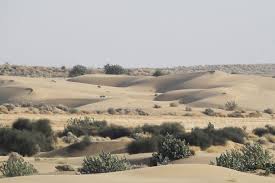
Desert National Park is a significant tourist attraction, drawing researchers, ecologists, and travelers alike. Its sand dunes, fossil remains (some dating back 180 million years), and diverse bird population make it an educational and ecological treasure.
📌 B) Why This News Is Important
Relevance to Environmental Awareness and Exams
This news is significant as it highlights a major biodiversity hotspot in India, which is a common topic in general studies, geography, environment, and wildlife conservation sections of government exams like UPSC, SSC, and State PCS.
Great Indian Bustard in the Spotlight
With the Great Indian Bustard on the brink of extinction, the Desert National Park becomes a critical area in discussions on endangered species and conservation efforts—key areas in current affairs and environmental studies.
📚 C) Historical Context
Establishment and Conservation History
The Desert National Park was declared a protected area in 1980 to preserve the unique desert ecosystem and its wildlife. Historically, this region was neglected in terms of conservation due to its harsh climate. However, growing awareness about species like the Great Indian Bustard led to increased conservation efforts, including its inclusion under the Wildlife Protection Act of 1972.
Project Bustard and Global Significance
The park became a focal point of India’s Project Bustard, aimed at protecting one of the world’s heaviest flying birds. With support from international conservation bodies, the Desert National Park is now recognized globally for its ecological importance.
📋 D) Key Takeaways from “Desert National Park in Rajasthan”
| S. No. | Key Takeaway |
|---|---|
| 1 | Desert National Park is located in Rajasthan’s Jaisalmer and Barmer regions. |
| 2 | It covers an area of about 3,162 sq km in the Thar Desert. |
| 3 | The park is home to the critically endangered Great Indian Bustard. |
| 4 | Established in 1980 to preserve the desert ecosystem and biodiversity. |
| 5 | It is part of India’s Project Bustard and draws global conservation focus. |
FAQs: Frequently Asked Questions
Q1. In which state is Desert National Park located?
Ans: Rajasthan
Q2. What is the significance of Desert National Park in India?
Ans: It preserves the fragile Thar Desert ecosystem and is a habitat for endangered species like the Great Indian Bustard.
Q3. Which bird species found in Desert National Park is critically endangered?
Ans: The Great Indian Bustard
Q4. When was Desert National Park established?
Ans: 1980
Q5. What kind of terrain does Desert National Park represent?
Ans: Arid and semi-arid terrain of the Thar Desert
Some Important Current Affairs Links