









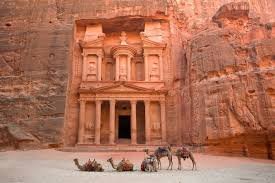
Petra, the ancient city in Jordan, is famously known as the Rose City due to the distinctive pinkish-red hue of its rock-cut architecture. This UNESCO World Heritage Site is one of the most significant archaeological treasures of the world and a major tourist attraction in the Middle East. It showcases the architectural brilliance and advanced engineering skills of the Nabataeans, the ancient civilization that inhabited the region around the 4th century BCE.
Historical Significance of Petra
Petra served as the capital of the Nabataean Kingdom and was a thriving trade hub, connecting major trading routes between Arabia, Egypt, and the Mediterranean. The city’s unique rock-cut structures, including the famous Al-Khazneh (The Treasury) and Ad-Deir (The Monastery), reflect the remarkable craftsmanship of the Nabataeans. Over centuries, Petra remained hidden from the world until Swiss explorer Johann Ludwig Burckhardt rediscovered it in 1812.
Architectural Marvels of Petra
Petra is best known for its monumental buildings, which were intricately carved into sandstone cliffs. The Siq, a narrow canyon that serves as the main entrance to the city, leads to Al-Khazneh, one of the most photographed structures in Petra. Other significant sites include the Royal Tombs, the Roman Theater, and the High Place of Sacrifice, each contributing to Petra’s reputation as an archaeological wonder.
Why Petra is Called the Rose City
The name “Rose City” comes from the color of the sandstone cliffs, which change shades throughout the day depending on the sunlight. At dawn and sunset, the rocks take on a deep rose-pink color, giving Petra its poetic nickname. The natural beauty and historical significance of Petra make it one of the New Seven Wonders of the World.
Tourism and Economic Impact
Petra is one of Jordan’s most important tourist destinations, attracting millions of visitors every year. The tourism industry surrounding Petra significantly contributes to Jordan’s economy, providing employment opportunities and promoting cultural exchange. Efforts by the Jordanian government and UNESCO ensure the preservation and conservation of this historic site.

Why This News is Important
1. Cultural and Historical Importance
Petra is not just an archaeological site but a symbol of ancient civilizations and their engineering brilliance. Understanding its significance is crucial for history and geography enthusiasts.
2. Relevant for Competitive Exams
For students preparing for government exams, questions related to world heritage sites, ancient civilizations, and geographical locations are common. Knowledge of Petra’s history and importance can be useful in various exams.
3. Boost to Global Tourism
Petra’s recognition as a UNESCO World Heritage Site and a New Wonder of the World continues to boost global tourism, reinforcing the importance of preserving ancient monuments.
Historical Context: The Legacy of Petra
Petra’s history dates back to the 4th century BCE when it was established by the Nabataeans. Due to its strategic location, the city flourished as a major trade center for silk, spices, and other luxury goods. The Nabataeans developed advanced water management systems, including dams and reservoirs, to sustain their city in the arid desert region. However, with the decline of trade routes and a series of earthquakes, Petra was gradually abandoned and remained hidden for centuries until its rediscovery in the 19th century.
Key Takeaways from Petra – The Rose City
| Sr. No. | Key Takeaway |
|---|---|
| 1 | Petra is known as the Rose City due to the pinkish-red hue of its rock structures. |
| 2 | It was the capital of the Nabataean Kingdom and a major trade hub in ancient times. |
| 3 | Petra was rediscovered in 1812 by Swiss explorer Johann Ludwig Burckhardt. |
| 4 | It is a UNESCO World Heritage Site and one of the New Seven Wonders of the World. |
| 5 | Petra remains a significant tourist destination, contributing to Jordan’s economy. |
FAQs: Frequently Asked Questions
1. Why is Petra called the Rose City?
Petra is called the Rose City because of the pinkish-red color of the sandstone cliffs, which change hues with the sunlight.
2. Who built the ancient city of Petra?
Petra was built by the Nabataeans, an ancient Arab civilization that established the city as a major trading hub.
3. When was Petra rediscovered?
Petra was rediscovered in 1812 by Swiss explorer Johann Ludwig Burckhardt.
4. What are the famous monuments in Petra?
Some of the famous monuments in Petra include Al-Khazneh (The Treasury), Ad-Deir (The Monastery), and The Royal Tombs.
5. Why is Petra important for competitive exams?
Petra is an important topic for exams as it is a UNESCO World Heritage Site, a New Wonder of the World, and a significant archaeological and historical landmark.
Some Important Current Affairs Links