


NASA astronaut Sunita Williams and her crew have returned to Earth after their mission in space. But what happens once astronauts land back on Earth? The journey doesn’t end with landing; a series of medical tests, rehabilitation programs, and reintegration procedures follow. This article explores the post-landing recovery process for astronauts, its significance, and how it has evolved over time.
Post-Landing Medical Evaluation and Quarantine
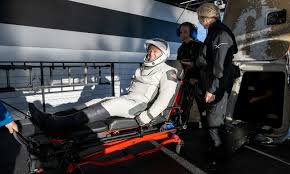
The first step after landing is a medical examination. Astronauts undergo extensive medical checks to assess their physical health, muscle strength, and balance. The effects of prolonged weightlessness on the human body, including bone density loss and cardiovascular changes, require immediate attention. In some cases, astronauts are also placed under quarantine to ensure they have not been exposed to any unknown pathogens in space.
Physical Rehabilitation: Restoring Muscle and Bone Strength
Living in microgravity for extended periods causes muscle atrophy and bone loss. Once back on Earth, astronauts start a rigorous rehabilitation process to regain strength. Special exercises and physiotherapy sessions help in restoring their ability to walk and perform everyday activities. This phase is crucial to ensuring astronauts can return to normal life without long-term health issues.
Psychological Readjustment to Earth’s Environment
The sudden shift from a zero-gravity environment to Earth’s gravity can be overwhelming. Astronauts often experience dizziness, balance issues, and spatial disorientation. They undergo psychological counseling to readjust to Earth’s conditions, cope with isolation effects, and reintegrate into society.
Scientific Debriefing and Mission Analysis
Post-mission debriefings are conducted where astronauts provide valuable insights into their experience. They discuss challenges faced during the mission, spacecraft performance, and the effectiveness of onboard systems. This information helps NASA improve future space missions. Data collected from their bodies and medical tests also contribute to research on human spaceflight.
Public Engagement and Educational Outreach
Astronauts often participate in public events, share their experiences, and inspire young minds. They visit schools, universities, and scientific forums to talk about their journey and the significance of space exploration. Such outreach programs encourage students to pursue careers in STEM (Science, Technology, Engineering, and Mathematics).
Why This News is Important?
1. Contribution to Space Medicine and Human Health
Understanding how the human body reacts to long-term space travel is essential for future missions to the Moon and Mars. Sunita Williams’ return provides critical data that will shape astronaut training and medical procedures.
2. Development of Future Space Missions
Every space mission provides lessons for upcoming explorations. Studying the health and performance of returning astronauts helps refine strategies for extended deep-space travel.
3. Technological Advancements in Space Travel
Space missions drive technological innovation. The data collected from Sunita Williams’ return can lead to improvements in spacecraft design, landing techniques, and astronaut training.
4. Inspiration for Young Minds
As one of the most renowned astronauts, Sunita Williams’ journey motivates students and aspiring scientists. Her achievements encourage young individuals, especially women, to pursue careers in space science and engineering.
5. Strengthening International Space Collaboration
With multiple countries participating in space exploration, her return signifies global cooperation in advancing space research and technology. NASA’s collaboration with space agencies worldwide fosters progress in space exploration.
Historical Context: How Astronaut Recovery Has Evolved Over Time
1. Apollo Missions: Early Challenges in Astronaut Recovery
During the Apollo era (1960s–70s), astronauts landed in the ocean and were retrieved by naval ships. The re-adaptation process was not as advanced as today, and astronauts faced severe balance issues due to microgravity exposure.
2. Space Shuttle Program: Introduction of Advanced Medical Protocols
The Space Shuttle Program (1981-2011) introduced advanced medical tests and rehabilitation protocols. Astronauts began undergoing structured recovery programs immediately after landing.
3. International Space Station (ISS): Long-Duration Spaceflight Adaptations
With the establishment of the ISS, astronauts started spending months in space, leading to the development of specialized exercise routines in orbit to counteract muscle loss. Today’s recovery programs are far more advanced due to ISS research.
4. Present and Future: Preparing for Deep Space Missions
NASA and private space agencies are now focusing on long-duration missions to Mars and beyond. The lessons learned from astronauts like Sunita Williams are shaping the future of deep-space exploration, making space travel safer for humans.
Key Takeaways from Sunita Williams’ Return to Earth
| S. No. | Key Takeaway |
|---|---|
| 1 | Sunita Williams and her team have successfully returned to Earth after their space mission. |
| 2 | Astronauts undergo extensive medical tests, rehabilitation, and psychological readjustment post-landing. |
| 3 | Data collected from returning astronauts help in advancing space medicine and future space missions. |
| 4 | Sunita Williams’ return serves as an inspiration for students and aspiring astronauts worldwide. |
| 5 | The recovery process for astronauts has evolved significantly, from the Apollo era to modern-day missions. |
FAQs: Frequently Asked Questions
1. Who is Sunita Williams, and why is she important?
Sunita Williams is a NASA astronaut of Indian origin, known for her contributions to space exploration. She has spent over 321 days in space and holds records for multiple spacewalks by a female astronaut. Her missions provide valuable insights into human spaceflight.
2. What happens to astronauts after they land back on Earth?
Astronauts undergo medical evaluations, rehabilitation programs, psychological readjustment, and scientific debriefings. These processes help them recover from the effects of microgravity and contribute to space medicine research.
3. How does microgravity affect astronauts’ bodies?
Prolonged exposure to microgravity causes muscle atrophy, bone density loss, cardiovascular changes, and balance issues. To counteract these effects, astronauts follow strict exercise routines while in space and undergo rehabilitation after landing.
4. What lessons from Sunita Williams’ return are important for future space missions?
Her return provides insights into post-mission recovery, space medicine, and the psychological effects of space travel. These lessons will help NASA and other space agencies prepare for long-duration missions to Mars and beyond.
5. How do astronauts regain their strength after returning to Earth?
They follow specialized rehabilitation programs that include physiotherapy, strength training, and balance exercises. NASA also monitors their health to understand the long-term effects of space travel.
Some Important Current Affairs Links