








Maha Kumbh Mela 2025: Record-Breaking Gathering, History & Significance
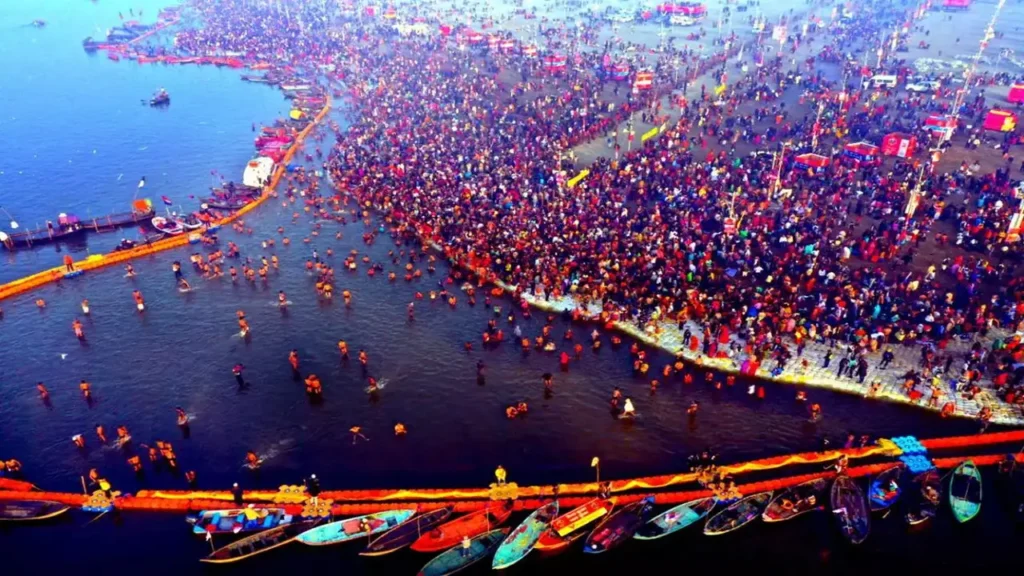
The Maha Kumbh Mela 2025, held in Prayagraj, Uttar Pradesh, from January 13 to February 26, 2025, witnessed an unprecedented gathering of over 660 million devotees. This massive congregation, nearly twice the population of the United States, underscores the festival’s profound spiritual significance and its unparalleled scale.
Confluence of Devotion at Triveni Sangam
Central to the festival is the Triveni Sangam, the sacred confluence of the Ganga, Yamuna, and the mythical Saraswati rivers. Pilgrims believe that taking a holy dip at this juncture purifies the soul and absolves one of sins, facilitating liberation from the cycle of rebirth. The auspicious timing of this year’s Maha Kumbh, marked by a rare celestial alignment occurring once every 144 years, added to the event’s sanctity.
Global Participation and Notable Attendees
The festival drew participants from all walks of life, including political leaders, celebrities, and international figures. Prime Minister Narendra Modi described the event as a “Mahayajna of Unity,” highlighting its role in uniting the nation’s collective consciousness. International attendees, such as Chris Martin of Coldplay, further emphasized the festival’s global appeal.
Infrastructure and Crowd Management
Managing such a colossal influx required meticulous planning and robust infrastructure. Authorities established a temporary tent city spanning an area larger than 7,500 football fields, equipped with over 175,000 tents, 150,000 toilets, 30 floating bridges, and nearly 70,000 streetlights. Despite these efforts, challenges persisted, including a tragic stampede on January 29, the most auspicious bathing day, resulting in multiple fatalities.
Cultural and Spiritual Significance
Beyond its religious importance, the Maha Kumbh Mela serves as a vibrant cultural festival. Devotees engage in various rituals, including the ‘Shahi Snan’ (royal bath) performed by ascetic orders, and participate in spiritual discourses, musical performances, and yoga sessions. The festival embodies the essence of ‘Vasudhaiva Kutumbakam’—the world is one family—by fostering unity and spiritual growth among diverse participants.
Conclusion
The Maha Kumbh Mela 2025 stands as a testament to India’s rich cultural heritage and the enduring power of faith. Its successful execution, despite the challenges, reflects the collaborative efforts of authorities and the unwavering devotion of millions, solidifying its status as the world’s largest religious gathering.
Why This News Is Important
Unprecedented Scale and Global Attention
The Maha Kumbh Mela 2025’s record-breaking attendance of over 660 million people has garnered international attention, highlighting India’s capacity to manage events of such magnitude. This showcases the country’s organizational prowess and cultural richness on a global platform.
Cultural and Economic Impact
The festival significantly boosts local economies through tourism, creating numerous employment opportunities and promoting cultural exchange. Understanding the event’s impact is crucial for aspirants in civil services, tourism, and cultural studies, as it exemplifies the intersection of tradition and modernity in India’s socio-economic landscape.
Historical Context
Origins Rooted in Ancient Mythology
The Kumbh Mela’s origins trace back to the ancient Hindu legend of the Samudra Manthan, or the churning of the ocean. According to mythology, during this cosmic event, drops of the nectar of immortality (amrita) fell at four locations: Prayagraj, Haridwar, Nashik, and Ujjain. These sites have since become the venues for the Kumbh Mela, rotating every 12 years, with the Maha Kumbh occurring every 144 years at Prayagraj.
Evolution Through the Ages
Historically, the Kumbh Mela has been a focal point for spiritual discourse and cultural exchange. The first organized Kumbh Mela in Allahabad (now Prayagraj) was held in 1870 under British supervision, marking the beginning of structured management for the massive influx of pilgrims. Over the centuries, the festival has evolved, incorporating modern amenities and infrastructure to accommodate the growing number of participants, while preserving its spiritual essence.
Key Takeaways from Maha Kumbh Mela 2025
| S.No. | Key Takeaway |
|---|---|
| 1 | Record-Breaking Attendance: Over 660 million devotees participated, making it the largest gathering in history. Reuters |
| 2 | Significant Infrastructure Development: A temporary city with extensive facilities was constructed to manage the massive crowd. Wall Street Journal |
| 3 | Global Participation: Attendees included international figures, highlighting the festival’s worldwide appeal. Reuters |
| 4 | Cultural and Economic Impact: The event provided a substantial boost to local economies and promoted cultural exchange. |
| 5 | Historical and Mythological Significance: Rooted in ancient legends, the festival underscores India’s rich cultural heritage. |
Important FAQs for Students from this News
Q1: What is the Maha Kumbh Mela?
A1: The Maha Kumbh Mela is a Hindu religious festival held once every 144 years at Prayagraj, where the Ganga, Yamuna, and mythical Saraswati rivers converge. It is considered the world’s largest gathering of devotees.
Q2: Why is the Maha Kumbh Mela 2025 significant?
A2: The 2025 Maha Kumbh Mela witnessed a record-breaking participation of over 660 million people. The event was marked by rare celestial alignments, making it highly auspicious.
Q3: What is the mythological significance of the Kumbh Mela?
A3: According to Hindu mythology, the Kumbh Mela originates from the Samudra Manthan (churning of the ocean), during which drops of the nectar of immortality (amrita) fell at four locations, including Prayagraj.
Q4: How does the Kumbh Mela impact the economy?
A4: The festival boosts tourism, generates employment, and stimulates the local economy by attracting millions of pilgrims, vendors, and businesses.
Q5: What are the major rituals performed during the Kumbh Mela?
A5: The main rituals include the Shahi Snan (royal bath) taken by sadhus and devotees, religious discourses, spiritual gatherings, and cultural performances.
Some Important Current Affairs Links