








Largest Island of Antarctica: Ellsworth Land’s Ross Island
Introduction
Antarctica, the southernmost continent, is home to some of the largest ice-covered islands in the world. Recently, discussions about the largest island of Antarctica have gained prominence due to increasing research and exploration in the region. Understanding these geographical aspects is crucial for various competitive exams.
Largest Island in Antarctica: Alexander Island
Alexander Island, also known as Alexander I Land, is the largest island of Antarctica, covering approximately 49,070 square kilometers. It is located in the Bellingshausen Sea, west of the Antarctic Peninsula. Despite being covered in ice and appearing as part of the mainland, it is separated from the continent by the George VI Sound.
Geographical Features of Alexander Island
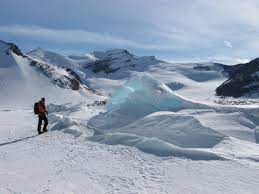
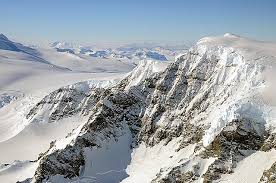
The island consists mainly of glaciated mountain ranges, including the Havre Mountains and the Rouen Mountains. It is characterized by extreme climatic conditions, with temperatures dropping significantly below freezing throughout the year. The island also has a diverse range of glaciers, ice shelves, and marine ecosystems that are of interest to scientists studying climate change and glacial movements.
Scientific Importance of Alexander Island
Alexander Island plays a crucial role in climate studies and ecological research. Due to its vast ice-covered landmass, scientists use it as a key observation point to monitor changes in ice sheets and sea levels. Research stations established by various countries focus on studying meteorological conditions, glaciology, and the impact of climate change in the region.
Other Major Islands of Antarctica
While Alexander Island holds the title of the largest island, Antarctica is home to several other significant islands:
- Berkner Island: Located beneath the Filchner-Ronne Ice Shelf, it is the second-largest island of Antarctica.
- Thurston Island: A heavily glaciated island in West Antarctica.
- Ross Island: Home to the famous Mount Erebus and major research stations.
- James Ross Island: Located near the Antarctic Peninsula, known for geological studies.
Why This News Is Important?
Antarctica’s Role in Climate Change Studies
The importance of Antarctica, particularly its islands like Alexander Island, has been increasing due to climate change. The melting of ice shelves and glaciers contributes to rising sea levels, affecting global weather patterns and coastal regions worldwide.
Scientific Exploration and Research Stations
Several countries have established research stations in Antarctica to study its extreme environment. Understanding the geographical distribution of islands helps in locating potential research sites and assessing natural resources.
Relevance for Competitive Exams
Topics related to geography, climate change, and Antarctica are frequently included in exams such as UPSC, SSC, and state-level PSCs. Aspirants preparing for these exams must be aware of significant geographical features and their global implications.
Historical Context
The discovery of Alexander Island dates back to 1821 when a Russian expedition led by Fabian Gottlieb von Bellingshausen sighted the region. Initially thought to be part of the Antarctic mainland, it was later confirmed as an island in the mid-20th century when aerial surveys and geological studies provided accurate mapping. Since then, it has been a focal point for scientific research.
Key Takeaways from Largest Island of Antarctica
| S. No | Key Takeaway |
|---|---|
| 1 | Alexander Island is the largest island in Antarctica, covering 49,070 sq. km. |
| 2 | It is separated from the mainland by George VI Sound. |
| 3 | The island plays a crucial role in climate change research. |
| 4 | Antarctica has several other large islands, including Berkner and Ross Islands. |
| 5 | The island was discovered in 1821 and later confirmed as separate from the mainland. |
Important FAQs for Students from this News
Q1: Which is the largest island in Antarctica?
A1: Alexander Island is the largest island in Antarctica, covering approximately 49,070 sq. km.
Q2: Where is Alexander Island located?
A2: It is located in the Bellingshausen Sea, west of the Antarctic Peninsula.
Q3: Why is Alexander Island important for scientific research?
A3: The island is significant for climate change studies, glacial monitoring, and ecological research.
Q4: What are some other large islands in Antarctica?
A4: Other major islands include Berkner Island, Ross Island, Thurston Island, and James Ross Island.
Q5: When was Alexander Island discovered?
A5: It was first sighted in 1821 by a Russian expedition and later confirmed as an island in the mid-20th century.
Some Important Current Affairs Links