








Oldest High Court in India: The Calcutta High Court
The Calcutta High Court, established on July 1, 1862, holds the title of the oldest high court in India. It was created under the Indian High Courts Act of 1861, which led to the establishment of high courts in various parts of the British Empire, and is one of the primary judicial bodies in India today. Serving as the highest judicial authority in the state of West Bengal, the Calcutta High Court has a long and illustrious history in shaping India’s legal landscape.
Historical Significance
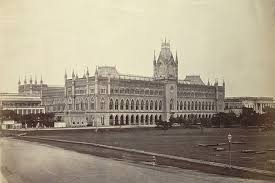
The court’s formation marked a pivotal moment in the legal history of India, as it became a vital institution for judicial processes in British India. Located in the city of Kolkata (formerly Calcutta), it was instrumental in overseeing cases related to both civil and criminal matters. The court’s architectural design, with its magnificent neo-gothic structure, also stands as a symbol of British influence on Indian law and governance. Over the years, it has made significant contributions to legal reforms and judicial decisions, some of which have had long-lasting impacts on the legal systems in India.
Judicial Role and Evolution
As an apex body, the Calcutta High Court has expanded its jurisdiction and powers over time, handling cases in constitutional law, human rights, commercial law, and administrative law. In recent years, it has been a key player in ensuring justice delivery in the state, contributing to the overall development of the judicial system. With its dynamic judges and progressive rulings, the court continues to be a pillar of justice in India.
Why This News is Important
Importance for Judiciary Aspirants
For students preparing for government exams, particularly those focused on judicial services, knowledge about the oldest high court in India is crucial. The Calcutta High Court not only represents a historical institution but also plays a critical role in shaping the legal framework of the nation. Understanding its history and role can be beneficial for exams that test general knowledge, Indian polity, and judicial systems.
Understanding India’s Judicial Heritage
The formation of the Calcutta High Court is deeply tied to India’s colonial past and legal reforms. The Indian High Courts Act of 1861 was an essential step in the formalization of judicial systems during British rule, and knowing its historical context gives a better understanding of how the judicial system evolved post-independence. This knowledge is particularly relevant for students preparing for civil services exams, including IAS, where questions on constitutional and legal history often appear.
Contribution to Modern Legal System
The Calcutta High Court’s contribution to India’s legal landscape is undeniable. It has set numerous precedents that are referred to by legal professionals and has influenced the country’s legal system significantly. For students aspiring to join the judiciary, understanding the court’s role can provide valuable insights into the workings of India’s legal machinery and inspire those looking to contribute to the nation’s judicial system.
Historical Context
The Indian High Courts Act of 1861 laid the foundation for the establishment of high courts in several cities across the British Empire, with the Calcutta High Court being the first. Its creation aimed at providing a judicial system that could handle the growing number of legal disputes and appeals across the empire. The need for such an institution arose as the British government sought to ensure that its rule in India was upheld through a formal and structured legal system.
Before the formation of the High Court, the judicial system was a mix of British legal practices and traditional Indian systems. The Calcutta High Court’s creation heralded a new era of legal governance that would eventually lead to a more modern and standardized judiciary in India. The court’s role grew throughout British rule, and post-independence, it continued to be a central judicial body. It has witnessed the evolution of laws, including the Indian Penal Code (IPC) and Indian Evidence Act, which were formulated during the colonial period.
The Calcutta High Court has also been a site for many landmark legal battles in the post-independence era, contributing to constitutional jurisprudence and the protection of individual rights. Its history is closely linked to significant milestones in India’s political and social movements, especially during the struggle for independence, when the judiciary played an essential role in interpreting and implementing laws.
Key Takeaways from the Oldest High Court in India
| S.No. | Key Takeaway |
|---|---|
| 1 | The Calcutta High Court is the oldest in India, established in 1862 under the Indian High Courts Act of 1861. |
| 2 | It plays a critical role in the judicial system of West Bengal, handling cases in civil, criminal, and constitutional law. |
| 3 | The court’s historical significance lies in its contribution to shaping the modern Indian judicial system during the British colonial era. |
| 4 | The Calcutta High Court has influenced many landmark decisions in Indian law, setting precedents that have shaped judicial practices. |
| 5 | For government exam aspirants, understanding the court’s history and role provides key insights into Indian polity, legal reforms, and constitutional law. |
Important FAQs for Students from this News
1. When was the Calcutta High Court established?
- The Calcutta High Court was established on July 1, 1862, making it the oldest high court in India.
2. Why is the Calcutta High Court historically significant?
- It is historically significant because it was the first high court to be established in India under the Indian High Courts Act of 1861 and played a crucial role in shaping India’s judicial system during the British colonial era.
3. What was the role of the Calcutta High Court during British rule?
- During British rule, the Calcutta High Court served as the apex judicial body in India, overseeing civil, criminal, and administrative matters. It helped formalize the legal system under British rule and set many legal precedents.
4. What jurisdiction does the Calcutta High Court cover?
- The Calcutta High Court has jurisdiction over the state of West Bengal and the Union Territory of Andaman and Nicobar Islands. It deals with a variety of cases, including civil, criminal, constitutional, and administrative matters.
5. How is the Calcutta High Court relevant to students preparing for government exams?
- The Calcutta High Court is important for students preparing for exams such as IAS, PSC, and judicial services because its history, role in legal reforms, and contribution to Indian law are often covered in the General Knowledge and Indian Polity sections of these exams.
Some Important Current Affairs Links