







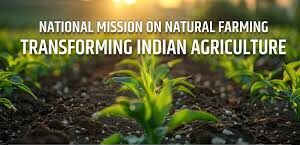
National Mission on Natural Farming: Advancing Sustainable Agriculture
The Indian government has launched the National Mission on Natural Farming (NMNF) as part of its commitment to promoting sustainable and eco-friendly agricultural practices. This mission aims to replace chemical-intensive farming with natural farming methods, ensuring environmental preservation and healthier food production.
Objective of the Mission
The National Mission on Natural Farming is designed to promote farming practices that rely on organic inputs and natural systems. The mission seeks to boost the production of chemical-free food and create a more resilient agricultural system. By reducing the dependence on harmful chemical fertilizers and pesticides, the initiative targets the improvement of soil health, reduction of pollution, and better water management.
Key Features of the Mission
The mission emphasizes the use of organic inputs like compost, natural pesticides, and bio-fertilizers in farming practices. It encourages farmers to adopt sustainable methods that mimic natural ecosystems. Farmers will be provided with training, financial incentives, and resources to shift to natural farming. Moreover, the government plans to promote natural farming zones and create a robust framework for the certification of organic produce. Additionally, research and development in this field will be accelerated to provide innovative solutions to challenges faced by farmers.
Impact on Agriculture and Rural Communities
The National Mission on Natural Farming aims to make farming economically viable for farmers by reducing input costs. It will also encourage sustainable land management practices, benefiting soil health and water conservation. The mission is expected to reduce farmers’ dependency on external agricultural inputs, thereby lowering costs and increasing profits. Additionally, as natural farming practices can significantly reduce the carbon footprint of agriculture, the initiative will also contribute to India’s climate action goals.

Why This News is Important
Environmental Benefits
The launch of the National Mission on Natural Farming is a major step towards environmental sustainability. By promoting chemical-free agriculture, the mission directly contributes to reducing soil degradation, water contamination, and the harmful effects of synthetic pesticides. This mission will be instrumental in restoring ecosystems, enhancing biodiversity, and reducing greenhouse gas emissions from the agricultural sector.
Supporting Farmers’ Income
Natural farming offers economic benefits for farmers by reducing their dependence on costly synthetic fertilizers and pesticides. With reduced input costs and an emphasis on organic produce, farmers are expected to see increased profitability. Additionally, with growing demand for organic produce, farmers who adopt these practices may gain better market access and higher returns.
Aligning with Sustainable Development Goals (SDGs)
The mission aligns with India’s commitments under the United Nations Sustainable Development Goals (SDGs), particularly SDG 2 (Zero Hunger), SDG 12 (Responsible Consumption and Production), and SDG 13 (Climate Action). The focus on sustainability and environmental conservation will contribute to India’s overall efforts in achieving these global goals.
Historical Context
Evolution of Organic Farming in India
Organic farming has a long-standing history in India, where traditional farming practices have been rooted in sustainability. However, with the Green Revolution in the 1960s, the widespread use of chemical fertilizers and pesticides became the norm, significantly reducing soil fertility and increasing dependency on external inputs. In recent years, the detrimental effects of this approach have prompted a shift towards more sustainable farming methods.
Government’s Push for Sustainable Agriculture
Over the years, the Indian government has taken steps to encourage organic farming, such as launching schemes like the National Program for Organic Production (NPOP) and promoting organic certification systems. The introduction of the National Mission on Natural Farming represents a significant escalation of these efforts, providing farmers with a structured platform to transition to eco-friendly farming practices.
Key Takeaways from the National Mission on Natural Farming
| Serial Number | Key Takeaway |
|---|---|
| 1 | The National Mission on Natural Farming aims to promote sustainable agriculture by reducing reliance on chemical fertilizers and pesticides. |
| 2 | The mission focuses on using organic inputs like compost and natural pesticides to enhance soil health and reduce environmental pollution. |
| 3 | Financial incentives, training, and resources will be provided to farmers to transition to natural farming methods. |
| 4 | The mission is expected to improve farmers’ income by reducing input costs and providing better market access for organic produce. |
| 5 | The initiative supports India’s commitments to climate action and the United Nations SDGs, particularly in promoting sustainable agricultural practices. |
Important FAQs for Students from this News
1. What is the National Mission on Natural Farming (NMNF)?
The National Mission on Natural Farming is an initiative by the Indian government to promote sustainable agricultural practices that minimize the use of chemical fertilizers and pesticides. It aims to encourage farmers to adopt natural farming methods, such as using organic inputs and bio-fertilizers, to improve soil health and reduce environmental pollution.
2. What are the main objectives of the National Mission on Natural Farming?
The key objectives of the NMNF include reducing dependence on chemical farming inputs, improving soil health, enhancing water conservation, and providing economic benefits to farmers through sustainable farming practices. The mission also aims to align with India’s environmental and climate action goals.
3. How will the National Mission on Natural Farming benefit farmers?
The mission will benefit farmers by reducing their input costs, improving soil fertility, and increasing profits by promoting the sale of organic produce. Farmers will receive training, financial support, and certification to adopt natural farming practices.
4. What role do organic inputs play in the mission?
Organic inputs, such as compost, natural pesticides, and bio-fertilizers, are a central aspect of the mission. These inputs help in improving soil health, reducing the need for chemical fertilizers, and enhancing the overall sustainability of farming practices.
5. How does the mission contribute to India’s climate action goals?
By promoting chemical-free and sustainable farming practices, the National Mission on Natural Farming contributes to reducing greenhouse gas emissions, soil degradation, and water pollution. These benefits directly support India’s commitments under the United Nations Sustainable Development Goals (SDGs), especially in the areas of climate action and responsible consumption.
Some Important Current Affairs Links