







Indian Navy Conducts Largest Coastal Defence Exercise – Sea Vigil 24
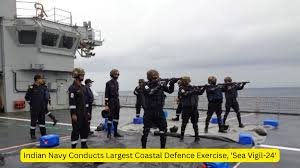
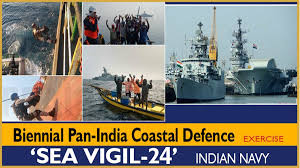
The Indian Navy recently conducted Sea Vigil 24, the country’s largest coastal defence exercise, aimed at assessing and strengthening the nation’s maritime security. This exercise, which spanned several days, was designed to evaluate the preparedness of India’s coastal security apparatus in protecting its vast coastline from various threats, both internal and external.
The Scope of Sea Vigil 24
Sea Vigil 24 was a comprehensive and multi-stakeholder exercise involving several agencies and organisations, including the Indian Coast Guard, Navy, and other defence agencies. It focused on strengthening coordination between these entities in order to safeguard the 7,500-kilometer-long coastline of India, one of the longest in the world. The exercise tested various security measures, including surveillance systems, rapid response strategies, and the capability of forces to counter terrorism and other maritime threats.
Significance of Sea Vigil 24
The exercise aimed to enhance the nation’s capability to counter maritime security threats such as smuggling, piracy, and infiltration, which have become increasingly prevalent in the region. Sea Vigil 24 is crucial in the context of India’s growing maritime interests and the need for robust coastal security mechanisms to protect vital assets and maintain strategic maritime dominance.
Why This News is Important: Enhancing India’s Coastal Security
Strategic Importance of Coastal Defence
India’s geographical location makes it an essential player in the Indo-Pacific region, with its vast coastline acting as a critical gateway for global trade and maritime routes. The security of this coastline is pivotal not only for national safety but also for safeguarding the economic interests of the country. By conducting such large-scale exercises, the Indian Navy ensures that the nation’s maritime defence systems are capable of handling modern-day challenges like terrorism, piracy, and smuggling.
International Concerns and Global Maritime Security
The exercise is especially important in light of the increasing security threats in the Indian Ocean Region (IOR). With India sharing maritime borders with several countries, including Pakistan, Bangladesh, and Sri Lanka, ensuring coastal security is vital to maintaining peaceful and secure trade routes. Furthermore, the exercise demonstrates India’s commitment to international maritime security norms, fostering closer cooperation with friendly nations in safeguarding the maritime domain.
Technological Advancements and Coordination
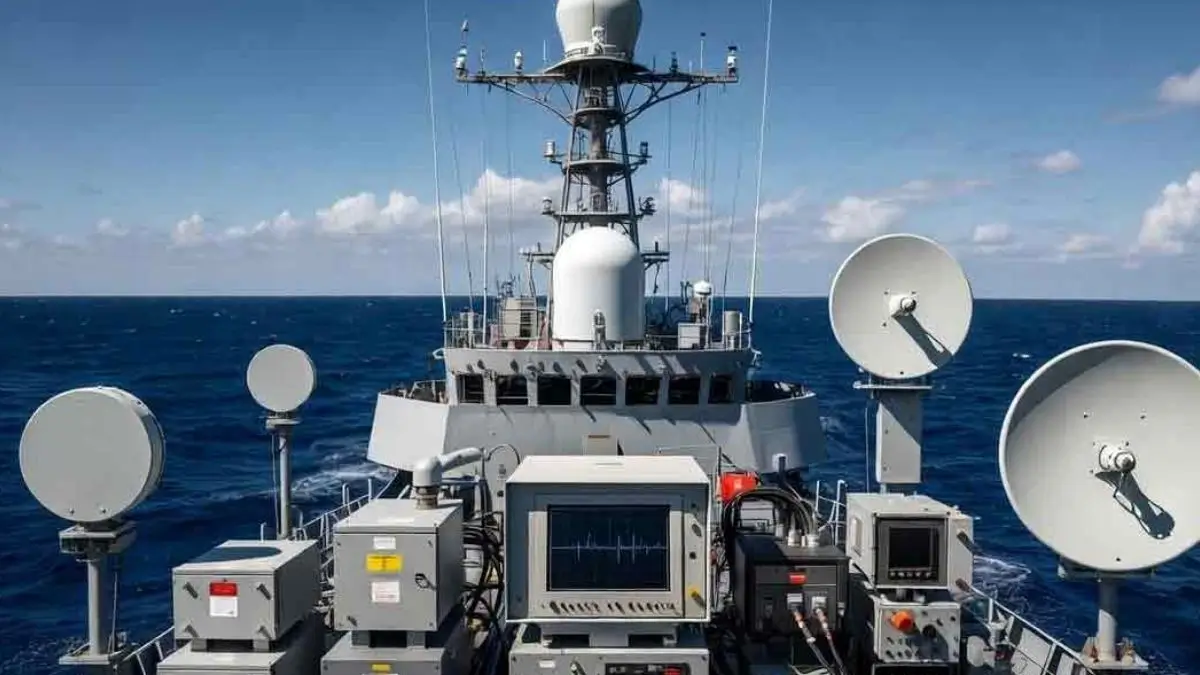
Sea Vigil 24 was also an opportunity to test India’s latest surveillance and security technologies, which play an essential role in identifying threats in real-time. This not only boosts the Navy’s capability but also sets a benchmark for coordinated efforts between various maritime security agencies, improving response times and operational efficiency.
Historical Context: Evolution of India’s Coastal Defence Mechanisms
India’s coastal security has evolved significantly over the years, especially in the aftermath of the 2008 Mumbai attacks, where terrorists infiltrated the coastal areas by sea. This event highlighted critical gaps in coastal security, leading to several reforms and initiatives.
Formation of Coastal Security Mechanisms
In response to growing concerns about maritime security, the Indian government established the National Committee on Strengthening Maritime and Coastal Security (NCSMCS) in 2009. This committee’s efforts have led to increased vigilance, surveillance, and coordination among various stakeholders such as the Indian Navy, Indian Coast Guard, and state maritime authorities.
Previous Sea Vigil Exercises
The Sea Vigil exercises began in 2018, with Sea Vigil 21 being the most recent prior to the current edition. Each iteration has expanded its scope and complexity, adapting to new security challenges and incorporating emerging technologies. These exercises have proven instrumental in creating a more unified and efficient coastal defence strategy.
5 Key Takeaways from Sea Vigil 24
| Serial Number | Key Takeaway |
|---|---|
| 1 | Sea Vigil 24 is India’s largest coastal defence exercise aimed at strengthening maritime security. |
| 2 | The exercise involved multiple agencies, including the Navy, Coast Guard, and state authorities. |
| 3 | It focused on enhancing real-time surveillance, rapid response capabilities, and counter-terrorism measures. |
| 4 | Sea Vigil 24 is vital for securing India’s 7,500 km-long coastline, which is critical for economic and strategic purposes. |
| 5 | The exercise demonstrated India’s commitment to international maritime security and regional peace. |
Important FAQs for Students from this News
What is Sea Vigil 24?
- Sea Vigil 24 is India’s largest coastal defence exercise conducted by the Indian Navy to strengthen and assess the country’s coastal security mechanisms. It involves several agencies, including the Indian Coast Guard and other defence authorities.
Why was Sea Vigil 24 conducted?
- The exercise was designed to enhance India’s ability to respond to maritime threats such as terrorism, piracy, and smuggling. It focused on improving surveillance, rapid response, and inter-agency coordination along India’s 7,500 km coastline.
Which agencies participated in Sea Vigil 24?
- The exercise involved multiple agencies, including the Indian Navy, Indian Coast Guard, and various state maritime security forces, all working together to ensure comprehensive coastal defence.
What is the significance of India’s coastal security?
- India’s coastal security is crucial for safeguarding vital trade routes, preventing infiltration, and ensuring the protection of economic interests. It also plays a key role in maintaining regional peace and security in the Indian Ocean Region.
What technological advancements were tested during Sea Vigil 24?
- The exercise tested India’s advanced surveillance and monitoring technologies designed to detect and neutralize threats in real time. This includes radar systems, satellite tracking, and real-time coordination among multiple agencies.
Some Important Current Affairs Links