






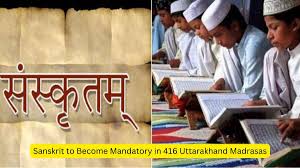
Sanskrit to Become Mandatory in 416 Uttarakhand Madrasas
Introduction to the New Initiative
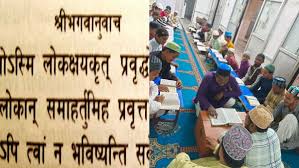
The Uttarakhand government has recently made a significant decision to implement Sanskrit as a mandatory subject in 416 madrasas across the state. This initiative, driven by the aim to promote cultural and linguistic heritage, marks a vital step towards integrating traditional knowledge into the educational framework of religious institutions. The move reflects the government’s commitment to preserving and revitalizing ancient Indian languages, while also enhancing the educational curriculum offered in madrasas.
Objectives of the Initiative
The primary objective of introducing Sanskrit in madrasas is to bridge the gap between traditional Islamic education and Indian cultural heritage. By incorporating Sanskrit, the government aims to provide students with a broader understanding of India’s linguistic diversity. This initiative not only promotes Sanskrit as a classical language but also seeks to encourage students to appreciate their cultural roots. Moreover, the inclusion of Sanskrit is expected to facilitate better communication and understanding among students from different backgrounds.
Implementation Strategy
The Uttarakhand Madarsa Board will oversee the implementation of this initiative, which is set to commence in the academic year 2024-2025. Teachers will be trained to deliver quality instruction in Sanskrit, ensuring that students gain a solid foundation in the language. The curriculum will be designed to include conversational skills, grammar, and literature, making the learning process engaging and effective. The government has allocated funds for training teachers and developing instructional materials to support this initiative.
Response from the Community
This initiative has sparked mixed reactions among various stakeholders. While proponents argue that it will foster cultural integration and enhance students’ educational prospects, critics raise concerns about the potential marginalization of other subjects and languages. However, the government maintains that this initiative will not compromise the existing curriculum but rather enrich it, offering students a more holistic educational experience.
Conclusion
In conclusion, the decision to make Sanskrit mandatory in Uttarakhand madrasas is a progressive step towards promoting linguistic diversity and cultural awareness among students. As the implementation begins, it will be essential to monitor its impact on the educational landscape and address any concerns that may arise.
Why This News is Important
Promotion of Cultural Heritage
This initiative is crucial for the promotion of India’s rich cultural heritage. By making Sanskrit a mandatory subject, the government emphasizes the significance of preserving ancient languages that have shaped India’s historical and cultural identity. It encourages students to connect with their roots, fostering a sense of pride in their cultural heritage.
Educational Opportunities
Incorporating Sanskrit into the madrasa curriculum opens up new educational opportunities for students. Proficiency in Sanskrit can enhance cognitive skills and provide students with a competitive edge in various academic fields. Additionally, it can serve as a foundation for studying other classical languages and literature.
Fostering Integration
The move aims to foster integration among students from diverse backgrounds. By learning a classical language that is integral to Indian culture, students can develop a sense of unity and understanding, promoting harmony in society. This initiative can pave the way for cultural exchange and collaboration among different communities.
Addressing Language Diversity
The decision to include Sanskrit reflects an acknowledgment of India’s linguistic diversity. It recognizes the importance of offering students exposure to multiple languages, enabling them to communicate effectively in a multicultural environment. This initiative aligns with global educational trends that advocate for multilingualism.
Policy and Educational Reform
This initiative is part of a broader educational reform agenda aimed at improving the quality of education in religious institutions. It highlights the government’s commitment to enhancing the educational framework within madrasas, ensuring that students receive a well-rounded education that prepares them for future challenges.
Historical Context
The Importance of Sanskrit in India
Sanskrit, one of the oldest languages in the world, holds a prominent place in India’s cultural and religious history. It is the language of ancient scriptures, including the Vedas and Upanishads, and has been pivotal in shaping Hindu philosophy, literature, and traditions. Historically, Sanskrit was widely used in various fields, including science, mathematics, and medicine.
The Role of Madrasas
Madrasas have traditionally served as centers for religious and cultural education within the Muslim community. They play a vital role in preserving Islamic teachings while providing a foundation for personal and community development. However, the integration of modern subjects has become increasingly important in recent years to ensure that students are equipped for contemporary challenges.
Recent Educational Reforms
The Indian government has made several efforts to reform educational curricula across different institutions, aiming to enhance the quality of education and address the needs of a diverse student population. Initiatives like the National Education Policy (NEP) 2020 advocate for multilingual education and the preservation of cultural heritage, aligning with the recent decision to introduce Sanskrit in madrasas.
Key Takeaways from “Sanskrit to Become Mandatory in 416 Uttarakhand Madrasas”
| Serial Number | Key Takeaway |
|---|---|
| 1 | The Uttarakhand government will make Sanskrit a mandatory subject in 416 madrasas. |
| 2 | The initiative aims to promote cultural integration and enhance educational prospects for students. |
| 3 | Implementation is set to begin in the academic year 2024-2025, with teacher training and curriculum development. |
| 4 | The move has received mixed reactions, with proponents highlighting cultural preservation and critics expressing concerns. |
| 5 | This initiative aligns with broader educational reforms aimed at improving the quality of education in religious institutions. |
Important FAQs for Students from this News
1. What is the main objective of making Sanskrit mandatory in Uttarakhand madrasas?
The primary objective is to promote cultural integration and enhance the educational curriculum by providing students with a broader understanding of India’s linguistic heritage.
2. When will the implementation of this initiative begin?
The initiative is set to commence in the academic year 2024-2025.
3. Who will oversee the implementation of Sanskrit in madrasas?
The Uttarakhand Madarsa Board will be responsible for overseeing the implementation of this initiative.
4. What kind of training will teachers receive?
Teachers will undergo training to effectively teach Sanskrit, including conversational skills, grammar, and literature.
5. How has the community responded to this initiative?
The response has been mixed, with some supporting it for fostering cultural integration and others expressing concerns about potential marginalization of other subjects.
Some Important Current Affairs Links