









The Inventor of the Hot Air Balloon: A Historical Perspective
Introduction to the Hot Air Balloon
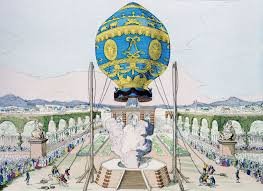
The hot air balloon, a marvel of early aviation, traces its origins back to the late 18th century. The invention of this groundbreaking aerial device is attributed to the Montgolfier brothers, Joseph-Michel and Jacques-Étienne, who were French paper manufacturers. Their groundbreaking work in 1783 marked a significant milestone in the history of aviation.
The Montgolfier Brothers’ Innovation
The Montgolfier brothers, through rigorous experimentation, created the first successful hot air balloon. Their first flight took place on June 4, 1783, in Annonay, France, and was a historic achievement that showcased the potential of human flight. The balloon, made from paper and cloth, was powered by a fire that heated the air inside, causing the balloon to rise. This experiment paved the way for future advancements in aeronautics.
Key Features of the Hot Air Balloon
The hot air balloon operates on a simple principle: hot air rises. The balloon comprises a large fabric envelope, a burner to heat the air, and a basket for passengers. The envelope, typically made from heat-resistant materials, holds the hot air, and the burner maintains the required temperature to keep the balloon aloft. The design has undergone numerous improvements over the centuries, enhancing safety and efficiency.
Impact on Early Aviation
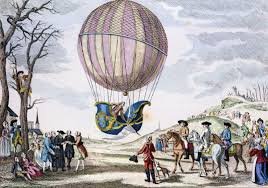
The success of the Montgolfier brothers’ hot air balloon significantly impacted the development of aviation. It inspired further research and experimentation, leading to the development of various flying machines and eventually to powered flight. The hot air balloon remains a popular recreational activity and an important symbol of human ingenuity in the quest to conquer the skies.
Why This News is Important
Significance of Early Aviation
The invention of the hot air balloon is a cornerstone of aviation history. It represents the first successful attempt at controlled flight and laid the groundwork for modern aeronautics. Understanding this milestone is crucial for students preparing for government exams, as it highlights the importance of technological innovation and its impact on human progress.
Educational Value
For students, learning about the Montgolfier brothers and their invention provides insight into the scientific principles behind early flight technology. It demonstrates the role of experimentation and perseverance in scientific discovery, offering valuable lessons in problem-solving and innovation.
Historical Context
The hot air balloon’s invention is set against the backdrop of the Enlightenment, a period marked by significant advancements in science and technology. This era fostered a spirit of inquiry and experimentation, contributing to numerous breakthroughs. The Montgolfier brothers’ work is a testament to the era’s emphasis on exploration and discovery.
Historical Context:
The Enlightenment Era
The late 18th century, known as the Enlightenment period, was characterized by a surge in scientific and intellectual advancements. This era was marked by a growing interest in exploration and understanding the natural world. The Montgolfier brothers were part of this vibrant scientific community, driven by curiosity and a desire to explore the potential of human flight.
The Montgolfier Brothers’ Contribution
Joseph-Michel and Jacques-Étienne Montgolfier, through their innovative approach, managed to harness the principles of buoyancy and thermal dynamics to create the hot air balloon. Their experiments were not only a technological achievement but also a reflection of the scientific spirit of the time. Their work demonstrated the potential for human flight and inspired future generations of aviators and engineers.
Key Takeaways from the Inventor of the Hot Air Balloon
| Serial Number | Key Takeaway |
|---|---|
| 1 | The hot air balloon was invented by the Montgolfier brothers in 1783. |
| 2 | The first successful flight of the hot air balloon occurred on June 4, 1783. |
| 3 | The hot air balloon operates on the principle that hot air rises. |
| 4 | The invention marked a significant milestone in the history of aviation. |
| 5 | The Montgolfier brothers’ work inspired future advancements in flight technology. |
Important FAQs for Students from this News
1. Who invented the hot air balloon?
The hot air balloon was invented by Joseph-Michel and Jacques-Étienne Montgolfier, two French brothers, in 1783.
2. When was the first successful flight of the hot air balloon?
The first successful flight of the hot air balloon took place on June 4, 1783.
3. What principle does a hot air balloon operate on?
A hot air balloon operates on the principle that hot air rises. The burner heats the air inside the balloon, causing it to rise.
4. What materials are used in the construction of a hot air balloon?
Hot air balloons are typically made from heat-resistant fabrics for the envelope, and the burner is used to heat the air inside. The basket, which carries passengers, is usually made from wicker or other durable materials.
5. How did the invention of the hot air balloon impact the field of aviation?
The invention of the hot air balloon was a significant milestone in aviation history. It demonstrated the feasibility of controlled flight and inspired further research and technological advancements in the field of aeronautics.
Some Important Current Affairs Links