
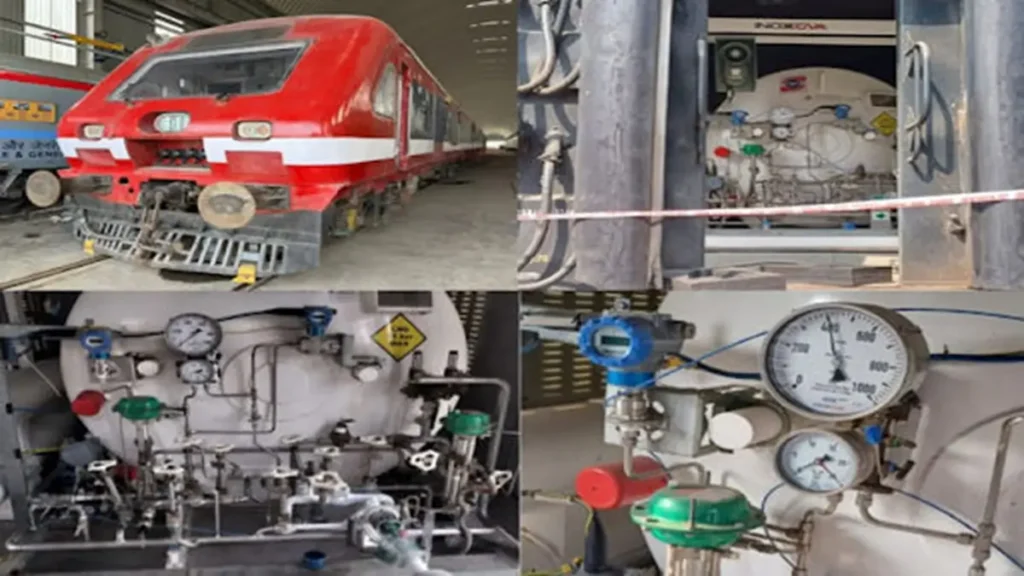
Indian Railways LNG dual-fuel DEMU train launched in Ahmedabad marks a major step in green transport. Learn key facts, benefits, and exam-relevant insights.
Indian Railways Launches First LNG-Diesel Dual-Fuel DEMU Train in Ahmedabad
A New Milestone in Sustainable Rail Transport
Indian Railways has achieved a landmark milestone by operationalising the country’s first-ever LNG-Diesel dual-fuel DEMU (Diesel Electric Multiple Unit) train from Sabarmati in Ahmedabad, Gujarat. This major development marks a significant shift towards greener, cleaner and cost-efficient railway operations in India.
Understanding the Dual-Fuel DEMU Train
Traditionally, DEMU trains run solely on diesel. However, in this upgraded version, the train’s driving power cars (DPCs) have been converted to a dual-fuel system that uses a combination of Liquefied Natural Gas (LNG) and diesel. LNG replaces approximately 40% of conventional diesel consumption, while maintaining the train’s performance and reliability.
The upgraded system allows fuel switching based on availability and helps operate the train in regular passenger service after completing over 2,000 km of successful field trials without technical issues.
Environmental Benefits of the LNG-Diesel System
The biggest advantage of this dual-fuel technology is its environmental impact. By substituting diesel with LNG, the technology significantly:
- Reduces carbon dioxide (CO₂) emissions
- Lowers nitrogen oxides (NOx)
- Decreases smoke and particulate pollution
- Improves air quality along railway corridors
These benefits make trains more eco-friendly — a key focus of India’s climate and net-zero goals.
Economic and Operational Advantages
The dual-fuel system also promises economic benefits:
- Cutting down diesel consumption cuts fuel costs
- Enhancing energy efficiency
- Reducing dependence on fossil fuels
- No drastic changes required in existing engine structures
Railway officials estimate that this approach can save significant fuel-related expenditure annually, besides contributing to cleaner transport.
Future Prospects and Expansion
This technology reflects Indian Railways’ commitment to green transportation, aligning with national policies on clean energy usage. On successful expansion, this system could be replicated on many more trains, especially in regional and commuter routes, further reducing environmental impact and improving cost efficiencies across the network.

Why This News Is Important
Advancing India’s Climate Goals
This initiative is significant because it directly supports India’s transition to cleaner energy. By reducing the reliance on diesel — a major source of greenhouse gas emissions — the dual-fuel train helps Indian Railways contribute to national and global net-zero targets. LNG combustion produces fewer pollutants than diesel, which positively impacts air quality and contributes to India’s climate commitments under international agreements.
Economic and Operational Relevance
From an economic perspective, the introduction of dual-fuel technology is a major step in reducing fuel costs for the vast Indian Railways network — one of the world’s largest. Reduced fuel expenses can help allocate funds to other developmental priorities, including infrastructure and safety upgrades.
Implications for Competitive Exams
For government exam aspirants, this news encompasses key themes across Environment and Ecology, Science & Technology, and Economy — common sections in exams like SSC CGL, UPSC Civil Services, Railway Exams, Banking (IBPS/SBI) and Teaching eligibility tests. Understanding this development helps candidates answer questions on clean energy innovation, sustainability initiatives by public sectors, and government policies on green transport.
Historical Context of Dual-Fuel Innovation in Railways
Indian Railways — one of the world’s largest railway networks — has long focused on cleaner and more efficient technologies. Initiatives in recent years included solar-powered DEMU trains and trials of CNG/Diesel hybrid engines to reduce emissions.
However, these earlier technologies either remained limited in scope or faced infrastructure challenges. The introduction of the LNG-Diesel dual-fuel system represents a significant practical advancement because LNG infrastructure is more scalable and offers greater emissions reduction potential than some earlier fuel alternatives.
This development also aligns with India’s broader strategy of adopting alternative fuels — including solar, electric, hydrogen and biofuels — across transport sectors to ensure sustainable mobility and reduce dependence on imported fossil fuels.
Key Takeaways from Indian Railways’ First LNG-Diesel Dual-Fuel Train
| S.No. | Key Takeaway |
|---|---|
| 1 | Indian Railways operationalised the first LNG-Diesel dual-fuel DEMU train at Sabarmati, Ahmedabad, Gujarat. |
| 2 | The train’s driving power cars now use Liquefied Natural Gas (LNG) to replace around 40% of diesel consumption. |
| 3 | The DEMU successfully completed more than 2,000 km of field trials before entering regular service. |
| 4 | The initiative contributes to lower emissions and improved air quality, supporting sustainability goals. |
| 5 | This advancement reflects a major shift in fuel technology and has important implications for cost savings and future railway modernization. |
FAQs: Frequently Asked Questions
1. What is the significance of the LNG-Diesel dual-fuel DEMU train launched by Indian Railways?
The launch marks a major step toward green and sustainable railway transport in India. The dual-fuel system reduces diesel consumption by using Liquefied Natural Gas (LNG), lowering emissions and operational costs. It supports India’s clean energy and environmental goals.
2. Where was India’s first LNG-Diesel dual-fuel DEMU train launched?
The train was launched from Sabarmati in Ahmedabad, Gujarat. This location is important for exams as questions often ask about the city or state associated with major infrastructure developments.
3. What percentage of diesel is replaced by LNG in the dual-fuel system?
Approximately 40% of conventional diesel consumption is replaced by LNG. This helps reduce fuel costs and pollution without compromising train performance.
4. What are the environmental benefits of LNG compared to diesel?
LNG produces lower carbon dioxide (CO₂), nitrogen oxides (NOx), and particulate emissions than diesel. This improves air quality and contributes to India’s climate commitments and sustainable transport goals.
5. What does DEMU stand for in Indian Railways?
DEMU stands for Diesel Electric Multiple Unit. It is a type of train used mainly for short-distance and suburban passenger services.
6. How is this news relevant for government exam aspirants?
The news is important for exams because it covers topics related to environment, science and technology, infrastructure development, and government initiatives — common areas in UPSC, SSC, Railways, Banking, and State PSC exams.
7. How does this initiative support India’s green transportation strategy?
It aligns with India’s broader push for alternative fuels such as LNG, hydrogen, solar, and electric energy in public transport, reducing dependence on fossil fuels.
Some Important Current Affairs Links

