
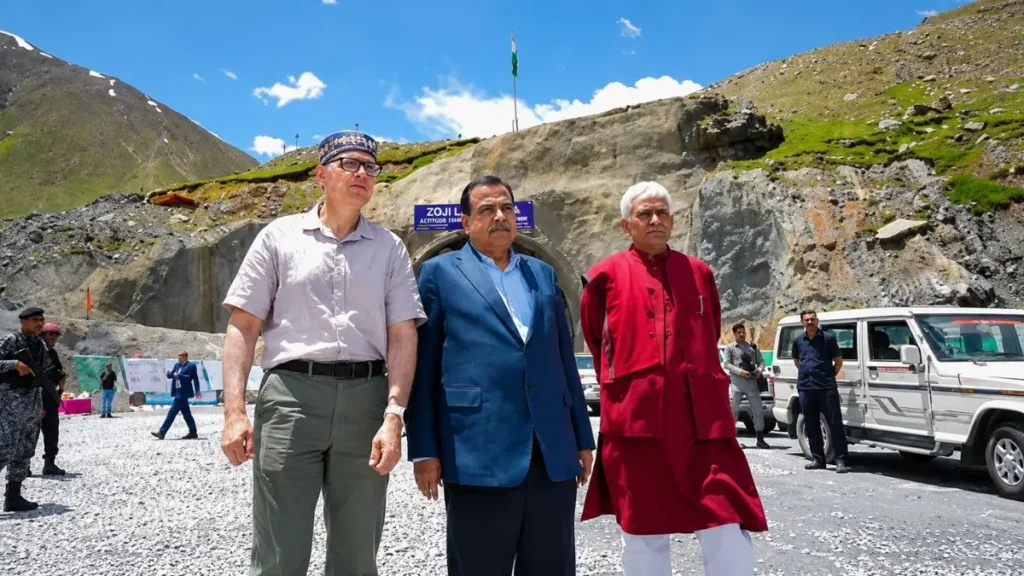
Zojila tunnel breakthrough achieved marks a major infrastructure milestone for India. Learn about its strategic importance, all-weather connectivity benefits, national security significance, exam relevance, and key facts for UPSC, SSC, Banking, Railways, Defence, and PSC aspirants.
Introduction to the Historic Milestone
India has achieved a major infrastructure milestone with the successful breakthrough of the Zojila Tunnel, one of the country’s most strategically significant road projects. The breakthrough marks the completion of the excavation phase, connecting both ends of the tunnel beneath the challenging Himalayan terrain. This development brings India significantly closer to ensuring all-weather road connectivity between Kashmir and Ladakh.
The Zojila Tunnel is being constructed under the Zoji La Pass, a crucial mountain pass that connects the Kashmir Valley with Ladakh. Due to heavy snowfall and avalanches, the pass remains closed for several months every year, often isolating Ladakh from the rest of the country. The tunnel is expected to solve this long-standing connectivity challenge.
What is the Zojila Tunnel Project?
The Zojila Tunnel is a 13.153-kilometre high-altitude road tunnel being developed on National Highway-1 between Baltal and Minamarg. It is considered one of the most challenging engineering projects undertaken in the Himalayas and is expected to become one of the world’s longest single-tube bi-directional road tunnels at such a high altitude.
The project is being executed to provide uninterrupted transportation between Srinagar, Kargil, and Leh, regardless of weather conditions. Once operational, the tunnel will drastically reduce travel time and improve accessibility throughout the year.
Significance of the Breakthrough
The recent breakthrough was achieved after the final section of rock separating the two ends of the tunnel was removed through a controlled blast. This achievement represents the completion of one of the most difficult stages of tunnel construction.
The milestone demonstrates India’s growing expertise in high-altitude infrastructure development. Engineers had to overcome extreme weather conditions, unstable Himalayan geology, and temperatures that often fall far below freezing.
Strategic Importance for National Security
The Zojila Tunnel has immense strategic value for India. Ladakh shares sensitive borders with both China and Pakistan. Reliable transportation infrastructure is critical for the movement of troops, military equipment, and essential supplies throughout the year.
During the 1999 Kargil conflict, the Srinagar-Leh route emerged as a crucial lifeline for Indian armed forces. The tunnel will strengthen India’s logistical capabilities and ensure uninterrupted access to border areas even during severe winters.
Economic Benefits for the Region
Apart from strategic advantages, the tunnel is expected to transform the economy of Ladakh and surrounding regions. Better connectivity will encourage tourism, trade, and investment. Businesses will benefit from reduced transportation costs, while residents will gain easier access to healthcare, education, and other essential services.
The project is also expected to generate employment opportunities and contribute to regional development by integrating remote areas more closely with national markets.
Engineering Challenges in the Himalayas
Constructing a tunnel through the Himalayas is a highly complex task. Engineers faced challenges such as fragile rock formations, high seismic activity, extreme cold, and difficult working conditions at elevations above 11,500 feet. Advanced tunnelling technologies and careful geological monitoring were required throughout the project.
The successful breakthrough highlights India’s capability to execute large-scale infrastructure projects in some of the world’s most difficult terrains.
Future Outlook
Although excavation has been completed, additional work such as road surfacing, ventilation systems, safety installations, electrical infrastructure, and finishing operations remains before the tunnel becomes fully operational. Once completed, the project will revolutionize transportation between Kashmir and Ladakh and enhance India’s strategic infrastructure network.
Why This News Is Important
Importance for UPSC and State PSC Examinations
The Zojila Tunnel project is highly relevant for competitive examinations because it combines themes related to infrastructure development, border management, national security, regional development, and government policy. Questions may appear in UPSC, State PSC, SSC, Railways, Defence, and Banking examinations under current affairs and geography sections.
Strategic Infrastructure and National Security
The tunnel demonstrates how infrastructure development contributes directly to national security. Year-round connectivity to Ladakh strengthens India’s ability to maintain logistics and troop movement in strategically sensitive border regions. This makes the project important from both defence and geopolitical perspectives.
Economic and Social Development
The project highlights the government’s efforts to improve connectivity in remote regions. Better roads facilitate tourism, trade, healthcare access, education, and economic growth. Such projects are frequently discussed in questions related to inclusive development and regional planning.
Engineering Achievement
The successful completion of excavation at such a high altitude showcases India’s growing engineering capabilities. Competitive exams often ask about major infrastructure projects and engineering achievements that contribute to nation-building.
Historical Context: The Story Behind Zojila Connectivity
The Importance of Zoji La Pass
Zoji La Pass has historically served as the primary gateway connecting the Kashmir Valley with Ladakh. The pass is located at a high altitude in the Himalayas and has immense strategic and economic significance.
Seasonal Isolation of Ladakh
For decades, heavy snowfall and avalanches caused the pass to remain closed for nearly six months every year. This seasonal closure often disrupted transportation of essential goods and limited access to remote areas.
Approval and Development of the Tunnel Project
Recognizing the need for permanent connectivity, the Government of India approved the Zojila Tunnel project. Construction activities began in the early 2020s with the objective of creating an all-weather route linking Kashmir and Ladakh. The project soon became one of India’s most ambitious mountain infrastructure initiatives.
A Long-Awaited Dream for Ladakh
Residents and leaders in Ladakh have viewed the tunnel as a transformational project for decades. The recent breakthrough is therefore seen as the realization of a long-standing aspiration to eliminate seasonal isolation and strengthen integration with the rest of India.
Key Takeaways from Zojila Tunnel Breakthrough
| S.No. | Key Takeaway |
|---|---|
| 1 | The Zojila Tunnel achieved its final breakthrough, connecting both ends of the tunnel. |
| 2 | The tunnel is approximately 13.15 km long and will provide all-weather connectivity between Kashmir and Ladakh. |
| 3 | It is among the world’s longest single-tube bi-directional road tunnels at high altitude. |
| 4 | The project has major strategic significance for military logistics and border security. |
| 5 | The tunnel will boost tourism, trade, economic development, and regional integration in Ladakh. |
Frequently Asked Questions (FAQs)
1. What is the Zojila Tunnel?
The Zojila Tunnel is a high-altitude road tunnel being constructed beneath the Zoji La Pass on National Highway-1 to provide all-weather connectivity between Kashmir and Ladakh.
2. Where is the Zojila Tunnel located?
The tunnel is located between Baltal in Jammu & Kashmir and Minamarg in Ladakh, beneath the Zoji La Pass in the Himalayas.
3. What is the length of the Zojila Tunnel?
The Zojila Tunnel is approximately 13.15 kilometres long.
4. Why is the Zojila Tunnel important?
The tunnel will ensure year-round road connectivity between Srinagar, Kargil, and Leh, reducing travel disruptions caused by heavy snowfall.
5. What does the term “breakthrough” mean in tunnel construction?
A breakthrough occurs when excavation from both ends of a tunnel successfully meets, completing the primary tunnelling phase.
6. Which regions will benefit the most from the tunnel?
The regions of Kashmir, Kargil, and Ladakh will benefit significantly through improved transportation, tourism, and economic opportunities.
7. How does the Zojila Tunnel help national security?
It enables uninterrupted movement of troops, military equipment, and supplies to border areas throughout the year.
8. Which ministry is responsible for the project?
The project is being implemented under the Ministry of Road Transport and Highways.
9. Which pass does the tunnel bypass?
The tunnel bypasses the Zoji La Pass, which remains snowbound for several months every year.
10. Why is the Zojila Tunnel important for competitive examinations?
The project is relevant for UPSC, State PSC, SSC, Railways, Defence, Banking, and teaching examinations because it relates to infrastructure, geography, internal security, and economic development.
Some Important Current Affairs Links

