
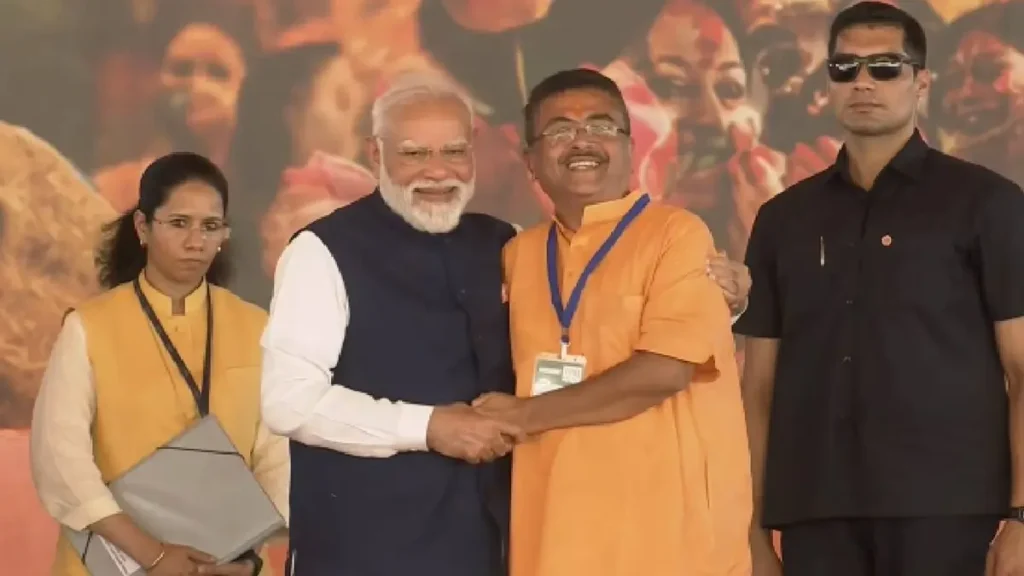
West Bengal CM oath update: Suvendu Adhikari takes oath as Chief Minister, marking a major political shift in West Bengal. Read full analysis, key takeaways, FAQs, and exam-focused insights for UPSC, SSC, and banking exams.
Suvendu Adhikari Takes Oath as West Bengal’s First BJP Chief Minister
A Historic Political Shift in West Bengal
Suvendu Adhikari has taken oath as the first Chief Minister from the Bharatiya Janata Party in the history of West Bengal. The swearing-in ceremony took place at the iconic Brigade Parade Ground in the presence of Prime Minister Narendra Modi, Union Home Minister Amit Shah, and several senior leaders of the National Democratic Alliance (NDA).
BJP Ends Decades of Non-BJP Rule
The victory of the BJP in West Bengal marks a major political transformation in the state. Since independence, the state had mainly been ruled by the Left Front and later by the All India Trinamool Congress under Mamata Banerjee. The BJP secured a clear majority in the 294-member West Bengal Legislative Assembly, ending nearly 15 years of TMC governance.
Swearing-In Ceremony Draws National Attention
The oath-taking ceremony became one of the most discussed political events in India. Governor R. N. Ravi administered the oath of office and secrecy to Suvendu Adhikari and members of his council of ministers. Several NDA chief ministers and Union ministers attended the event, showing the national significance of the BJP’s victory in West Bengal.
Suvendu Adhikari’s Political Journey
Suvendu Adhikari’s political rise has been dramatic. Earlier, he was one of the closest associates of Mamata Banerjee and played a major role in strengthening the Trinamool Congress in West Bengal. However, he later joined the BJP and emerged as one of its strongest leaders in the state. His victory from key constituencies such as Nandigram became politically significant because Nandigram was once the center of anti-land acquisition protests that changed Bengal politics.
Early Policy Decisions of the New Government
Soon after assuming office, the new BJP government announced several major policy decisions. These included closer coordination with the Central Government, implementation of Ayushman Bharat in the state, and raising the upper age limit for state government jobs from 40 to 45 years. These decisions were presented as efforts to improve governance and provide administrative reforms.
Political Reactions and Public Debate
The political development triggered strong reactions across the country. Supporters of the BJP described the moment as “historic” and a sign of political change in Bengal. At the same time, opposition parties and critics questioned the BJP’s leadership choices and raised concerns over governance and political polarization. Social media and online forums reflected both celebration and criticism regarding the new government.
Significance for Competitive Exams
This development is extremely important for students preparing for government examinations because it highlights changes in Indian electoral politics, regional political shifts, federal governance, and party expansion strategies. Questions related to current chief ministers, assembly election outcomes, constitutional procedures for oath-taking, and political transitions are frequently asked in competitive exams such as UPSC, SSC, Banking, Railways, State PCS, and Defence examinations.

Why This News is Important
Major Change in India’s Political Landscape
The formation of the first BJP government in West Bengal is politically significant because the state had historically resisted the BJP’s expansion. For decades, West Bengal remained dominated first by communist governments and later by the Trinamool Congress. The BJP’s victory reflects changing political trends and voter behavior in eastern India.
Important for Federal Politics
West Bengal is one of India’s most politically influential states. A BJP government in the state changes the relationship between the state and the Centre. The new administration has already indicated stronger cooperation with the Union Government through the implementation of schemes like Ayushman Bharat and administrative coordination. This development may influence governance, welfare delivery, and future electoral politics in India.
Important for Competitive Examinations
For aspirants preparing for UPSC, SSC, State PCS, Banking, and Railways examinations, this news is highly relevant because questions are often asked about newly appointed chief ministers, important state elections, constitutional appointments, and current political developments. Students should remember that Suvendu Adhikari became the first BJP Chief Minister of West Bengal in 2026.
Historical Context
Political History of West Bengal
West Bengal has witnessed major political transitions since independence. From 1977 to 2011, the state was ruled by the Left Front led by the Communist Party of India (Marxist), making it one of the world’s longest-serving democratically elected communist governments.
Rise of Trinamool Congress
In 2011, Mamata Banerjee and the Trinamool Congress ended 34 years of Left rule through the “Poriborton” movement. The TMC remained in power for nearly 15 years and became the dominant political force in Bengal.
Emergence of BJP in Bengal
The BJP gradually expanded its influence in West Bengal after the 2014 Lok Sabha elections. Issues such as nationalism, political violence, identity politics, and central welfare schemes helped the party strengthen its base. Suvendu Adhikari’s move from TMC to BJP further strengthened the BJP’s position in the state.
Constitutional Process of Oath-Taking
Under Article 164 of the Indian Constitution, the Governor appoints the Chief Minister and administers the oath of office and secrecy. The Chief Minister then forms the Council of Ministers to aid and advise the Governor in governance.
Key Takeaways from This News
| S.No. | Key Takeaway |
|---|---|
| 1 | Suvendu Adhikari became the first BJP Chief Minister of West Bengal. |
| 2 | The BJP ended the 15-year rule of the Trinamool Congress in the state. |
| 3 | The oath-taking ceremony was held at Brigade Parade Ground in Kolkata. |
| 4 | The new government announced policy reforms including Ayushman Bharat implementation and increased job age limits. |
| 5 | The event marks a major political shift in eastern India and is important for competitive examination preparation. |
Frequently Asked Questions (FAQs)
1. Who is Suvendu Adhikari?
Suvendu Adhikari is a senior Indian politician and a prominent leader of the Bharatiya Janata Party (BJP), known for his strong influence in West Bengal politics.
2. Why is this news important for competitive exams?
This news is important because questions related to state chief ministers, elections, political parties, and constitutional procedures are frequently asked in UPSC, SSC, Banking, Railways, and State PCS exams.
3. What is the constitutional process of appointing a Chief Minister in India?
The Governor appoints the Chief Minister, who is usually the leader of the majority party in the Legislative Assembly, and administers the oath of office under Article 164 of the Constitution.
4. Which political parties were dominant in West Bengal before this development?
Before this development, West Bengal was mainly governed by the Left Front (1977–2011) and later by the Trinamool Congress (2011–2026).
5. What are some key decisions taken by the new government?
Key decisions include implementation of central welfare schemes like Ayushman Bharat and proposed reforms in state employment policies.
6. Where was the swearing-in ceremony held?
The oath-taking ceremony was held at Brigade Parade Ground in Kolkata.
7. Why is West Bengal politically significant?
West Bengal is one of India’s largest states in terms of population and has historically played a major role in shaping national politics.
8. Which article of the Indian Constitution deals with the Chief Minister?
Article 164 of the Indian Constitution deals with the appointment and responsibilities of the Chief Minister.
Some Important Current Affairs Links

