
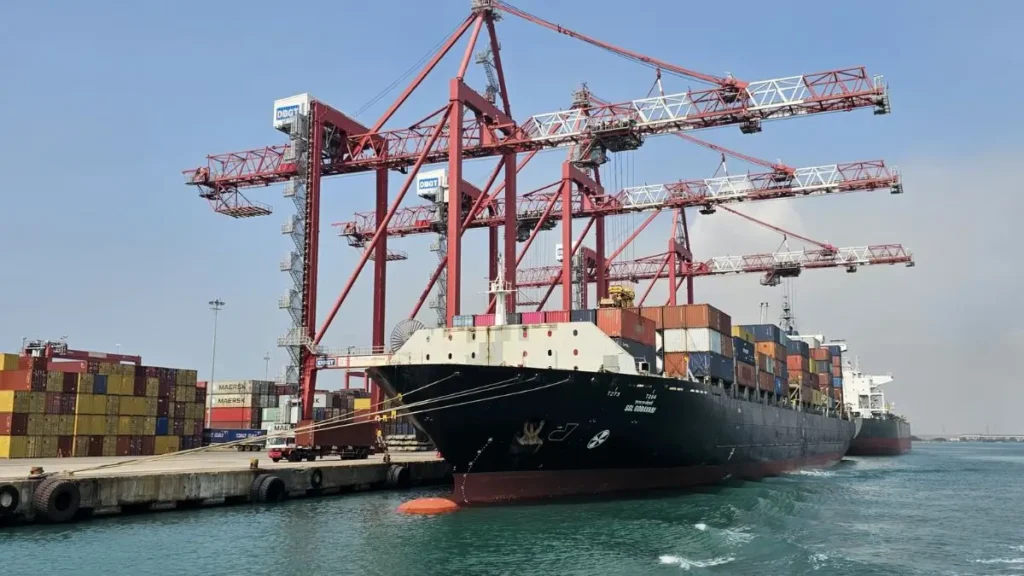
VOC Port anti drone system marks India’s first port security upgrade using advanced RF and radar technology to strengthen maritime infrastructure and national security.
VOC Port Becomes India’s First to Deploy Anti-Drone System: Strengthening Coastal Security
In a significant step towards enhancing India’s coastal and maritime security, the V.O. Chidambaranar Port Authority (VOC Port) in Thoothukudi, Tamil Nadu has become the first port in India to deploy an advanced Anti-Drone Security System. This development marks a breakthrough in safeguarding critical maritime infrastructure against emerging aerial threats posed by unmanned drones, reflecting India’s sustained efforts to modernise defence and security technologies.
The Anti-Drone System integrated at VOC Port uses cutting-edge Radio Frequency (RF) and radar-based technology, enabling real-time detection, tracking, classification, and neutralisation of unauthorised drones operating within the port’s airspace. With a 360-degree coverage range of up to 5 kilometres, this system forms a formidable barrier against potential security breaches around strategic assets and personnel.
The project is a result of a strategic collaboration between VOC Port Authority and Central Electronics Limited (CEL) — a Government of India enterprise under the Department of Scientific and Industrial Research, Ministry of Science and Technology. This partnership also underscores the Government’s push for indigenous technology development in critical defence and infrastructure sectors.
Enhanced aerial security will not only protect key port operations — such as cargo handling, energy imports and trade logistics — but also align with India’s broader maritime vision and strategic objectives outlined in national initiatives such as the Amrit Kaal Vision 2047 and Maritime India Vision 2030.
Why Anti-Drone Security Matters at Ports
With the proliferation of affordable commercial drones, strategic infrastructure such as ports has become vulnerable to unauthorised aerial activities including surveillance, intrusion, smuggling and potential sabotage. Traditional security setups are often not equipped to monitor low-altitude, small-signature aerial objects, which makes drone detection and neutralisation systems indispensable in the current security landscape.
By deploying this advanced anti-drone technology, VOC Port has set a national benchmark for maritime security. The integrated system enhances operational readiness, risk mitigation, and emergency response capabilities, positioning the port as a model for others to follow.
Implications for National Security and Economy
Ports are integral nodes in India’s trade network and economic infrastructure. Ensuring their safety is crucial not only for economic stability, but also for national defence preparedness. The adoption of smart and adaptive security technologies such as RF and radar-based counter-drone systems signals India’s growing emphasis on technological innovation in the face of evolving threats.

Why This News Is Important for Government Exam Aspirants
Enhances Understanding of National Security Measures
This development is crucial from a national security perspective, especially for students preparing for defence-related government exams (e.g., CAPF, CDS, NDA) and civil services like IAS and IPS, where questions on security technologies and policies are common. Anti-drone systems are becoming essential tools in modern defence strategies, showcasing how countries protect their critical infrastructure.
Relevance to Administrative and Infrastructure Policies
For exams like SSC CGL, Railways, Banking and Public Administration, understanding how India secures key assets like ports is important. VOC Port’s deployment of an advanced anti-drone system reflects broader government strategies in infrastructure security and public safety, which are frequent components of General Awareness and Current Affairs sections in competitive exams.
Connection with National Visions and Schemes
The move aligns with Amrit Kaal Vision 2047 and Maritime India Vision 2030, both of which shape India’s long-term policy directions. Competitors must relate current developments to such national frameworks to answer policy-based questions effectively.
Historical Context
Evolution of Anti-Drone Security in India
The increasing global utilisation of unmanned aerial vehicles (UAVs or drones) for surveillance, delivery, and security purposes has prompted nations to invest in anti-drone technologies. In India, the need for such systems has grown rapidly due to rising drone incidents near borders and critical infrastructure.
Previously, anti-drone technologies have been deployed in other sectors too, such as by police forces during major events to protect sensitive airspaces and by defence units along international borders. The Indian Army and other forces have tested indigenous counter-drone solutions to detect and neutralise hostile drones.
The VOC Port deployment represents the first instance of a port authority hosting such a system, demonstrating the application of anti-drone technology beyond traditional military scenarios to civilian strategic infrastructure. This marks a strategic shift in how aerial threats are managed across multiple sectors.
Key Takeaways from VOC Port Becomes India’s First to Deploy Anti-Drone System
| # | Key Takeaway |
|---|---|
| 1. | V.O. Chidambaranar Port Authority became India’s first port to deploy an advanced Anti-Drone System. |
| 2. | The system uses RF and radar-based technologies to detect, track, and neutralise unauthorised drones. |
| 3. | It offers 360-degree omnidirectional coverage with an operational range of up to 5 km. |
| 4. | The project was implemented in collaboration with Central Electronics Limited (CEL), a government enterprise. |
| 5. | This initiative aligns with national strategic frameworks like Amrit Kaal Vision 2047 and Maritime India Vision 2030. |
FAQs: Frequently Asked Questions
1. Which Indian port has deployed the country’s first anti-drone security system?
The V.O. Chidambaranar (VOC) Port in Thoothukudi, Tamil Nadu has become the first port in India to deploy an advanced anti-drone security system. This marks a milestone in strengthening maritime infrastructure security.
2. What is the purpose of installing an anti-drone system at VOC Port?
The anti-drone system is designed to detect, track, and neutralize unauthorized drones that may pose threats such as surveillance, smuggling, or sabotage. It helps protect critical port infrastructure and ensures safe maritime operations.
3. Which organization collaborated with VOC Port to implement the system?
The system was implemented in collaboration with Central Electronics Limited (CEL), a Government of India enterprise under the Department of Scientific and Industrial Research, Ministry of Science and Technology.
4. What technology does the anti-drone system use?
The system uses radio frequency (RF) sensors and radar-based detection technology to provide 360-degree surveillance coverage and neutralize potential aerial threats within a range of about 5 km.
5. Why is this development important for government exam aspirants?
This news is relevant for exams because it relates to national security, technological innovation, and maritime infrastructure, which are key topics in General Awareness sections of UPSC, SSC, Banking, Railways, and Defence exams.
6. Under which national visions does this initiative fall?
The initiative aligns with Maritime India Vision 2030 and Amrit Kaal Vision 2047, both of which aim to modernize India’s infrastructure and strengthen national security.
7. Where is VOC Port located?
VOC Port is located in Thoothukudi (Tuticorin), Tamil Nadu, and is one of India’s major ports on the southeastern coast.
Some Important Current Affairs Links

