
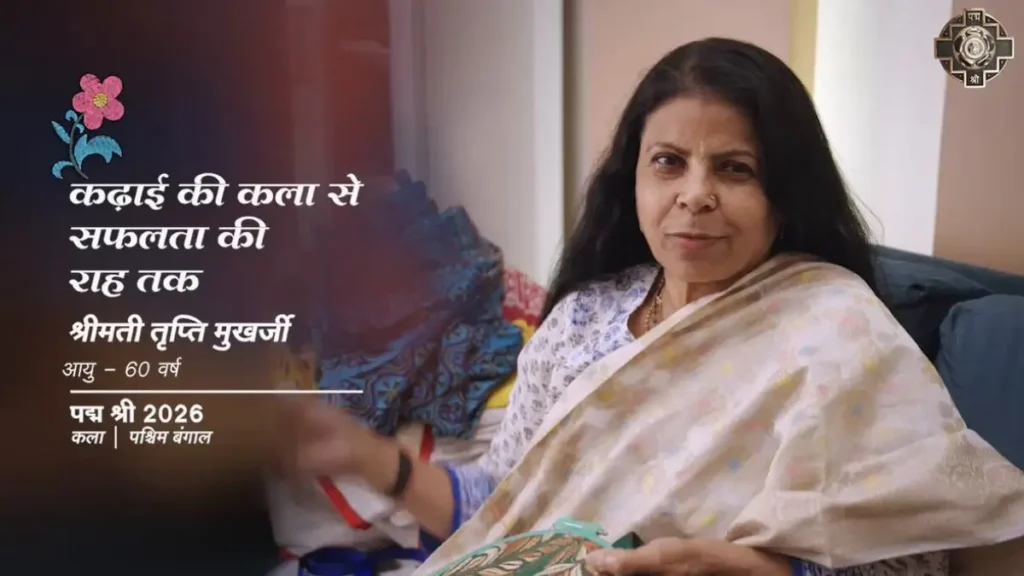
Tripti Mukherjee Padma Shri news highlights the importance of Kantha embroidery, traditional Indian handicrafts, women empowerment, and cultural heritage preservation for competitive exam preparation.
Introduction to the Honour
Traditional Indian handicrafts have long represented the cultural identity of the country. In a major recognition for India’s rich textile heritage, Kantha embroidery artist Tripti Mukherjee is set to receive the prestigious Padma Shri award for her contribution to preserving and promoting Kantha stitch embroidery. The Padma Shri is India’s fourth-highest civilian award and is given to individuals for distinguished service in various fields.
The recognition has drawn national attention to the traditional embroidery art form of West Bengal, which has been kept alive for generations by rural women artisans. Tripti Mukherjee has spent nearly four decades preserving this cultural legacy while also empowering thousands of women through skill development and employment opportunities.
What is Kantha Embroidery?
Kantha embroidery is a traditional style of hand stitching that originated in West Bengal and Bangladesh. It is famous for its intricate needlework patterns created using simple running stitches. Historically, old sarees and cloth materials were layered together and stitched into quilts, shawls, or decorative pieces.
Over time, Kantha evolved into a globally recognised handicraft tradition. Today, Kantha embroidery is used on sarees, dupattas, bed covers, wall hangings, jackets, and fashion accessories. The art form often reflects themes of rural life, mythology, nature, and Indian traditions.
The embroidery technique is labour-intensive and requires exceptional patience and craftsmanship. The preservation of such indigenous art forms has become increasingly important due to the rise of machine-made textile products.
Journey of Tripti Mukherjee
Born in West Bengal, Tripti Mukherjee learned the art of Kantha stitching from her mother at an early age. Inspired by traditional household embroidery practices, she gradually transformed her childhood learning into a professional mission dedicated to preserving India’s textile heritage.
She later established a training centre in Suri, located in the Birbhum district of West Bengal. Through this initiative, she trained thousands of women in Kantha embroidery, helping them achieve financial independence and self-reliance. According to multiple reports, she has trained more than 20,000 women across rural areas of Birbhum district.
Her work has played a significant role in rural women’s empowerment by creating livelihood opportunities in economically weaker communities. Many women trained by her participate in government-sponsored exhibitions and handicraft fairs, where they sell handcrafted products and earn sustainable incomes.
International Recognition of Indian Handicrafts
Apart from her contributions within India, Tripti Mukherjee has represented Indian handicrafts internationally. In 2017, she visited Birmingham in the United Kingdom under a Government of India-sponsored initiative to showcase Kantha embroidery on a global platform. She also participated in the India Trend Fair in Tokyo organised by the Export Promotion Council for Handicrafts under the Ministry of Textiles.
These international exhibitions helped promote Indian handloom and handicraft traditions worldwide while generating interest in traditional embroidery techniques among global audiences.
Previous Awards and Recognition
Before being selected for the Padma Shri, Tripti Mukherjee had already received several important honours for her contribution to handicrafts and textile art. These include:
- National Award Certificate in 2010
- Shilp Guru Award from the Ministry of Textiles in 2016
- Bangashree Award from the Government of West Bengal in 2017
These recognitions reflect her long-standing dedication to preserving traditional embroidery techniques and supporting artisan communities.
Importance of Traditional Art Preservation
India possesses one of the world’s richest handicraft traditions. However, many indigenous art forms face threats from industrialisation, urbanisation, and reduced market demand. Preservation efforts by artisans like Tripti Mukherjee are crucial for safeguarding India’s cultural identity.
Traditional crafts not only preserve heritage but also contribute significantly to employment generation, especially in rural areas. Handicrafts and handloom industries provide livelihoods to millions of artisans across India and support women-led entrepreneurship.
The Government of India has increasingly promoted “Vocal for Local,” handicraft exports, and rural entrepreneurship initiatives to strengthen traditional industries.

Why This News is Important
Recognition of India’s Cultural Heritage
The Padma Shri award to Tripti Mukherjee highlights the importance of preserving India’s traditional handicrafts and cultural heritage. Such recognition encourages younger generations to value indigenous art forms and continue traditional practices.
Women Empowerment Through Skill Development
This news is significant because it demonstrates how traditional skills can become tools for women’s empowerment. By training over 20,000 rural women in Kantha stitching, Tripti Mukherjee helped many women achieve economic independence and sustainable livelihoods.
Important for Government Exam Preparation
Questions related to Padma Awards, Indian handicrafts, traditional art forms, women empowerment schemes, and cultural heritage are frequently asked in competitive examinations such as UPSC, SSC, Banking, Railways, Defence, State PSCs, and teaching exams.
Students preparing for government jobs should understand the importance of preserving traditional crafts, the role of artisans in rural development, and India’s cultural diplomacy through handicrafts.
Promotion of Vocal for Local and Handicraft Economy
The news also aligns with India’s focus on promoting local products and strengthening rural economies. Traditional crafts like Kantha embroidery contribute to exports, tourism, and employment generation. Government support for artisans helps preserve cultural diversity while improving economic opportunities in rural India.
Historical Context
Origin and Evolution of Kantha Art
Kantha embroidery originated in the Bengal region centuries ago as a domestic craft practised mainly by women. Old cloth materials were recycled into quilts and decorative items using hand stitching techniques. The craft symbolised sustainability, creativity, and storytelling through embroidery patterns.
Initially limited to household use, Kantha later evolved into a commercial handicraft industry with growing domestic and international demand.
Traditional Handicrafts in India
India has a long history of textile and handicraft traditions, including Chikankari of Lucknow, Pashmina weaving of Kashmir, Madhubani painting of Bihar, and Kanchipuram silk weaving of Tamil Nadu. These crafts form an important part of India’s soft power and cultural diplomacy.
Government institutions such as the Ministry of Textiles and Export Promotion Council for Handicrafts have played a major role in supporting artisan communities through exhibitions, fairs, export promotion, and skill development programmes.
Padma Awards and Cultural Recognition
The Padma Awards were instituted in 1954 to recognise exceptional contributions in various fields, including art, literature, science, social work, and public affairs. Honouring traditional artisans under these awards helps bring national attention to India’s cultural preservation efforts and rural craftsmanship.
Key Takeaways from This News
| S.No. | Key Takeaway |
|---|---|
| 1 | Tripti Mukherjee will receive the Padma Shri for preserving Kantha embroidery. |
| 2 | Kantha embroidery is a traditional hand-stitch embroidery style originating from West Bengal and Bangladesh. |
| 3 | She has trained more than 20,000 rural women in Kantha stitching and helped create livelihood opportunities. |
| 4 | She represented Indian handicrafts internationally in countries like the United Kingdom and Japan. |
| 5 | The news highlights the importance of preserving traditional Indian handicrafts and promoting women empowerment through skill development. |
FAQs Related to Kantha Artist Tripti Mukherjee and Padma Shri Award
1. Who is Tripti Mukherjee?
Tripti Mukherjee is a renowned Kantha embroidery artist from West Bengal who has been awarded the Padma Shri for preserving and promoting traditional Indian embroidery.
2. What is Kantha embroidery?
Kantha embroidery is a traditional hand-stitch embroidery style originating from West Bengal and Bangladesh. It uses simple running stitches to create decorative patterns on cloth.
3. Which civilian award will Tripti Mukherjee receive?
She will receive the Padma Shri, India’s fourth-highest civilian award.
4. Why is Tripti Mukherjee famous?
She is famous for preserving the traditional Kantha embroidery art form and training thousands of rural women in embroidery skills.
5. How many women have been trained by Tripti Mukherjee?
Reports suggest that she has trained more than 20,000 rural women in Kantha stitching.
6. Which ministry is associated with handicraft promotion in India?
The Ministry of Textiles is mainly responsible for promoting handicrafts and handloom industries in India.
7. What is the significance of Kantha art in Indian culture?
Kantha embroidery represents India’s traditional textile heritage and reflects rural culture, storytelling, and sustainability practices.
8. When were the Padma Awards instituted?
The Padma Awards were instituted in 1954 by the Government of India.
9. Which are the major Padma Awards in India?
The major Padma Awards are:
- Bharat Ratna
- Padma Vibhushan
- Padma Bhushan
- Padma Shri
10. Why is this topic important for competitive exams?
Questions related to Padma Awards, Indian handicrafts, cultural heritage, women empowerment, and traditional art forms are frequently asked in UPSC, SSC, Banking, Railways, Defence, and State PSC examinations.
Some Important Current Affairs Links

