

Rare blue pinkgill mushroom (Entoloma hochstetteri) discovered in Telangana forests highlights biodiversity and ecological research importance. Key facts for competitive exams.
🌿 Discovery of Rare Blue Pinkgill Mushroom in Telangana Forests
In a remarkable ecological discovery, the blue pinkgill mushroom (Entoloma hochstetteri), a species native to New Zealand, has been spotted for the first time in the forests of Telangana. This discovery was made in the Kagaznagar forest division of the Komaram Bheem Asifabad district, marking a significant addition to India’s mycological records.
🧬 What is the Blue Pinkgill Mushroom?
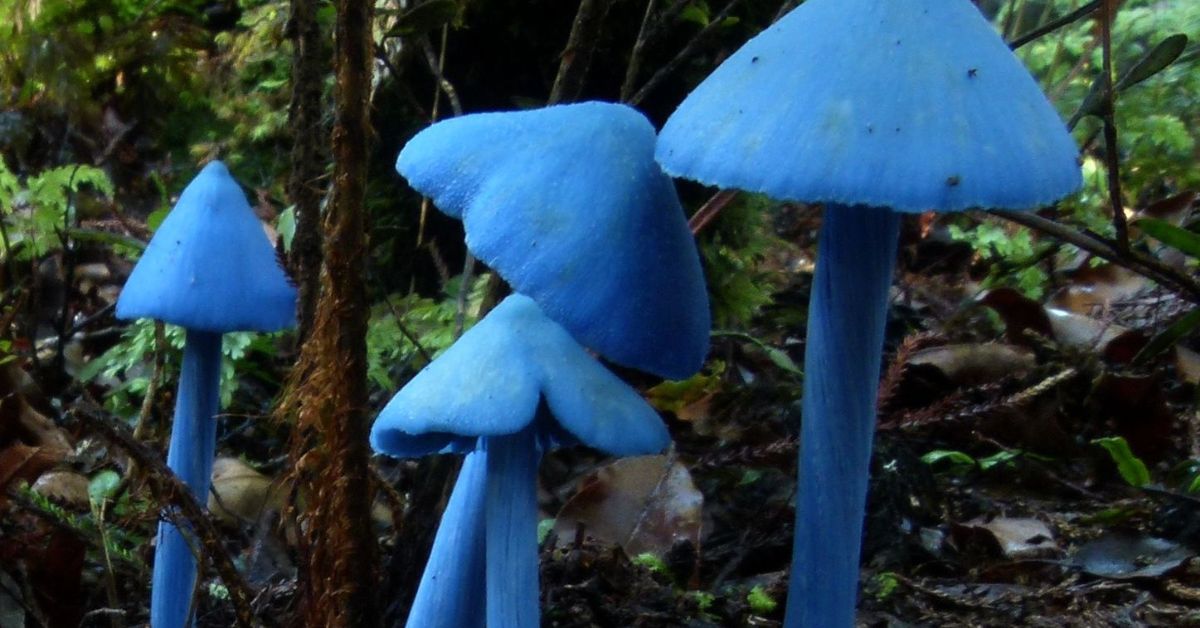
The blue pinkgill mushroom, also known as the sky-blue mushroom, is renowned for its striking indigo-blue cap and stem, with gills that range from pink to purplish hues due to the presence of spores. Its vivid blue coloration is attributed to rare azulene pigments, making it one of the few fungi to exhibit such a hue. The mushroom’s cap can be flat or funnel-shaped, and it typically produces a pink to salmon-colored spore print, aiding in its identification.
📍 Discovery Location and Significance
The blue pinkgill was discovered in the Kadamba Reserve Forest and other areas within the Kagaznagar forest division. This region is known for its rich biodiversity and has now added this rare species to its list of documented flora. The presence of such a species in Telangana underscores the ecological importance of the state’s forests and their potential to harbor unique and previously undocumented species.
🌱 Ecological and Scientific Importance
The discovery of the blue pinkgill mushroom holds significant ecological and scientific value. Fungi play a crucial role in forest ecosystems, particularly in nutrient cycling and decomposition processes. Understanding the distribution and characteristics of such species can provide insights into forest health and biodiversity. Moreover, the presence of a species previously thought to be confined to New Zealand suggests that Telangana’s forests may share ecological similarities with other global regions, warranting further research and conservation efforts.
🧠 Why This News is Important
🌿 Enhancing Biodiversity Records
The identification of the blue pinkgill mushroom in Telangana contributes to the expanding biodiversity records of India. Documenting such species is essential for understanding the full spectrum of flora present in the country and aids in conservation planning.
🔬 Implications for Ecological Studies
This discovery provides researchers with an opportunity to study the ecological roles of fungi in Indian forests. Investigating how such species interact with their environment can lead to a deeper understanding of forest dynamics and health.
📚 Relevance to Competitive Exams
For students preparing for government exams, especially in fields related to environmental science, biology, and forestry, this discovery is pertinent. It highlights the importance of mycology and the need for awareness of lesser-known species in ecological studies.
🌍 Global Ecological Connections
The presence of a New Zealand-native species in India suggests potential global ecological connections. This aspect can be explored in exams focusing on global biodiversity and the factors influencing species distribution.
🛡️ Conservation Awareness
The discovery emphasizes the need for conservation efforts to protect diverse species and their habitats. Understanding the significance of such species can inspire future conservation initiatives and policies.
🕰️ Historical Context
The blue pinkgill mushroom (Entoloma hochstetteri) was first described in New Zealand and is known for its distinctive blue coloration, attributed to azulene pigments. It has been featured on New Zealand’s $50 banknote, highlighting its cultural and scientific significance. Prior to this discovery, the species had been recorded in India only once, in Odisha in 1989. This recent sighting in Telangana marks a significant extension of its known range in the country.
✅ Key Takeaways from “Rare Blue Pinkgill Mushroom Discovered in Telangana Forests”
| No. | Key Takeaway |
|---|---|
| 1. | The blue pinkgill mushroom (Entoloma hochstetteri), native to New Zealand, has been discovered in Telangana’s Kagaznagar forest division. |
| 2. | The mushroom’s vivid blue color is due to rare azulene pigments, making it unique among fungi. |
| 3. | Its discovery in Telangana marks the first confirmed record of this species in the region. |
| 4. | The presence of the blue pinkgill highlights the rich biodiversity and ecological significance of Telangana’s forests. |
| 5. | This finding is relevant for students preparing for exams in fields like environmental science, biology, and forestry. |
FAQs: Frequently Asked Questions
1. What is the blue pinkgill mushroom?
The blue pinkgill mushroom (Entoloma hochstetteri) is a rare fungi species native to New Zealand, known for its striking indigo-blue cap and stem, with pink to purplish gills.
2. Where was the blue pinkgill mushroom discovered in India?
It was discovered in the Kagaznagar forest division of the Komaram Bheem Asifabad district, Telangana.
3. What makes the blue pinkgill mushroom unique?
Its vivid blue coloration is due to azulene pigments, a rare feature among fungi. It also produces a pink to salmon-colored spore print.
4. Why is this discovery ecologically important?
Fungi play a crucial role in nutrient cycling and forest health. Discovering such rare species highlights the biodiversity and ecological value of Telangana’s forests.
5. Has this mushroom been found in India before?
Yes, a single record exists from Odisha in 1989, making this discovery in Telangana significant for its range extension.
6. How is this discovery relevant for competitive exams?
For exams like UPSC, SSC, RRB, and state-level exams, questions on biodiversity, rare species, and ecological studies are common. Knowledge of unique discoveries like this can be directly asked.
7. What is the scientific significance of this mushroom?
It provides opportunities for research on species distribution, ecological interactions, and potential biochemical properties of rare fungi.
Some Important Current Affairs Links

