
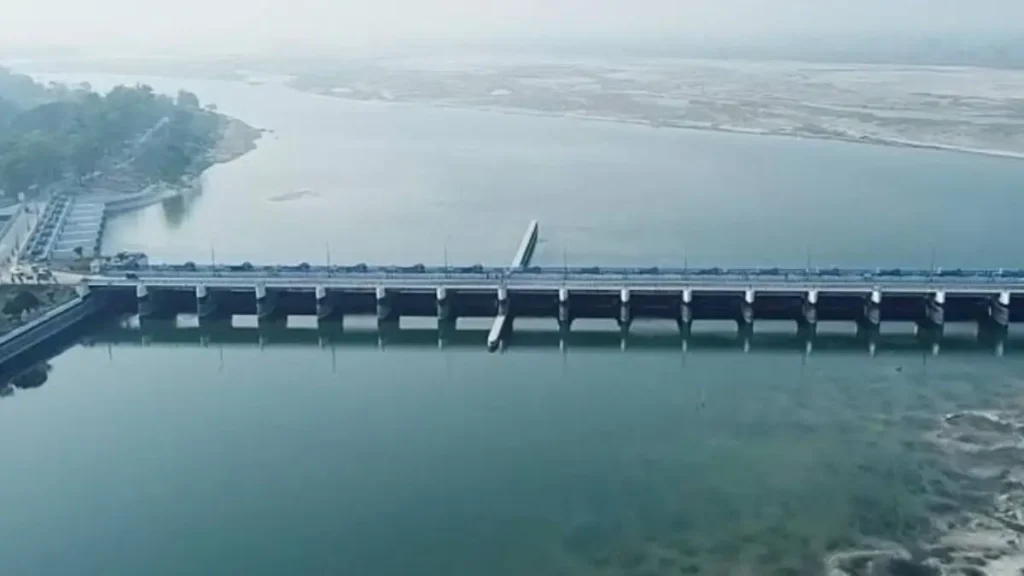
Teesta Barrage Project review committee: India forms a 12-member panel to review the Teesta Barrage Project amid China-Bangladesh cooperation, covering water security, infrastructure and climate resilience.
India Constitutes High-Powered Committee on Teesta Barrage Project
India has constituted a 12-member high-powered committee to examine the restoration, strengthening and future management of the Teesta Barrage Project (TBP) in West Bengal. The move has gained importance because Bangladesh has recently increased cooperation with China on the management and restoration of the Teesta River. The Indian committee is chaired by the Chairman of the Central Water Commission (CWC) and has been given six months to submit its report.
Committee to Assess Water Availability and Future Demand
The committee will undertake a comprehensive assessment of the Teesta basin, including present water utilisation, future water requirements and methods for improving river-basin management. It will also examine the effects of climate change and identify strategies that can make the project and associated infrastructure more climate-resilient. Representatives from Sikkim and West Bengal are also part of the committee at the Joint Secretary level or equivalent.
Focus on Barrage Infrastructure and River Management
The review is not limited to the physical condition of the existing barrage. The committee will study issues such as siltation, water availability, augmentation of water resources, present usage and projected demand. It will also consider measures to increase the carrying capacity of the Teesta and its drainage channels and strengthen associated infrastructure. Regulation of releases from upstream dams and storage facilities, including the Gajaldoba Barrage, is also part of the wider assessment.
China-Bangladesh Cooperation Adds Geopolitical Significance
The Indian review comes at a time when Bangladesh is seeking greater Chinese participation in the Teesta River Comprehensive Management and Restoration Project. During Bangladeshi Prime Minister Tarique Rahman’s visit to China in June 2026, Beijing agreed to provide support and technical cooperation for Bangladesh’s plans concerning the Teesta. Bangladesh has been seeking improvements in flood control, irrigation, river navigation and dry-season water availability.
Teesta River Has Strategic Importance for India and Bangladesh
The Teesta originates in the Himalayan region of Sikkim, flows through West Bengal and subsequently enters Bangladesh. Its transboundary nature makes the river important not only for water management but also for India-Bangladesh relations. Agriculture, irrigation, flood management and water availability during the dry season are major concerns for communities dependent on the river in both countries. China’s increasing involvement has therefore added a broader geopolitical dimension to an existing water-management issue.
India to Examine Climate-Resilient Management
Another important aspect of the committee’s mandate is climate resilience. Changing rainfall patterns, floods, sedimentation and fluctuations in river discharge can affect the long-term performance of water infrastructure. By examining current and future water requirements together with climate-related risks, the committee is expected to help develop a more sustainable approach to Teesta basin management.
Teesta Issue Relevant for Government Exam Preparation
For government-exam aspirants, the development is important because it connects Indian geography, river systems, water resources, international relations, environmental management and India’s neighbourhood policy. Questions may focus on the origin and course of the Teesta, the states through which it flows, the countries sharing the river, the Central Water Commission, the Teesta Barrage Project and the emerging India-Bangladesh-China dimension.
Why This News is Important
Significance for India-Bangladesh Relations
The Teesta issue has been a long-standing component of India-Bangladesh relations. The river is shared by India and Bangladesh, making its management closely connected with agriculture, irrigation and livelihoods. India’s decision to reassess the Teesta Barrage Project comes at a sensitive time when Bangladesh is developing closer cooperation with China over the river. This makes the issue relevant to India’s neighbourhood diplomacy and regional strategic interests.
Importance for Water Security
The committee’s mandate demonstrates that water security is increasingly being viewed through a long-term and basin-wide approach. Its assessment of present utilisation, future demand, siltation and climate change is significant because river flows and water availability can change over time. Effective management can help address irrigation requirements, flood risks and infrastructure challenges.
China Factor in Regional Geopolitics
China’s involvement in Bangladesh’s Teesta plans gives the issue a geopolitical dimension. Bangladesh has sought Chinese technical cooperation for a project involving flood control, irrigation, navigation and dry-season water availability. Although China has stated that its cooperation is not directed against any third country, India’s review highlights the strategic importance of developments involving a transboundary river in its neighbourhood.
Importance for Competitive Examinations
The news provides an integrated topic for UPSC, State PCS, SSC, Banking, Railways, Defence and other government examinations. Aspirants should connect the development with Indian rivers, transboundary water management, federal coordination involving Sikkim and West Bengal, India-Bangladesh relations and India’s strategic concerns in South Asia.
Historical Context: Background of the Teesta Issue
Origin and Course of the Teesta
The Teesta is a major Himalayan river that originates in Sikkim, passes through Sikkim and West Bengal and then flows into Bangladesh. Its transboundary character has made water-sharing and river management important subjects in relations between India and Bangladesh. The river supports irrigation and agriculture in regions on both sides of the international border.
Teesta Water-Sharing Dispute
The sharing of Teesta waters has remained unresolved for years. India and Bangladesh have held negotiations over an agreement for sharing the river’s waters, particularly during the dry season when water availability becomes more constrained. Differences over allocation have prevented the conclusion of a comprehensive long-term water-sharing agreement.
Teesta Barrage Project
The Teesta Barrage Project in West Bengal is associated with irrigation and water-resource management in the Teesta basin. The infrastructure has an important role in regulating and utilising available river water. Over time, concerns involving water availability, sedimentation, infrastructure capacity and changing environmental conditions have increased the need for comprehensive assessment.
Emergence of the China Dimension
China’s interest in supporting Bangladesh’s Teesta River management plans has added a new dimension to the issue. In 2026, Bangladesh sought Chinese involvement and technical support for its comprehensive Teesta management and restoration plans. The development has increased attention in India because the Teesta is a transboundary river that originates in territory under Indian administration before entering Bangladesh.
Recent Indian Review
Against this background, India constituted the 12-member committee on 10 July 2026 to examine the restoration and future management of the Teesta Barrage Project. The committee has six months to submit its recommendations. Its work includes assessing water use, future demand, infrastructure, siltation, climate change and measures for improving the river basin’s management.
Key Takeaways from Teesta Barrage Project Review
| S. No. | Key Takeaway |
|---|---|
| 1 | India has constituted a 12-member high-powered committee to review the restoration and future management of the Teesta Barrage Project. |
| 2 | The committee is chaired by the Chairman of the Central Water Commission (CWC) and has six months to submit its report. |
| 3 | The Teesta originates in Sikkim, flows through West Bengal, and then enters Bangladesh. |
| 4 | The review covers water utilisation, future demand, siltation, infrastructure, river capacity and climate-change resilience. |
| 5 | The development comes amid growing China-Bangladesh cooperation on Teesta River management, adding a geopolitical dimension to the India-Bangladesh water issue. |
FAQs: Frequently Asked Questions
1. Why has India constituted a committee to review the Teesta Barrage Project?
India has constituted a 12-member high-powered committee to examine the restoration, strengthening and future management of the Teesta Barrage Project. The review will assess water availability, present utilisation, future demand, infrastructure requirements, siltation and climate-related challenges.
2. Who is heading the committee reviewing the Teesta Barrage Project?
The committee is headed by the Chairman of the Central Water Commission (CWC).
3. How many members are included in the high-powered committee?
The committee consists of 12 members.
4. What is the Teesta Barrage Project?
The Teesta Barrage Project is a major water-resource and irrigation project in West Bengal associated with the utilisation and management of Teesta River waters.
5. Where does the Teesta River originate?
The Teesta River originates in Sikkim in the Himalayan region.
6. Which Indian states are associated with the course of the Teesta River?
The Teesta flows through Sikkim and West Bengal before entering Bangladesh.
7. Which neighbouring country shares the Teesta River with India?
Bangladesh shares the Teesta River with India.
8. Why is the Teesta River important for India and Bangladesh?
The river is important for irrigation, agriculture, flood management, water security and livelihoods. Its transboundary nature also makes it significant for India-Bangladesh relations.
9. What role does China play in the latest Teesta-related development?
Bangladesh has been pursuing Chinese technical cooperation for its Teesta River Comprehensive Management and Restoration Project, covering areas such as flood control, irrigation, navigation and river management.
10. What environmental issue will the Indian committee examine?
The committee will examine issues including climate change, siltation, changing water availability and future water demand, along with measures to improve the resilience of the river system and related infrastructure.
Some Important Current Affairs Links

