
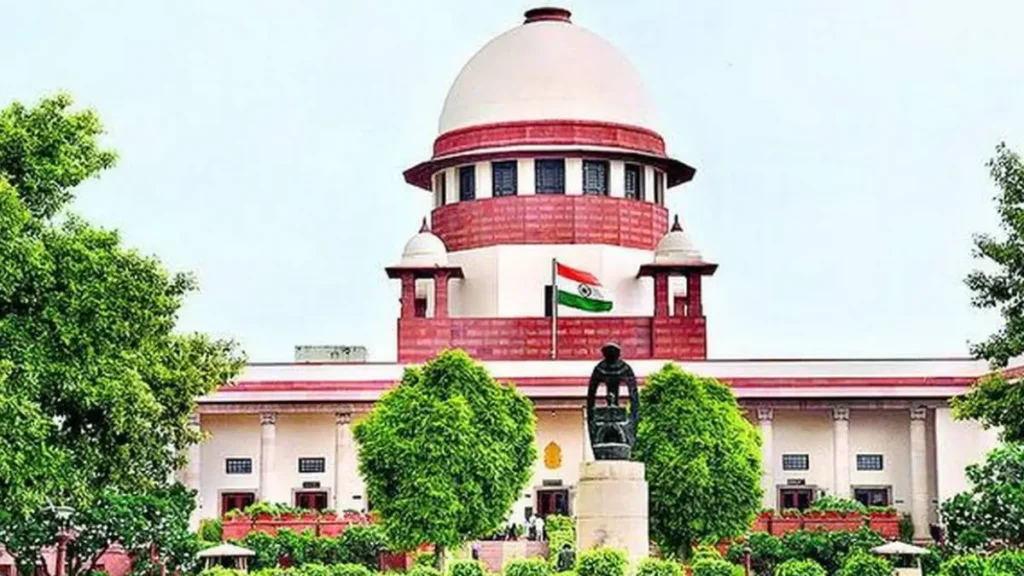
Supreme Court cancer notification: The Supreme Court asks 19 States and UTs to consider declaring cancer a notifiable disease. Know key facts for government exams.
Supreme Court’s Direction on Cancer Reporting
The Supreme Court of India has asked 19 States and Union Territories that have not yet declared cancer a notifiable disease to consider taking appropriate steps in this direction. The move is aimed at strengthening cancer surveillance, improving the availability of reliable health data and supporting better planning for prevention, screening, diagnosis and treatment. The direction came while the court was examining a Public Interest Litigation seeking nationwide recognition of cancer as a notifiable disease.
What Is a Notifiable Disease?
A notifiable disease is a disease whose occurrence or suspected occurrence has to be reported to designated public health authorities under applicable laws or regulations. Such reporting allows governments to monitor disease patterns, identify emerging trends and plan appropriate public-health interventions. The specific list of notifiable diseases can vary across States and Union Territories in India.
19 States and UTs Asked to Take Appropriate Action
According to the information placed before the Supreme Court, 17 of India’s 36 States and Union Territories had already declared cancer a notifiable disease. The court has now asked the remaining 19 States and UTs to consider the issue and take appropriate decisions. These governments are also required to submit compliance affidavits indicating the steps taken in response to the court’s direction.
Why Cancer Notification Matters
Declaring cancer as a notifiable disease can facilitate systematic reporting of newly diagnosed cases to public health authorities. A stronger reporting mechanism can help create more comprehensive databases, identify geographical and demographic patterns and support evidence-based health policies. It can also help governments assess where healthcare infrastructure, diagnostic facilities and cancer-treatment resources are most urgently required.
Need for Better Cancer Surveillance in India
Cancer surveillance is important because reliable information about the number, type and distribution of cancer cases is essential for effective public-health planning. Differences in reporting practices among States and UTs can make it difficult to obtain a consistent national picture. Wider notification of cancer cases could therefore improve the quality and comparability of information available to policymakers and health authorities.
Supreme Court Also Highlights Cancer Screening
The court’s concern is not limited to disease reporting. It has also called for steps towards implementing cancer screening. Screening can help detect certain cancers at an earlier stage, when treatment may be more effective. This is particularly significant in areas where access to specialised healthcare and diagnostic services remains limited.
Health as a State Subject
An important constitutional and administrative aspect of the matter is that public health is primarily a State subject under India’s constitutional framework. The Centre informed the court that States have authority in this area and that 17 States had already taken steps concerning cancer notification. This makes coordination between the Union and State governments important for developing more consistent disease-surveillance practices.
Importance for Government Exam Aspirants
For students preparing for UPSC, State PCS, SSC, banking, railways, police, teaching and defence examinations, this development connects several important subjects: Indian Polity, public health, governance, federalism and current affairs. Aspirants should particularly remember the number of States and UTs that had already notified cancer, the number asked to consider notification, the meaning of a notifiable disease and the role of disease surveillance in public-health policy.
Why This News is Important
Strengthening Public Health Data
The Supreme Court’s direction is important because effective healthcare policy depends heavily on accurate and timely data. Cancer notification could make reporting of cancer cases more systematic and help authorities understand the burden of the disease across different regions. Better information can improve the allocation of healthcare resources and the design of prevention and treatment programmes.
Supporting Evidence-Based Policy
Reliable cancer data can assist governments in identifying areas with higher disease burdens and determining where screening, diagnostic centres, treatment facilities and trained medical personnel are needed. This can make public-health decisions more evidence-based rather than relying on incomplete information.
Improving Early Detection
The Supreme Court has also highlighted cancer screening. Early detection is an important component of cancer control because identifying disease at an earlier stage can improve treatment prospects for several types of cancer. Stronger surveillance and screening systems can therefore complement each other.
Important for Federalism and Governance
The issue also highlights India’s federal structure. Since health is a State subject, States and UTs play a significant role in disease notification and public-health administration. The case therefore provides an important example of how judicial directions, State responsibilities and national public-health objectives can interact.
Key Current Affairs Point
From an examination perspective, the development is particularly relevant because it combines a Supreme Court direction with public health and Centre-State relations. The figures are important: out of 36 States and UTs, 17 had already declared cancer notifiable, while the remaining 19 were asked to consider doing so.
Historical Context: Background of Disease Notification and Cancer Surveillance in India
Evolution of Disease Surveillance
Disease notification is a long-standing public-health mechanism used by governments to identify and monitor diseases that require official surveillance. Reporting helps health authorities understand disease incidence, geographical distribution and changes over time. Diseases such as tuberculosis, dengue, malaria, cholera, measles and polio have been subject to notification requirements in different jurisdictions.
State-Level Approach in India
India does not currently operate with a single, uniform list of notifiable diseases applicable in exactly the same manner across every State and Union Territory. States and UTs have considerable responsibility in determining notification requirements within their respective public-health systems. This decentralised approach can result in differences in reporting practices.
Cancer Registry and Surveillance
Cancer surveillance has also developed through cancer registry systems that collect information on cancer incidence and related characteristics. However, concerns over the coverage and consistency of cancer surveillance have highlighted the need for stronger reporting mechanisms, particularly to obtain better information from populations and regions that may not be adequately represented in existing systems.
Public Interest Litigation and Supreme Court Intervention
The present development originated from a Public Interest Litigation seeking wider recognition of cancer as a notifiable disease. During the proceedings, the Supreme Court considered the existing differences among States and UTs and asked the 19 jurisdictions that had not yet notified cancer to consider taking appropriate action.
Broader Public-Health Significance
The issue reflects a broader shift towards data-driven public health. As cancer remains a major health challenge, reliable information can assist authorities in prevention, screening, diagnosis, treatment planning and resource allocation. The Supreme Court’s direction therefore places disease surveillance and early detection at the centre of the current discussion.
Key Takeaways from Supreme Court’s Cancer Notification Direction
| S. No. | Key Takeaway |
|---|---|
| 1 | The Supreme Court asked 19 States and Union Territories to consider declaring cancer a notifiable disease. |
| 2 | 17 of India’s 36 States and UTs had already declared cancer a notifiable disease, according to information placed before the court. |
| 3 | A notifiable disease is one whose occurrence or suspected occurrence is required to be reported to designated public-health authorities under applicable rules. |
| 4 | Cancer notification can improve disease surveillance, data collection, healthcare planning and resource allocation. |
| 5 | The Supreme Court also highlighted the importance of cancer screening and early detection, making the issue significant for India’s public-health strategy. |
Frequently Asked Questions (FAQs)
1. What did the Supreme Court ask 19 States and UTs to consider?
The Supreme Court asked 19 States and Union Territories that had not yet declared cancer a notifiable disease to consider taking appropriate steps towards doing so.
2. What is a notifiable disease?
A notifiable disease is a disease whose occurrence or suspected occurrence is required to be reported to designated public-health authorities under applicable laws or regulations. Such reporting helps governments monitor disease trends and plan public-health interventions.
3. How many States and Union Territories had already declared cancer a notifiable disease?
According to the information placed before the Supreme Court, 17 of India’s 36 States and Union Territories had already declared cancer a notifiable disease.
4. Why is cancer notification important?
Cancer notification can strengthen disease surveillance by improving the systematic collection of information about cancer cases. Better data can support healthcare planning, resource allocation, screening programmes and policymaking.
5. What is the significance of cancer screening?
Cancer screening can help identify certain cancers at an early stage, potentially improving treatment outcomes. Strengthening screening is therefore an important component of cancer-control strategies.
6. Which constitutional subject primarily covers public health in India?
Public health and sanitation; hospitals and dispensaries are primarily covered under the State List of the Seventh Schedule of the Constitution of India.
7. How many States and UTs were yet to declare cancer a notifiable disease according to the information before the Supreme Court?
19 States and Union Territories had not yet declared cancer a notifiable disease, according to the information considered by the court.
8. How can cancer notification help policymakers?
It can provide more systematic information about the incidence and distribution of cancer, helping authorities identify areas requiring improved screening, diagnostic facilities, treatment infrastructure and healthcare personnel.
9. What is the role of cancer surveillance?
Cancer surveillance involves collecting and analysing information about cancer cases and trends. It helps governments and health agencies understand disease patterns and formulate evidence-based cancer-control policies.
10. Why is this issue important for government examinations?
The topic combines current affairs, Indian Polity, public health, Centre-State relations and governance. Important examination facts include the Supreme Court’s direction, the number of States and UTs involved, the concept of a notifiable disease and the importance of cancer surveillance.
Some Important Current Affairs Links

