
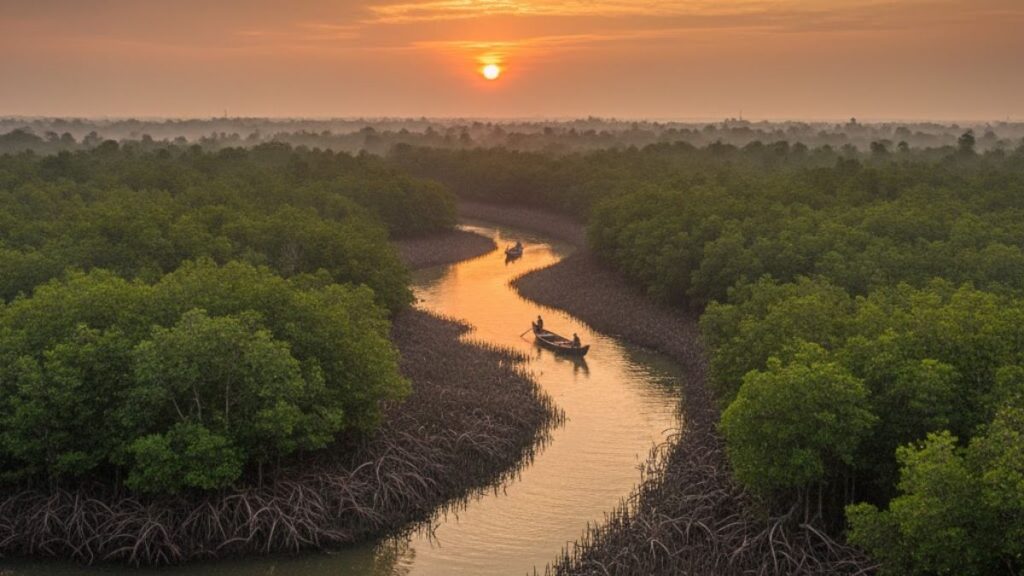
SAIME sustainable aquaculture model in Sundarbans earns FAO global recognition for integrating shrimp farming with mangrove conservation, promoting community livelihoods and coastal resilience.
SAIME Aquaculture Model from Sundarbans Earns FAO Global Recognition
Introduction: FAO Recognizes SAIME Model
In October 2025, the Sustainable Aquaculture in Mangrove Ecosystems (SAIME) model, developed by the Nature Environment and Wildlife Society (NEWS) in West Bengal’s Sundarbans, received Global Technical Recognition from the Food and Agriculture Organization (FAO) during the World Food Forum in Rome. This acknowledgment highlights India’s leadership in integrating sustainable aquaculture with mangrove conservation.
Understanding the SAIME Model
The SAIME model is a community-based initiative that integrates 5–30% mangrove cover within aquaculture ponds, focusing on Black Tiger Shrimp (Penaeus monodon). Farmers utilize mangrove litter as natural feed, reducing reliance on chemical inputs and promoting a self-sustaining ecosystem. Implemented across 29.84 hectares in North and South 24 Parganas districts, the model has doubled farmers’ annual net profits by cutting production costs.
Environmental and Climate Resilience
Mangroves play a crucial role in enhancing coastal resilience by acting as natural buffers against storms and erosion. The SAIME model not only supports sustainable livelihoods but also contributes to carbon sequestration, aligning with global climate action goals. This integrated approach demonstrates how aquaculture can coexist with environmental conservation.
Community Participation and Governance
The success of the SAIME model is attributed to its participatory approach, involving local farmers in decision-making and management. This community-driven governance has fostered trust and accountability, ensuring the model’s sustainability and scalability in other coastal regions.
Conclusion: A Model for Sustainable Aquaculture
The recognition of the SAIME model by the FAO underscores the importance of integrating sustainable practices in aquaculture. It serves as a blueprint for balancing ecological conservation with economic development, offering valuable insights for policy makers, environmentalists, and aspirants of civil services and related examinations.
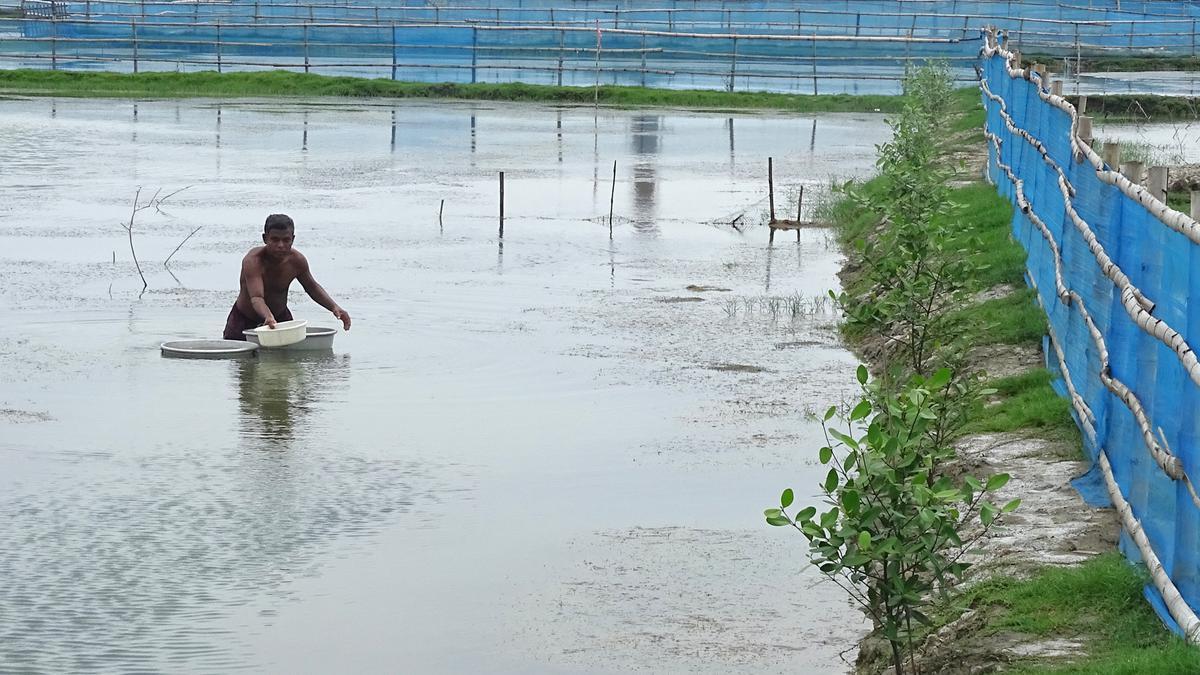
Why This News is Important
Significance for Sustainable Development
The SAIME model exemplifies a successful integration of aquaculture with mangrove conservation, addressing both environmental and economic challenges. This approach aligns with Sustainable Development Goal 14 (Life Below Water) and Goal 13 (Climate Action), promoting responsible resource use and climate resilience.
Implications for Coastal Communities
By involving local communities in sustainable practices, the SAIME model empowers farmers, enhances livelihoods, and fosters community cohesion. This participatory model can be replicated in other coastal regions facing similar challenges.
Relevance for Competitive Examinations
Understanding the SAIME model is crucial for candidates preparing for civil services and related examinations. It provides insights into sustainable development practices, environmental conservation, and community-based governance, which are pertinent to various examination syllabi.
Historical Context:
The Sundarbans Ecosystem
The Sundarbans, located in the delta of the Ganges, Brahmaputra, and Meghna rivers, is the largest mangrove forest in the world. It is a UNESCO World Heritage Site and a Wetland of International Importance under the Ramsar Convention. The region is home to diverse flora and fauna, including the Bengal tiger, and plays a vital role in coastal protection and carbon sequestration.
Challenges Faced by the Region
The Sundarbans face several environmental challenges, including salinity intrusion, sea-level rise, and habitat degradation. Traditional aquaculture practices have contributed to mangrove deforestation, exacerbating these issues. The SAIME model emerged as a solution to balance aquaculture with mangrove conservation, promoting sustainable livelihoods and environmental resilience.
Key Takeaways from “SAIME Aquaculture Model from Sundarbans Earns FAO Global Recognition”
| No. | Key Takeaway |
|---|---|
| 1. | The SAIME model integrates 5–30% mangrove cover within aquaculture ponds, focusing on Black Tiger Shrimp farming. |
| 2. | Utilization of mangrove litter as natural feed reduces reliance on chemical inputs, promoting a self-sustaining ecosystem. |
| 3. | The model has been implemented across 29.84 hectares in North and South 24 Parganas districts, benefiting 42 farmers. |
| 4. | FAO’s recognition underscores India’s leadership in sustainable aquaculture and mangrove conservation. |
| 5. | The SAIME model serves as a replicable framework for balancing ecological conservation with economic development in coastal regions. |
FAQs: Frequently Asked Questions
1. What is the SAIME model recognized by FAO?
The SAIME (Sustainable Aquaculture in Mangrove Ecosystems) model is a community-based initiative in the Sundarbans that integrates 5–30% mangrove cover within aquaculture ponds, focusing on Black Tiger Shrimp farming. It promotes sustainable aquaculture while conserving mangroves.
2. Which organization developed the SAIME model?
The SAIME model was developed by the Nature Environment and Wildlife Society (NEWS), West Bengal.
3. Why did the FAO recognize the SAIME model globally?
FAO recognized the model for its innovative approach to sustainable aquaculture, mangrove conservation, climate resilience, and community participation in coastal livelihoods.
4. How does the SAIME model benefit local farmers?
It reduces production costs by using mangrove litter as natural feed, increases annual net profits, and promotes self-sustaining ecosystems, benefiting local coastal communities economically.
5. Where has the SAIME model been implemented?
The model has been implemented across 29.84 hectares in North and South 24 Parganas districts in the Sundarbans region.
6. What environmental benefits does the SAIME model provide?
The model supports carbon sequestration, enhances coastal resilience, prevents mangrove deforestation, and contributes to climate action goals.
7. How is community participation incorporated in the SAIME model?
Local farmers are actively involved in pond management, decision-making, and governance, ensuring accountability and sustainability of the model.
8. Which species of shrimp is primarily farmed in the SAIME model?
Black Tiger Shrimp (Penaeus monodon) is the primary species farmed under this model.
9. What is the significance of mangroves in aquaculture?
Mangroves act as natural buffers against storms, prevent soil erosion, and provide natural feed for aquaculture, reducing chemical use.
10. How can the SAIME model be useful for government exam preparation?
Understanding this model is relevant for questions on sustainable development, climate action, coastal management, and community-based governance, which are often part of civil services, banking, and UPSC exam syllabi.
Some Important Current Affairs Links

