
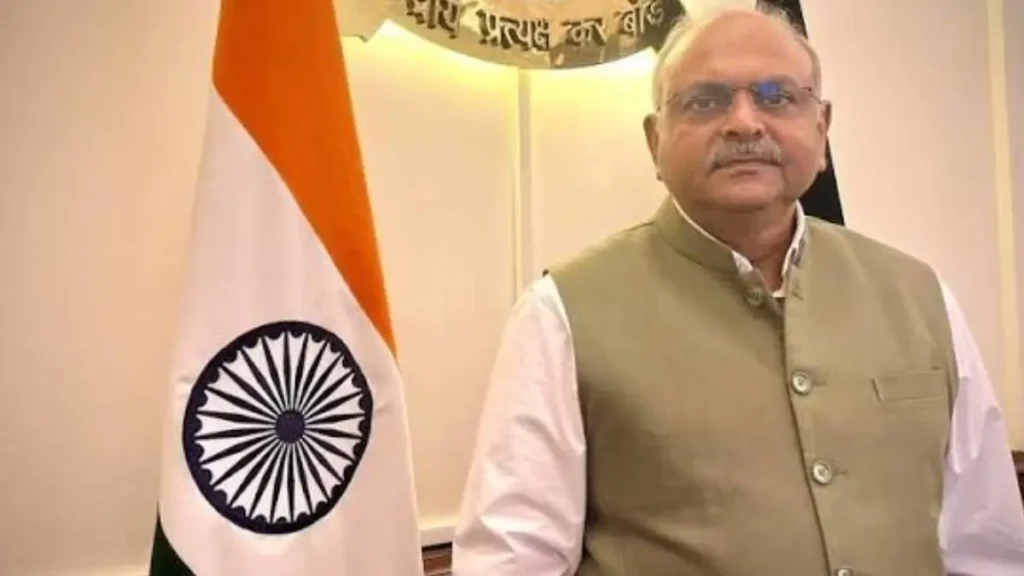
Ravi Agrawal CBDT chairman reappointment explained in detail for UPSC, SSC, Banking, Railways, Defence, and State PSC exams. Learn about the CBDT Chairman’s tenure extension till December 2026, the role of CBDT, important facts, historical background, FAQs, and exam-oriented key points.
Ravi Agrawal Reappointed as CBDT Chairman: Centre Extends Tenure Till December 2026
Government Approves Fresh Extension for CBDT Chairman
The Union Government has reappointed Ravi Agrawal as the Chairman of the Central Board of Direct Taxes (CBDT) on a contract basis, extending his tenure until 31 December 2026. The decision was approved by the Appointments Committee of the Cabinet (ACC) and came into effect from 1 July 2026. This extension ensures continuity in the leadership of India’s apex direct tax administration at a time when several tax reforms and digital governance initiatives are underway.
Who is Ravi Agrawal?
Ravi Agrawal is a 1988-batch Indian Revenue Service (IRS) officer belonging to the Income Tax cadre. Before becoming the CBDT Chairman, he served as Member (Administration) in the CBDT and held several senior positions in the Income Tax Department. He assumed charge as CBDT Chairman in July 2024, succeeding Nitin Gupta. Since then, he has been associated with improving tax administration, increasing voluntary compliance, and promoting technology-driven governance.
Details of the Latest Appointment
According to the official order issued by the ACC, Ravi Agrawal has been reappointed on a contract basis for six months beginning from 1 July 2026 or until further orders, whichever is earlier. The appointment has been made by relaxing the existing recruitment rules applicable to central government officers. The government had earlier extended his tenure by one year in 2025, and the latest order further continues his leadership till the end of December 2026.
What is the Central Board of Direct Taxes (CBDT)?
The CBDT is the highest policymaking body responsible for the administration of direct taxes in India. It functions under the Department of Revenue in the Ministry of Finance. The board formulates tax policies, supervises the functioning of the Income Tax Department, improves taxpayer services, and ensures effective implementation of direct tax laws.
The CBDT is headed by a Chairman and can have up to six members, each responsible for different administrative and policy functions. The Chairman holds the rank equivalent to a Special Secretary to the Government of India.
Major Responsibilities of CBDT
The CBDT performs several important functions, including:
- Formulating direct tax policies.
- Administering the Income-tax Act and related laws.
- Supervising the Income Tax Department.
- Promoting voluntary tax compliance.
- Expanding digital tax administration.
- Handling international taxation matters.
- Preventing tax evasion.
- Improving taxpayer grievance redressal mechanisms.
These responsibilities make the CBDT one of the most important institutions in India’s financial administration.
Importance of Leadership Continuity
The government has emphasized continuity in tax administration through this extension. India has witnessed significant reforms in recent years, including faceless assessments, digital filing systems, pre-filled income tax returns, and simplified compliance mechanisms. Stable leadership is expected to help continue these reforms efficiently while maintaining policy consistency.
Recent Developments in India’s Direct Tax System
India’s direct tax administration has increasingly focused on technology-driven governance. Artificial intelligence, data analytics, and integrated digital platforms are now widely used to improve compliance and reduce tax evasion.
The Income Tax Department has also strengthened taxpayer services by introducing online grievance mechanisms, faster refunds, and simplified return filing procedures. These initiatives have contributed to higher tax collections and improved transparency.
Significance for Competitive Examinations
Appointments and tenure extensions of senior constitutional and administrative officials are frequently asked in examinations such as UPSC Civil Services, State PSCs, SSC CGL, Banking, Railways, Defence, and teaching eligibility tests.
Students should remember:
- Ravi Agrawal is a 1988-batch IRS officer.
- He serves as the Chairman of the Central Board of Direct Taxes (CBDT).
- His tenure has been extended until 31 December 2026.
- CBDT functions under the Department of Revenue, Ministry of Finance.
- CBDT administers direct taxes, while CBIC administers indirect taxes.
Difference Between CBDT and CBIC
Many examinations ask candidates to distinguish between CBDT and the Central Board of Indirect Taxes and Customs (CBIC).
| CBDT | CBIC |
|---|---|
| Administers Direct Taxes | Administers Indirect Taxes |
| Income Tax, Corporate Tax | GST, Customs, Central Excise |
| Department of Revenue | Department of Revenue |
| Income Tax Department | GST and Customs formations |
Understanding this distinction is essential for objective examinations.
Exam-Oriented Facts
- Full Form: Central Board of Direct Taxes (CBDT)
- Ministry: Ministry of Finance
- Department: Department of Revenue
- Chairman: Ravi Agrawal
- Service: Indian Revenue Service (Income Tax)
- Batch: 1988
- Latest Extension: Till 31 December 2026
- Appointment Approved By: Appointments Committee of the Cabinet (ACC)
B) Why this News is Important
Important Administrative Appointment
The extension of Ravi Agrawal’s tenure is significant because it ensures continuity in India’s direct tax administration. Senior appointments in important government bodies are frequently covered in current affairs and form an important part of competitive examinations.
Relevance for Government Exam Aspirants
Questions related to appointments, tenure extensions, constitutional bodies, ministries, and government organizations are common in UPSC, State PSCs, SSC, Banking, Railways, Defence, and Teacher Recruitment examinations. Candidates are expected to know the names of important office holders and the organizations they head.
Importance for Economic Governance
CBDT plays a central role in implementing India’s direct tax policies. Stable leadership helps ensure consistency in policy implementation, taxpayer services, digital reforms, and revenue collection. Efficient tax administration directly contributes to national development and fiscal stability.
Static GK Connection
This news also links with static General Knowledge topics such as:
- Ministry of Finance
- Department of Revenue
- Indian Revenue Service (IRS)
- Direct Taxes
- Income Tax Administration
- Government Appointments
- ACC and Cabinet Committees
Therefore, the development has both current affairs and static GK relevance.
C) Historical Context
Evolution of CBDT
The Central Board of Direct Taxes was constituted under the Central Boards of Revenue Act, 1963, and became operational in 1964 after separating from the Central Board of Revenue. Since then, it has served as India’s apex policymaking body for direct taxation.
Growth of India’s Tax Administration
Over the decades, CBDT has modernized tax administration by introducing online filing systems, PAN, digital verification, faceless assessments, AI-based scrutiny, taxpayer services, and international cooperation against tax evasion.
Recent Administrative Reforms
In recent years, India has undertaken major reforms aimed at simplifying tax compliance, improving transparency, expanding the tax base, and strengthening digital governance. Leadership continuity at CBDT supports the implementation of these long-term reforms.
D) Key Takeaways from “Ravi Agrawal Reappointed as CBDT Chairman”
| S. No. | Key Takeaway |
|---|---|
| 1 | Ravi Agrawal has been reappointed as CBDT Chairman until 31 December 2026. |
| 2 | He is a 1988-batch Indian Revenue Service (IRS) officer. |
| 3 | The extension was approved by the Appointments Committee of the Cabinet (ACC). |
| 4 | CBDT is the apex policymaking body for direct taxes under the Ministry of Finance. |
| 5 | The extension ensures continuity in India’s ongoing tax administration and digital tax reforms. |
FAQs: Frequently Asked Questions
1. Who has been reappointed as the Chairman of the Central Board of Direct Taxes (CBDT)?
Ravi Agrawal, a 1988-batch Indian Revenue Service (IRS) officer, has been reappointed as the Chairman of the Central Board of Direct Taxes (CBDT).
2. Till when has Ravi Agrawal’s tenure as CBDT Chairman been extended?
His tenure has been extended till 31 December 2026 on a contract basis.
3. Which authority approved Ravi Agrawal’s reappointment?
The reappointment was approved by the Appointments Committee of the Cabinet (ACC).
4. What is the full form of CBDT?
CBDT stands for Central Board of Direct Taxes.
5. Under which ministry does the CBDT function?
CBDT functions under the Department of Revenue, Ministry of Finance, Government of India.
6. What are direct taxes?
Direct taxes are taxes paid directly by individuals or organizations to the government, such as Income Tax and Corporate Tax.
7. Which organization is responsible for administering direct taxes in India?
The Central Board of Direct Taxes (CBDT) administers and formulates policies related to direct taxes in India.
8. What is the difference between CBDT and CBIC?
- CBDT administers Direct Taxes (Income Tax, Corporate Tax).
- CBIC administers Indirect Taxes such as GST, Customs, and Central Excise.
9. Under which Act was the CBDT established?
The CBDT was constituted under the Central Boards of Revenue Act, 1963, and became operational in 1964.
10. Why is this appointment important for competitive examinations?
Appointments of senior government officials, important constitutional and statutory bodies, ministries, and tax administration are frequently asked in UPSC, State PSCs, SSC, Banking, Railways, Defence, and Teaching examinations.
Some Important Current Affairs Links

