
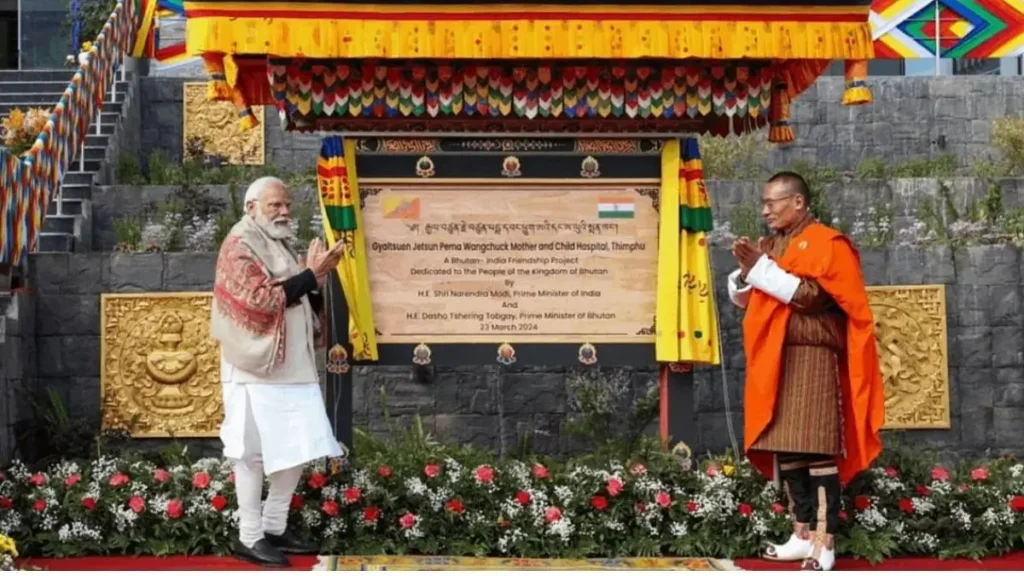
Prime Minister Bhutan visit 2025 highlights key India-Bhutan agreements including Punatsangchhu-II hydropower, INR 4,000 crore line of credit, renewable energy MoUs, and healthcare collaboration for strengthened bilateral relations.
Prime Minister’s Visit to Bhutan: Key Outcomes and Agreements Announced
Inauguration of the Punatsangchhu‑II Hydroelectric Project
The visit by India’s Prime Minister to Bhutan saw one of the centre‑piece events being the launch of the 1,020 MW Punatsangchhu‑II Hydroelectric Project. This significant energy infrastructure project is the result of bilateral cooperation and is expected to increase Bhutan’s electricity generation capacity considerably. Beyond simply adding megawatts, the project forms a foundational pillar in the energy partnership between India and Bhutan — reinforcing the idea of clean, renewable and regionally integrated infrastructure.
Major Announcements on Infrastructure, Culture and Financial Assistance
In addition to the plant inauguration, the visit featured several major announcements: the resumption of works on the 1,200 MW Punatsangchhu‑I Hydroelectric Project main dam structure; the allocation of land in Varanasi for a Bhutanese temple/monastery and guest house; establishment of a new immigration check post at Hatisar (across from Gelephu) to smooth cross‑border movement; and, notably, an Indian line of credit of INR 4,000 crore to support Bhutan’s infrastructure and development projects.These moves reflect a multi‐dimensional engagement — covering energy, culture, border management and development finance.
Signing of MoUs in Key Sectors: Renewable Energy, Health & Mental Health
A range of Memoranda of Understanding (MoUs) were signed between Indian and Bhutanese authorities, marking formal commitments in sectors of high strategic importance. These MoUs include cooperation in renewable energy (solar, wind, biomass, green hydrogen, energy storage and capacity building), collaboration in health and medicine (drugs, diagnostics, maternal & child health, disease prevention, telemedicine and professional training) and a specific institutional linkage between Bhutan’s PEMA (PEMA Secretariat) and Indian centre NIMHANS (National Institute of Mental Health and Neurosciences) for mental health capacity‑building and research.
Strategic Significance of the Visit
The visit underscores India’s holistic approach towards Bhutan and reinforces the strategic partnership between the two countries. On one hand, the energy security dimension is deepened through hydro and renewable projects; on the other hand, healthcare, culture, border management and financial support form the broader canvas of bilateral cooperation. The inauguration of projects, signing of MoUs and border‑post developments contribute to a stronger, multi‑layered relationship.
Towards a Sustainable and Integrated Future
By focusing on modern infrastructure, renewable energy, health systems and border facilitation, the two countries are moving beyond transactional ties and toward a shared vision of sustainable and inclusive development. The initiatives announced will have long‑term implications not just for Bhutan’s domestic growth but for the region’s stability and India’s role as a responsible neighbour and development partner.

Why This News Is Important
Enhances Energy and Infrastructure Cooperation
The launch of the Punatsangchhu‑II Hydroelectric Project and commitment to resume the Punatsangchhu‑I dam structure underline how energy and infrastructure are core to India‑Bhutan relations. For students preparing for government exams—especially those covering international relations, Indian foreign policy and regional cooperation—these developments showcase how infrastructural projects contribute to strategic partnerships.
Strengthens Regional Stability and Development Partnership
The INR 4,000 crore line of credit and land allocation for cultural exchange in Varanasi highlight how India supports Bhutan’s developmental agenda. This is relevant for civil service and defence aspirants, as strengthening friendly neighbours contributes to regional stability — a key dimension in exam syllabi on India’s neighbourhood policy.
Broadens Cooperation Beyond Traditional Sectors
MoUs in renewable energy, health and mental health indicate that bilateral engagement is moving beyond just hydropower or diplomacy. The inclusion of telemedicine, capacity‑building and cultural facilitation suggests a more rounded partnership. Banking, railways, teaching and other aspirants can note how such broad themes often appear in exam questions on bilateral ties.
Border Management & Cultural Diplomacy Are Important
The establishment of a new immigration check post and cultural gestures (temple/monastery land in Varanasi) signal the importance of border facilitation and cultural diplomacy in India’s foreign relations — a key topic for defence, police, civil service aspirants.
Embodies India’s Foreign Policy Strategy
This visit reflects several pillars of India’s foreign policy: “neighbourhood first”, connectivity, energy security, development partnership and cultural ties. Understanding this visit helps students build a coherent picture of India’s diplomatic strategy in South Asia.
Historical Context
India‑Bhutan Relations: A Long Standing Partnership
The diplomatic relationship between India and Bhutan dates back to the 1949 Treaty of Friendship, which has evolved over decades. Historically, Bhutan benefitted from Indian assistance in hydropower, development projects and energy exports; India benefitted from stability on its northeastern frontier, hydropower imports and a trusted ally.
Hydropower Cooperation Through the Years
Bhutan’s mountainous terrain and river systems mean hydropower has long been central to its development strategy. India has been a partner in financing, executing and importing power from these projects. The Punatsangchhu series is part of a wider pattern of Indo‑Bhutanese hydro projects.
From Bilateral Aid to Structured Development Finance
Over time, India’s support for Bhutan evolved from grants to structured loans, credit lines and more integrated sectoral collaboration. The recent line of credit and diversified MoUs reflect that maturity.
Expanding Scope of Collaboration
While early cooperation focused largely on hydropower and trade, recent years have seen broadening into health, climate, culture and border management. This mirrors global trends and India’s evolving foreign‑policy priorities in the region.
Key Takeaways from Prime Minister’s Visit to Bhutan
| # | Key Takeaway |
|---|---|
| 1 | Inauguration of 1,020 MW Punatsangchhu‑II Hydroelectric Project, strengthening India‑Bhutan energy ties. |
| 2 | Announcement of a INR 4,000 crore Line of Credit from India to Bhutan for infrastructure and development. |
| 3 | Signing of MoUs between India and Bhutan in renewable energy, health & medicine, and mental‑health institutional collaboration. |
| 4 | Establishment of new immigration check post at Hatisar (across Gelephu) and allocation of land in Varanasi for a Bhutanese temple/monastery and guest house. |
| 5 | The visit reaffirms India’s holistic engagement strategy with Bhutan—covering energy security, healthcare cooperation, cultural diplomacy and border facilitation. |
FAQs: Frequently Asked Questions
1. What was the main purpose of the Prime Minister’s visit to Bhutan in 2025?
The visit aimed to strengthen India-Bhutan relations through energy cooperation, infrastructure development, cultural diplomacy, health collaboration, and border management.
2. Which major hydropower project was inaugurated during the visit?
The 1,020 MW Punatsangchhu-II Hydroelectric Project was inaugurated, enhancing Bhutan’s electricity generation capacity.
3. How much Line of Credit did India announce for Bhutan’s development projects?
India announced a Line of Credit worth INR 4,000 crore to support infrastructure and development initiatives in Bhutan.
4. What sectors were covered in the MoUs signed between India and Bhutan?
The MoUs covered renewable energy (solar, wind, biomass, green hydrogen), health and medicine, maternal and child healthcare, telemedicine, and mental health collaboration.
5. Where has India allocated land for Bhutanese cultural projects?
Land was allocated in Varanasi for the construction of a Bhutanese temple/monastery and a guest house.
6. Why is the Hatisar immigration check post significant?
The new check post at Hatisar (across Gelephu) aims to facilitate smoother cross-border movement and strengthen bilateral connectivity.
7. How does the visit contribute to India’s foreign policy?
It reinforces India’s “neighbourhood first” policy, regional stability, energy security, and sustainable development through strategic partnerships.
8. Which Indian institution is collaborating with Bhutan in mental health?
NIMHANS (National Institute of Mental Health and Neurosciences) is collaborating with Bhutan’s PEMA Secretariat for capacity-building and research in mental health.
9. How does this visit impact exam-relevant topics for students?
It is relevant for topics like India’s foreign policy, regional cooperation, energy diplomacy, development finance, and bilateral cultural relations—important for UPSC, PSC, SSC, and other competitive exams.
10. What long-term benefits are expected from this visit?
Long-term benefits include enhanced energy cooperation, infrastructure development, improved healthcare systems, cultural exchange, border facilitation, and stronger strategic ties.
Some Important Current Affairs Links

