
PM Modi FAO Agricola Medal 2026 highlights India’s role in sustainable agriculture, food security, and rural development. Learn key facts, FAQs, MCQs, and exam-oriented insights.
PM Modi Receives FAO Agricola Medal in Rome for Sustainable Agriculture and Rural Development
India Honoured on the Global Stage
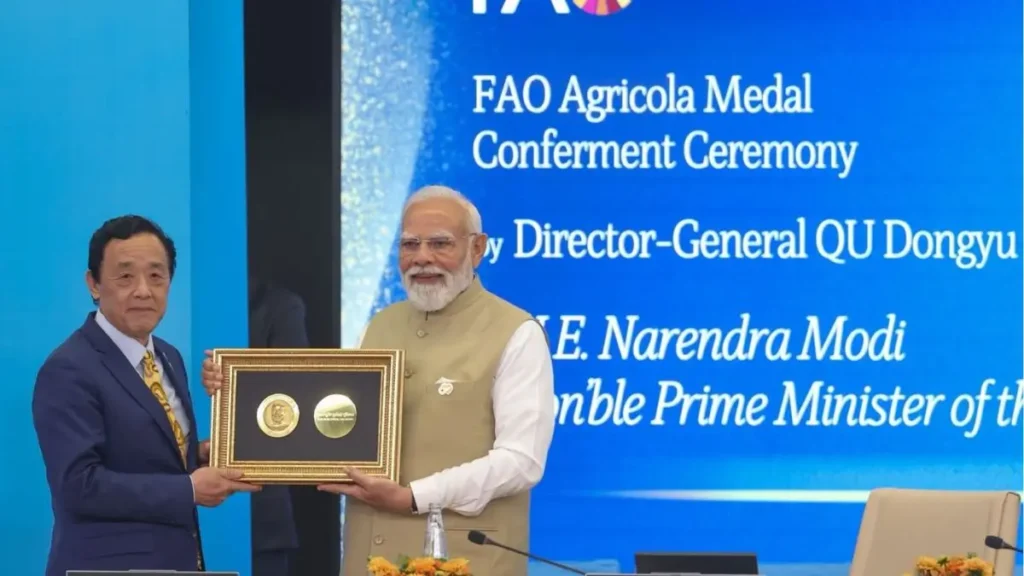
Prime Minister Narendra Modi received the prestigious Agricola Medal from the Food and Agriculture Organization (FAO) at its headquarters in Rome. The award is considered one of the highest recognitions given by the FAO for outstanding contributions towards food security, sustainable agriculture and rural development.
The medal was presented by FAO Director-General Qu Dongyu during PM Modi’s visit to Italy. The recognition highlighted India’s increasing role in global agricultural reforms and food sustainability initiatives.
Recognition for Food Security Initiatives
The FAO honoured PM Modi for India’s efforts in ensuring food security for millions of citizens through various agricultural and welfare schemes. Over the last decade, India has implemented several farmer-centric programmes including PM-KISAN, promotion of organic farming, digital agriculture and crop insurance schemes.
The organisation also appreciated India’s efforts in maintaining one of the world’s largest food distribution systems and promoting nutrition security among vulnerable populations. The recognition further acknowledged India’s contribution to global food supply chains, especially during difficult periods such as the COVID-19 pandemic.
Focus on Sustainable Agriculture
During the ceremony, PM Modi emphasised that India is moving towards climate-resilient and technology-driven agriculture. He highlighted initiatives such as “Per Drop More Crop,” micro-irrigation, precision farming and the use of Artificial Intelligence in agriculture.
The Prime Minister stated that India has developed nearly 3,000 climate-resilient crop varieties over the last decade. These innovations are helping farmers deal with changing climatic conditions and improving agricultural productivity. The government’s emphasis on reducing dependence on chemical fertilisers and promoting biodiversity also received global appreciation.
India’s Leadership in Global Agriculture
India’s promotion of millets through the International Year of Millets 2023 was also praised by the FAO. The initiative helped bring global attention to nutritious and climate-friendly crops.
PM Modi dedicated the award to Indian farmers, agricultural scientists, livestock rearers and workers associated with the agriculture sector. He described food security not merely as a policy issue but as a responsibility towards humanity.
The visit was also historically significant because PM Modi became the first Indian Head of Government to visit the FAO headquarters in nearly 30 years.

Why This News is Important
Important for Competitive Examinations
This development is highly important for aspirants preparing for UPSC, SSC, Banking, Railways, State PCS and Defence examinations because international awards, United Nations organisations and agriculture-related schemes are frequently asked in current affairs sections.
Questions may be framed regarding:
- FAO headquarters
- Agricola Medal
- Director-General of FAO
- International Year of Millets
- Sustainable agriculture initiatives of India
- Climate-resilient farming technologies
Highlights India’s Global Agricultural Influence
The award reflects India’s growing influence in international agricultural policy and food security discussions. It demonstrates how India is becoming a leading voice among developing countries on issues related to hunger eradication, rural development and sustainable farming.
The recognition also strengthens India’s diplomatic image globally and highlights the success of its agricultural reforms and welfare schemes. Aspirants should understand how agriculture is connected with economic development, climate change and international cooperation.
Relevance to Government Policies
The news is directly linked to several important government programmes including:
- PM-KISAN
- Pradhan Mantri Fasal Bima Yojana
- Digital Agriculture Mission
- Micro-Irrigation Schemes
- Natural Farming Initiatives
Understanding these schemes helps students prepare for descriptive answers, essays and interviews in civil services examinations.
Historical Context
About the FAO
The Food and Agriculture Organization was established in 1945 as a specialised agency of the United Nations. Its headquarters is located in Rome. The organisation works towards eliminating hunger, improving nutrition and promoting sustainable agriculture worldwide.
India has been an active member of the FAO since its formation and has collaborated on multiple programmes related to food security, fisheries, forestry and rural development.
Origin of the Agricola Medal
The Agricola Medal is among the highest honours awarded by the FAO Director-General. It recognises global leaders and individuals who have made exceptional contributions towards agricultural transformation, food security and poverty reduction.
Former Prime Minister Manmohan Singh had also received the honour earlier, making Narendra Modi one of the few Indian leaders to be recognised with this prestigious award.
India’s Agricultural Journey
Since the Green Revolution of the 1960s led by scientists such as M. S. Swaminathan, India has transformed from a food-deficit country into one of the world’s largest food producers.
Over time, India has expanded its focus from food production to sustainable and climate-smart agriculture. Recent efforts include promoting millets, precision farming, digital agriculture and renewable energy use in farming practices.
Key Takeaways from This News
| S. No. | Key Takeaway |
|---|---|
| 1 | PM Narendra Modi received the prestigious FAO Agricola Medal in Rome in 2026. |
| 2 | The award was given for contributions to food security, sustainable agriculture and rural development. |
| 3 | FAO headquarters is located in Rome, Italy, and its Director-General is Qu Dongyu. |
| 4 | India’s initiatives like climate-resilient farming, digital agriculture and millet promotion were globally recognised. |
| 5 | PM Modi became the first Indian Head of Government in nearly 30 years to visit FAO headquarters. |
FAQs (Frequently Asked Questions)
1. What is the FAO Agricola Medal?
The FAO Agricola Medal is one of the highest honours awarded by the Food and Agriculture Organization of the United Nations. It recognises exceptional contributions to agriculture, food security, rural development and sustainable farming practices globally.
2. Why was PM Narendra Modi awarded the FAO Agricola Medal?
PM Modi was awarded for India’s efforts in strengthening food security, promoting sustainable agriculture, supporting farmers through welfare schemes, and advancing climate-resilient agricultural practices.
3. Where is the headquarters of the FAO located?
The headquarters of the Food and Agriculture Organization (FAO) is located in Rome, Italy.
4. Which key Indian initiatives are linked to this recognition?
Major initiatives include PM-KISAN, Pradhan Mantri Fasal Bima Yojana, Digital Agriculture Mission, Millets promotion campaign, and natural farming programmes.
5. What is the significance of millets in India’s agricultural policy?
Millets are climate-resilient, nutritious crops that require less water and are suitable for dry regions. India promoted them globally during the International Year of Millets 2023.
6. Who is the Director-General of FAO?
Qu Dongyu is the current Director-General of the Food and Agriculture Organization (FAO).
7. Is the Agricola Medal commonly awarded to heads of government?
No, it is a rare honour and is awarded selectively to global leaders and individuals who have made significant contributions to agriculture and food security.
Some Important Current Affairs Links

