
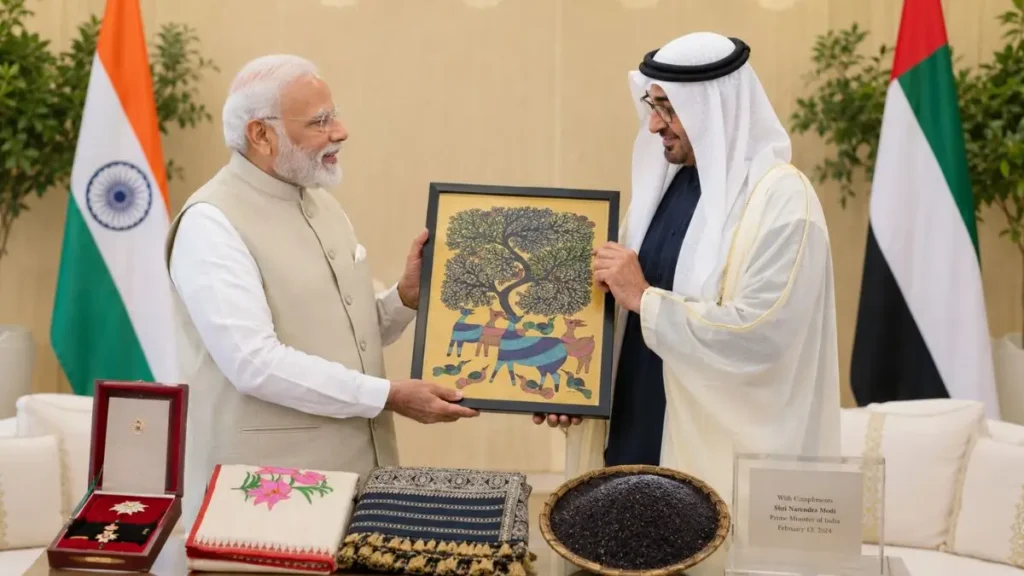
PM Modi cultural diplomacy highlights India’s tribal art, Gond paintings, Muga silk, and indigenous gifts for world leaders. Learn key current affairs, GI tags, soft power diplomacy, and important exam facts for UPSC, SSC, Banking, Railways, and State PCS exams.
India Uses Cultural Diplomacy to Strengthen Global Relations
Prime Minister Narendra Modi once again highlighted India’s rich cultural heritage during his recent diplomatic engagements with world leaders. Through carefully selected traditional gifts, India projected its soft power and showcased the artistic excellence of tribal communities and regional artisans. These gifts were not merely ceremonial items but symbols of India’s cultural diversity, indigenous traditions, and civilizational values.
The diplomatic outreach became significant because the gifts represented various tribal and regional art forms from across India. By presenting such culturally meaningful artefacts, India strengthened international relationships while simultaneously promoting local artisans on the global stage.
Tribal Art Forms Become Instruments of Soft Power
One of the most discussed gifts was the traditional Gond painting presented to Crown Princess Victoria of Sweden. Gond art, originating from Madhya Pradesh, is one of India’s oldest tribal art forms. It is known for intricate dot-and-line patterns, vibrant colours, and themes inspired by forests, animals, and tribal folklore. The international recognition of Gond art has significantly improved the livelihoods of tribal artisans.
Prime Minister Modi also gifted Muga silk and Shirui Lily stoles to Italian Prime Minister Giorgia Meloni. Muga silk from Assam is famous for its natural golden shine and durability. It carries a Geographical Indication (GI) tag and represents Assam’s centuries-old weaving culture. The Shirui Lily stole represented the craftsmanship of the Tangkhul Naga community of Manipur and highlighted the cultural richness of Northeast India.
Promotion of Indigenous Products and Local Artisans
The gifting of indigenous products aligns with the government’s “Vocal for Local” and “Aatmanirbhar Bharat” initiatives. These programmes encourage the promotion of local industries, tribal products, handicrafts, and traditional skills. By gifting such items on international platforms, India creates global awareness about its indigenous products and opens opportunities for export growth.
Several traditional Indian crafts, including Dokra art, Madhubani paintings, Bidri work, Pattachitra paintings, and Kalamkari art, have been used in diplomatic exchanges in recent years. These gifts help preserve traditional craftsmanship while supporting rural and tribal economies.
India’s Soft Power Strategy Gains Global Attention
India’s use of culture as a diplomatic tool reflects the broader concept of soft power. Soft power refers to the ability of a country to influence others through culture, values, traditions, and heritage rather than military or economic force. India has increasingly used yoga, Ayurveda, handicrafts, traditional textiles, cuisine, and spiritual heritage to strengthen its international image.
PM Modi’s gifting strategy has attracted attention globally because every gift carries a deeper cultural and symbolic meaning. It demonstrates India’s respect for heritage and its effort to connect with other nations through cultural understanding. Experts believe such diplomatic gestures strengthen bilateral ties and improve India’s global image.
Importance of GI-Tagged and Tribal Products
Many of the gifts presented by India carry GI tags, which protect products linked to a specific geographical origin. Products like Muga silk, Madhubani paintings, and regional handicrafts receive legal recognition and international branding through GI certification.
The promotion of GI-tagged products also benefits local economies by increasing demand and preserving traditional knowledge systems. India currently has hundreds of GI-tagged products covering textiles, handicrafts, agricultural products, and food items. The government has actively promoted GI products during international events such as the G20 Summit and bilateral visits.

Why This News is Important
Important for International Relations and Diplomacy
This news is important because it highlights how India is using cultural diplomacy as a strategic foreign policy tool. Instead of relying only on political negotiations, India is strengthening relationships through cultural connections. Such diplomatic practices improve India’s global reputation and create a positive international image.
For government exam aspirants, the topic is important under International Relations, Art and Culture, Soft Power Diplomacy, and Indian Foreign Policy. Questions related to tribal art, GI tags, cultural diplomacy, and “Vocal for Local” campaigns are frequently asked in UPSC, State PCS, SSC, Banking, Railways, and teaching examinations.
Relevance for Economy and Tribal Development
The news also reflects the government’s focus on tribal welfare and rural livelihoods. By promoting tribal art forms globally, India creates economic opportunities for artisans and strengthens indigenous industries. This supports schemes related to tribal empowerment, handicraft promotion, and local entrepreneurship.
The issue is also linked with sustainable development because many traditional Indian crafts use eco-friendly materials and indigenous knowledge systems. Therefore, this topic connects art, economy, tourism, exports, and sustainable development together.
Historical Context
India’s Long Tradition of Cultural Diplomacy
India has historically used culture as a means of diplomacy since ancient times. During the reign of Emperor Ashoka, Buddhism spread across Asia through peaceful cultural exchanges. Indian traders, scholars, and spiritual leaders carried Indian traditions, languages, art, and philosophy to Southeast Asia and beyond.
In modern times, India has continued this tradition through yoga diplomacy, Ayurveda promotion, classical dance performances, and the global celebration of the International Day of Yoga. Under Prime Minister Narendra Modi, cultural diplomacy has become more visible through the gifting of traditional Indian artefacts to foreign dignitaries.
Rise of Tribal and Indigenous Art on Global Platforms
Over the last decade, the Indian government has increasingly promoted tribal art forms such as Gond, Warli, Dokra, Pithora, and Madhubani paintings at international exhibitions and diplomatic events. Government initiatives like TRIFED, ODOP (One District One Product), and Janjatiya Gaurav Divas have helped tribal products gain national and international recognition.
India’s emphasis on indigenous crafts also supports the broader objective of preserving traditional heritage while generating employment opportunities for tribal communities and artisans.
Key Takeaways from This News
| S.No. | Key Takeaway |
|---|---|
| 1 | PM Narendra Modi used tribal art and indigenous gifts as tools of cultural diplomacy during meetings with global leaders. |
| 2 | Gond paintings, Muga silk, and Shirui Lily stoles highlighted India’s tribal and regional craftsmanship. |
| 3 | The initiative supports “Vocal for Local” and “Aatmanirbhar Bharat” by promoting indigenous artisans globally. |
| 4 | Cultural diplomacy strengthens India’s soft power and improves international relations through heritage and traditions. |
| 5 | GI-tagged products and tribal crafts are gaining global recognition, benefiting local economies and artisans. |
FAQs Related to PM Modi’s Cultural Diplomacy and Tribal Art Promotion
1. What is cultural diplomacy?
Cultural diplomacy refers to the use of a country’s culture, traditions, art, heritage, and values to strengthen international relations and improve global image.
2. Why did PM Modi gift tribal and indigenous products to world leaders?
PM Modi gifted tribal and indigenous products to promote India’s cultural heritage, support local artisans, and strengthen diplomatic ties through soft power diplomacy.
3. What is Gond art?
Gond art is a traditional tribal painting style from Madhya Pradesh known for its intricate patterns, vibrant colours, and themes inspired by nature and folklore.
4. Which Indian state is famous for Muga silk?
Assam is famous for Muga silk, which is known for its natural golden shine and durability.
5. What is a GI tag?
A Geographical Indication (GI) tag is a legal certification given to products that originate from a specific geographical region and possess unique qualities linked to that area.
6. Which government initiative promotes local products in India?
The “Vocal for Local” initiative promotes local products, indigenous crafts, and Indian industries.
7. What is soft power in international relations?
Soft power is the ability of a country to influence others through culture, values, diplomacy, and traditions instead of military or economic pressure.
8. Why are tribal arts important for India?
Tribal arts preserve indigenous traditions, generate employment opportunities, promote tourism, and strengthen cultural identity.
9. Which ministry promotes tribal products in India?
The Ministry of Tribal Affairs and organisations like TRIFED promote tribal products and handicrafts in India.
10. Why is this topic important for competitive exams?
This topic is important because it covers art and culture, international relations, tribal welfare, GI tags, soft power diplomacy, and government initiatives, which are frequently asked in UPSC, SSC, Banking, Railways, Defence, and State PCS examinations.
Some Important Current Affairs Links

