
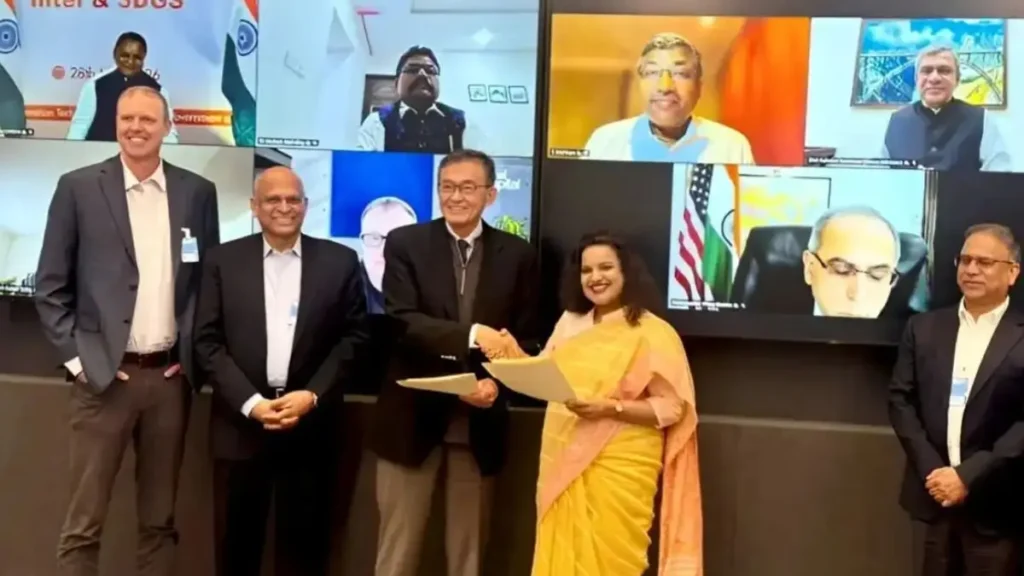
Odisha semiconductor deal 2026 with Intel and 3D Glass Solutions worth $3.3 billion boosts India’s chip manufacturing ecosystem, creates jobs, and strengthens semiconductor independence.
Odisha–Intel–3D Glass Solutions $3.3 Billion Semiconductor Deal: India’s Big Leap in Chip Manufacturing
Odisha Becomes a Key Hub in India’s Semiconductor Mission
The Government of Odisha, in collaboration with global technology giant Intel and US-based 3D Glass Solutions (3DGS), has signed a landmark memorandum of understanding (MoU) worth $3.3 billion. This agreement aims to establish an advanced semiconductor substrate manufacturing facility in the Bhubaneswar–Khurda region. The project marks one of the largest high-tech manufacturing investments in India’s electronics sector and is expected to significantly strengthen the country’s position in the global semiconductor supply chain.
What the Semiconductor Deal Includes
The proposed facility will focus on advanced packaging glass core substrates and high-density interconnect technologies, which are crucial components in modern semiconductor devices used in artificial intelligence (AI), 5G, telecommunications, and high-performance computing. Intel will act as a key technology partner, providing expertise in manufacturing processes, quality systems, and technical know-how, while 3DGS will contribute its advanced glass substrate technology.
Strategic Importance for India’s Tech Ecosystem
This investment aligns closely with the Government of India’s Semiconductor Mission, which aims to reduce dependence on imports and build domestic chip manufacturing capabilities. The project is expected to be implemented in phases over 5–6 years and will help position Odisha as an emerging hub for semiconductor innovation and production in India.
Employment and Economic Impact
According to official estimates, the project will generate over 1,800 high-skilled direct jobs, along with thousands of indirect employment opportunities across supply chains, logistics, and allied industries. This is expected to boost Odisha’s industrial growth and attract further global investments in advanced manufacturing.

Why this News is Important
Strengthening India’s Semiconductor Independence
India has long depended on foreign countries for semiconductor components, which are essential for electronics, defense systems, and digital infrastructure. This deal represents a significant step toward achieving Atmanirbhar Bharat (self-reliant India) in the semiconductor sector. By developing domestic manufacturing capacity, India reduces vulnerability to global supply chain disruptions.
Boost to High-Tech Manufacturing and Global Positioning
The collaboration between Odisha, Intel, and 3DGS positions India as a competitive player in advanced chip packaging technologies. Semiconductor packaging is a critical stage in chip production, and mastering this technology allows India to move up the global value chain from assembly to high-value manufacturing.
Economic Growth and Job Creation
The project will generate thousands of employment opportunities and encourage the development of a skilled workforce in electronics and nanotechnology. It will also boost related sectors such as logistics, infrastructure, and research and development, contributing to long-term economic growth.
Strategic Global Partnerships
The involvement of Intel highlights growing international confidence in India’s semiconductor ecosystem. Such partnerships strengthen India’s technological alliances with global leaders and enhance knowledge transfer in cutting-edge manufacturing technologies.
Historical Context
Evolution of India’s Semiconductor Push
India’s semiconductor journey began gaining momentum with the launch of the India Semiconductor Mission (ISM) in 2021, aimed at building a sustainable chip manufacturing ecosystem. Despite strong design capabilities, India has historically lacked large-scale fabrication and packaging facilities.
Global Semiconductor Supply Chain Shift
The global chip shortage during 2020–2022 exposed the vulnerability of overdependence on a few manufacturing hubs such as Taiwan, South Korea, and China. Since then, countries like India, the US, and the EU have been investing heavily in domestic semiconductor infrastructure.
Odisha’s Emerging Role
Odisha has recently emerged as a strategic destination for electronics and semiconductor investments due to its favorable policies, industrial corridors, and government support. This deal further strengthens its position as a rising technology manufacturing hub in eastern India.
Key Takeaways from Odisha–Intel–3DGS Semiconductor Deal
| S. No. | Key Takeaway |
|---|---|
| 1 | Odisha, Intel, and 3DGS signed a $3.3 billion MoU for semiconductor substrate manufacturing. |
| 2 | The project will establish an advanced packaging glass core substrate facility in Bhubaneswar–Khurda. |
| 3 | Intel will provide technology expertise and process support, while 3DGS supplies glass substrate technology. |
| 4 | The project will be implemented over 5–6 years in phased development. |
| 5 | It is expected to generate over 1,800 high-skilled direct jobs and many indirect employment opportunities. |
FAQs: Odisha–Intel–3D Glass Solutions Semiconductor Deal
1. What is the Odisha–Intel–3D Glass Solutions semiconductor deal about?
It is a $3.3 billion agreement to set up an advanced semiconductor substrate manufacturing facility in Odisha, focusing on next-generation chip packaging technologies.
2. Which companies are involved in this semiconductor project?
The key partners are the Government of Odisha, Intel, and 3D Glass Solutions (3DGS), with Intel providing technological support.
3. Where will the semiconductor facility be established?
The facility will be set up in the Bhubaneswar–Khurda region of Odisha.
4. What technologies will be produced in this facility?
The project will focus on advanced glass core substrates and high-density interconnect technologies used in AI, 5G, and high-performance computing.
5. How will this project benefit India’s economy?
It will reduce import dependency, strengthen domestic semiconductor manufacturing, and create over 1,800 direct skilled jobs along with indirect employment.
6. Why is semiconductor manufacturing important for India?
Semiconductors are essential for electronics, defense, telecom, and digital infrastructure, making domestic production critical for technological independence and security.
Some Important Current Affairs Links

