
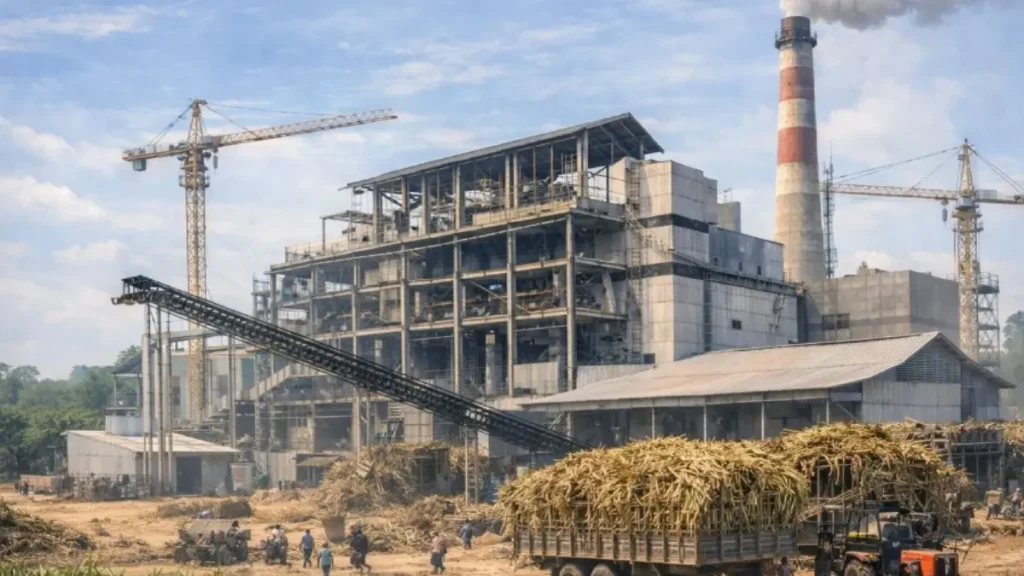
New Sugar Policy India introduces 25 km sugar mill distance rule under Sugarcane Control Order 2026, aiming to improve industry structure, boost ethanol production, and support farmers’ income security for competitive exams.
Introduction: Major Policy Shift in Sugar Industry
The Government of India has proposed a significant overhaul in the sugar sector through the draft Sugarcane (Control) Order 2026, introducing a key reform of maintaining a 25 km minimum distance between sugar mills. This move aims to reduce unhealthy competition among mills, improve cane availability, and ensure fair pricing for farmers. The policy is expected to reshape the structural framework of India’s sugar industry, which is one of the largest in the world.
📌 25 KM Distance Rule: Structural Reform in Mill Licensing
One of the most important features of the proposed policy is the increase in the minimum distance between two sugar mills from 15 km to 25 km. This reform is intended to prevent overcrowding of mills in cane-rich regions, especially in states like Uttar Pradesh and Maharashtra. By limiting proximity, the government seeks to ensure stable raw material supply for each mill and reduce competition for sugarcane procurement.
According to the draft, this rule will also help in improving operational efficiency and reducing financial stress on mills that often face cane shortages due to over-concentration of factories in a single region.
📌 Inclusion of Ethanol and Khandsari Sector
The new policy also expands regulatory coverage to include ethanol production and khandsari sugar units. Mills producing ethanol from sugarcane juice and by-products will have their output linked to sugar equivalent calculations. This aligns sugar production with India’s growing biofuel economy.
Additionally, khandsari units will now come under stricter licensing and compliance norms, ensuring better transparency and standardisation in the sugar ecosystem.
📌 Objective of the Policy Reform
The main objectives of this reform include:
- Strengthening cane supply management
- Reducing inter-mill competition
- Improving farmer payment security
- Supporting ethanol blending targets
- Ensuring long-term sustainability of sugar industry

📌 B) Why This News is Important
📊 Importance for Government Exams
The new sugar policy proposal is highly important for students preparing for UPSC, SSC, Banking, Railways, Defence, and State PCS exams, as it relates to agriculture policy, industrial regulation, and economic reforms.
📌 Policy Relevance in Economy and Agriculture
India is the second-largest sugar producer globally, and the sugar industry directly impacts millions of farmers. The introduction of the 25 km mill distance rule represents a major policy shift in agricultural-industrial planning. It aims to balance demand and supply while ensuring fair cane pricing for farmers.
📌 Link to Ethanol Economy and Energy Security
The integration of ethanol production into sugar policy is crucial for India’s energy transition strategy, particularly under the Ethanol Blending Programme. This makes the policy relevant not only for agriculture but also for renewable energy and climate goals.
📌 Exam Relevance
Questions related to:
- Sugarcane Control Orders
- Ethanol blending targets
- Agricultural pricing policies
- Industrial licensing reforms
are frequently asked in competitive exams. Hence, this news becomes important for both prelims and mains examinations.
📚 C) Historical Context
The sugar sector in India has been regulated since the Sugarcane (Control) Order, 1966, which governed pricing, procurement, and mill operations. Over time, issues like mill clustering, cane shortages, and delayed farmer payments emerged.
Earlier policies focused mainly on sugar production, but recent reforms shifted attention toward ethanol blending, biofuel production, and farmer income security. The introduction of distance norms is not new in principle; several states like Maharashtra already followed similar rules, but this proposal aims to make it a nationwide uniform standard.
Over the years, sugar policy has evolved from a purely agricultural regulation system to a multi-sectoral framework combining agriculture, energy, and industrial policy.
📊 D) Key Takeaways from “New Sugar Policy Proposal”
| No. | Key Takeaway |
|---|---|
| 1 | Government proposes 25 km minimum distance between sugar mills instead of 15 km. |
| 2 | Aim is to reduce competition among mills for sugarcane procurement. |
| 3 | Policy is part of Sugarcane (Control) Order 2026 draft reforms. |
| 4 | Ethanol production integrated into sugar output calculations. |
| 5 | Khandsari units brought under stricter regulatory framework. |
FAQs (Frequently Asked Questions)
❓1. What is the new sugar policy proposal in India?
The proposed sugar policy introduces a 25 km minimum distance rule between sugar mills under the draft Sugarcane (Control) Order 2026 to improve cane distribution and reduce competition among mills.
❓2. Why is the 25 km gap between sugar mills proposed?
It is proposed to prevent overcrowding of sugar mills, ensure better sugarcane availability for each mill, and improve financial stability of the sugar industry.
❓3. Which sectors are included in the new sugar policy?
The policy covers sugar production, ethanol manufacturing, and khandsari units, bringing a more integrated regulatory framework.
❓4. How does this policy support ethanol production?
It integrates ethanol output into sugar production calculations, supporting India’s Ethanol Blending Programme (EBP) and energy security goals.
❓5. Why is this news important for competitive exams?
It is important because it relates to agricultural policy, industrial regulation, ethanol blending targets, and economic reforms, which are frequently asked in UPSC, SSC, banking, and state PCS exams.
Some Important Current Affairs Links

