

NCB and RRU sign MoU to strengthen drug crime research and cybercrime training in India, establishing CoE-CIDI to tackle darknet markets and cryptocurrency-related offenses.
NCB and RRU Sign MoU to Strengthen Research and Training on Drug Crimes
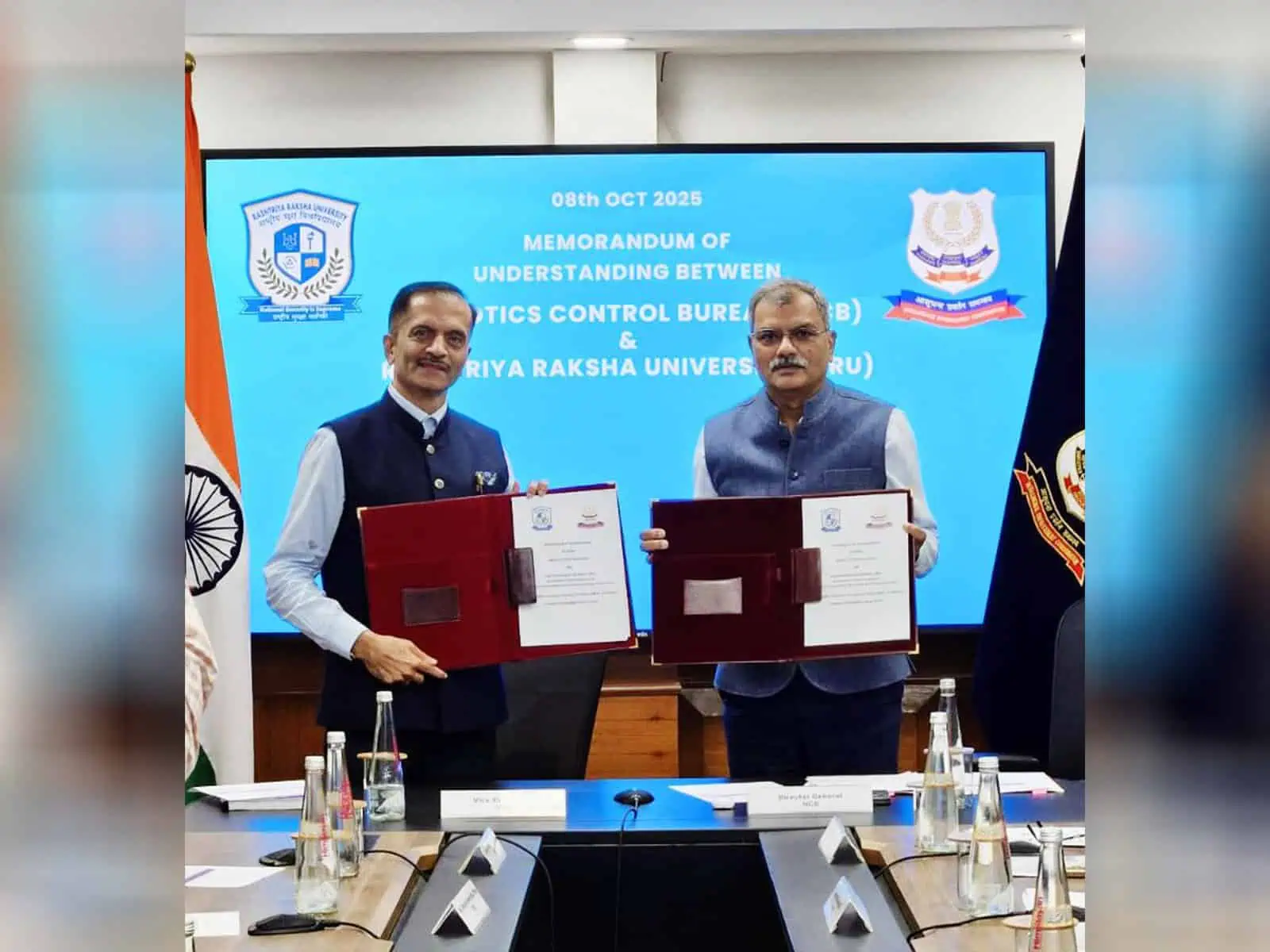
On October 8, 2025, the Narcotics Control Bureau (NCB) and Rashtriya Raksha University (RRU) signed a Memorandum of Understanding (MoU) in New Delhi to enhance cooperation in combating drug-related crimes, particularly those facilitated through cyber platforms.
Key Areas of Collaboration
The MoU outlines several key areas of collaboration:
- Research and Innovation: Joint efforts will focus on emerging threats such as darknet narcotics markets, cryptocurrency tracing, and cyber-threat intelligence.
- Training and Capacity Building: Specialized training programs will be developed in cyber forensics, blockchain forensics, Open Source Intelligence (OSINT), and behavioral profiling to enhance the technical capabilities of NCB personnel.
- Establishment of a Centre of Excellence: A Centre of Excellence in Cybercrime Investigation and Drug Intelligence (CoE-CIDI) will be set up to serve as a hub for advanced research, innovation, and inter-agency cooperation in tackling cyber-enabled drug networks.
Significance of the Collaboration
This partnership aims to integrate academic expertise with operational enforcement, creating a knowledge-driven enforcement ecosystem. By leveraging RRU’s academic strength and NCB’s operational experience, the collaboration seeks to address the evolving challenges of narcotics control in the digital age.
Why This News is Important
Enhancing Enforcement Capabilities
The collaboration between NCB and RRU is pivotal in strengthening India’s enforcement capabilities against modern drug trafficking methods. By focusing on cyber-enabled crimes, the partnership aims to equip law enforcement with the necessary tools and knowledge to combat illicit activities in the digital realm.
Addressing Emerging Threats
The emphasis on areas like darknet narcotics markets and cryptocurrency tracing highlights the need to address emerging threats in drug trafficking. These platforms have become significant avenues for illegal drug trade, necessitating specialized knowledge and skills to counteract them effectively.
Capacity Building for Law Enforcement
The specialized training programs designed for NCB officers will enhance their expertise in cyber forensics and related fields. This capacity building is crucial for adapting to the technological advancements that facilitate modern drug crimes.
Establishing a Research Hub
The establishment of CoE-CIDI will provide a dedicated space for research and innovation in cybercrime investigation and drug intelligence. This hub will foster collaboration among various stakeholders, leading to more effective strategies in combating drug-related crimes.
Integration of Academic and Operational Efforts
The partnership signifies a move towards integrating academic research with operational enforcement. This holistic approach ensures that strategies are grounded in research and are practically applicable in real-world scenarios.
Historical Context
The Narcotics Control Bureau (NCB) was established in 1986 under the Ministry of Home Affairs to combat drug trafficking and abuse in India. Over the years, the NCB has been at the forefront of efforts to control narcotics, adapting to various challenges posed by drug trafficking networks. With the advent of digital platforms, drug trafficking has evolved, necessitating new approaches and collaborations.
Rashtriya Raksha University (RRU), an Institution of National Importance under the Ministry of Home Affairs, has been instrumental in providing academic and research support in areas related to national security. The university’s expertise in research and training aligns with NCB’s operational needs, making this collaboration a strategic move to address the complexities of modern drug crimes.
Key Takeaways from ‘NCB and RRU Sign MoU to Strengthen Research and Training on Drug Crimes’
| S.No | Key Takeaway |
|---|---|
| 1. | NCB and RRU signed an MoU on October 8, 2025, to collaborate on combating drug crimes. |
| 2. | The partnership focuses on research areas like darknet narcotics markets and cryptocurrency tracing. |
| 3. | Specialized training programs will be developed in cyber forensics and related fields for NCB officers. |
| 4. | A Centre of Excellence in Cybercrime Investigation and Drug Intelligence (CoE-CIDI) will be established. |
| 5. | The collaboration aims to integrate academic research with operational enforcement to address modern drug trafficking challenges. |
FAQs: Frequently Asked Questions
1. What is the purpose of the MoU between NCB and RRU?
The MoU aims to strengthen research, training, and operational capabilities to combat drug-related crimes, especially cyber-enabled trafficking.
2. When was the MoU signed between NCB and RRU?
The MoU was signed on October 8, 2025, in New Delhi.
3. What is the Centre of Excellence (CoE-CIDI) mentioned in the MoU?
CoE-CIDI is a dedicated hub for research, innovation, and inter-agency cooperation in cybercrime investigation and drug intelligence.
4. What areas will the collaboration focus on?
The partnership focuses on darknet drug markets, cryptocurrency tracing, cyber forensics, Open Source Intelligence (OSINT), and behavioral profiling.
5. Why is the collaboration significant for law enforcement in India?
It enhances technical expertise, promotes knowledge-driven enforcement, integrates academic research with operational strategies, and addresses emerging cyber-enabled drug trafficking challenges.
6. Which Indian government ministry oversees RRU?
Rashtriya Raksha University (RRU) functions under the Ministry of Home Affairs.
7. How does the MoU help NCB officers?
It provides specialized training in cybercrime investigation, blockchain forensics, OSINT, and behavioral profiling, improving their capacity to tackle modern drug crimes.
Some Important Current Affairs Links

