
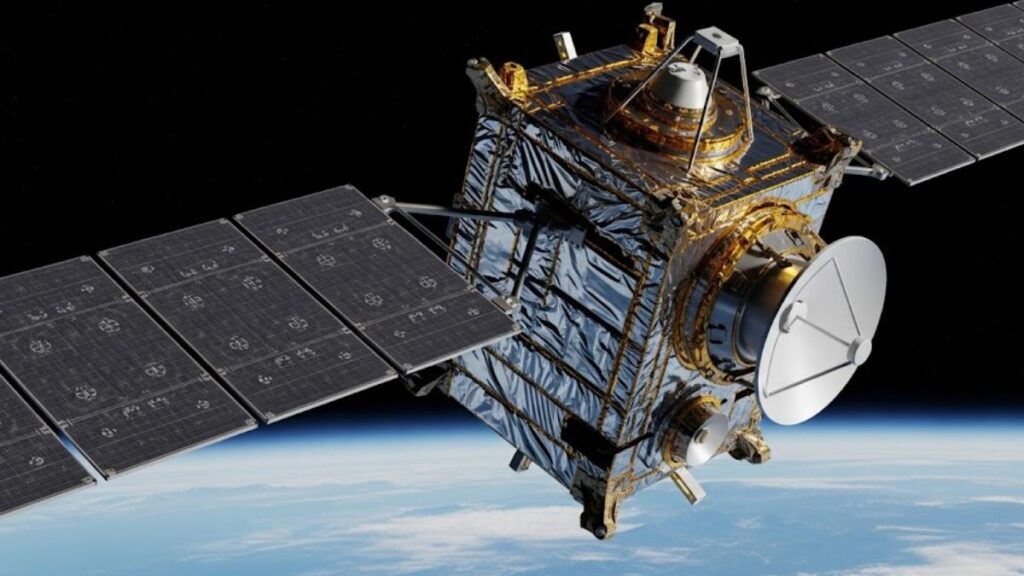
ISRO NavIC Satellite Launch 2026: ISRO will launch 3 more NavIC satellites by 2026 with L1-band support, enhancing India’s regional navigation capabilities for civilian and defence use. Read why this move matters for UPSC, SSC, CDS & other exams.
🛰️ ISRO to Launch 3 More NavIC Satellites by 2026: Strengthening India’s Indigenous Navigation System
🚀 ISRO’s Indigenous Navigation Push Gets Stronger
The Indian Space Research Organisation (ISRO) has announced that it will launch three more satellites under its Navigation with Indian Constellation (NavIC) system by 2026. This expansion aims to boost India’s self-reliance in satellite-based navigation, critical for applications in disaster management, vehicular tracking, precision agriculture, and defence operations. The move is aligned with India’s long-term space policy to strengthen indigenous capabilities and reduce dependence on foreign navigation systems like GPS, GLONASS, or Galileo.
🌐 What is NavIC?
NavIC stands for Navigation with Indian Constellation, formerly known as IRNSS (Indian Regional Navigation Satellite System). Developed by ISRO, NavIC is designed to provide accurate position information to users in India and up to 1,500 km from its borders. Unlike the US-based GPS, NavIC is under India’s full control, making it strategically important during geopolitical conflicts or emergencies when access to foreign systems may be restricted.
🔧 Technological Upgrades in the New Satellites
The new satellites will be equipped with L1 frequency, making them compatible with civilian applications and smartphones. This is a significant improvement, as earlier NavIC satellites used primarily S and L5 bands, which were not compatible with most mass-market smartphones. With L1, ISRO aims to make NavIC commercially viable and integrate it into consumer applications such as Google Maps, navigation devices, and IoT platforms.
📡 Existing Satellite Configuration and Future Launches
Currently, NavIC consists of seven operational satellites, with the constellation needing at least nine satellites for full redundancy and improved accuracy. Two new satellites — NVS-01 (launched in May 2023) and NVS-02 (expected in late 2025) — will be followed by three more satellites by mid-2026, as confirmed by ISRO Chairman S. Somanath. This strategic expansion will bolster NavIC’s regional coverage and signal strength.
🛡️ Strategic and Civil Implications of the Expansion
For the defence sector, having full control over a native navigation system like NavIC ensures operational independence in critical missions. For civilians, it opens up prospects of faster and more accurate GPS-like services in domestic smartphones, navigation devices, and fleet management systems. This will also empower sectors such as railways, civil aviation, fisheries, agriculture, and disaster response systems.
🛰️ ISRO’s Long-Term Vision with NavIC
ISRO envisions positioning NavIC as a reliable regional alternative to GPS, targeting both strategic utility and commercial integration. The inclusion of the L1 frequency and the extension of satellite coverage are critical steps toward achieving interoperability with global navigation systems, giving India a stronger say in the global satellite navigation ecosystem.
📌 Why This News Is Important
✅ Boosts Strategic Autonomy in Navigation
This development enhances India’s strategic independence by minimizing reliance on foreign satellite navigation systems like the American GPS or Russian GLONASS, especially in sensitive defence applications.
✅ Relevant for Multiple Government Sectors
NavIC has multi-sectoral implications — from transportation and agriculture to defence and disaster relief. For candidates preparing for exams like UPSC, CAPF, CDS, and SSC, understanding the application of such technology across ministries is essential.
✅ Strengthens India’s Space Diplomacy
With increased regional coverage and potential integration into global navigation systems, NavIC can also be promoted as a regional alternative to GPS in South Asia and beyond, enhancing India’s space diplomacy and technological leadership.
✅ Exam-Relevant Science and Tech Topic
This topic falls directly under Science & Technology — a recurring theme in most competitive exams. Aspirants must know NavIC’s components, strategic benefits, and recent advancements for GS papers or technical sections.
✅ Promotes Indigenous R&D and Innovation
It reflects India’s growing emphasis on Atmanirbhar Bharat (self-reliant India) through indigenous R&D efforts, which is a key policy trend across government schemes and initiatives.
🧭 Historical Context of NavIC Satellite System
📚 Origin and Evolution
The NavIC program was conceptualized in 2006 and approved by the Indian government in 2007. The idea was to create an independent regional navigation system catering specifically to the Indian subcontinent, especially after concerns over the availability of foreign navigation data in times of conflict.
🛰️ Initial Satellite Launches
The original plan included launching seven satellites (IRNSS-1A to IRNSS-1G), which became operational between 2013 and 2018. However, with the failure of Rubidium atomic clocks onboard some of the satellites, the need for replacements and upgrades was realized.
⚙️ Shift to Next-Gen NVS Satellites
To address technical issues and broaden application usability, ISRO began the launch of the next-gen NVS series satellites, starting with NVS-01 in 2023. These satellites support the L1 band and use indigenously developed atomic clocks, a milestone for India’s technological independence.
🌍 Global Comparisons
India’s NavIC is similar in concept to GPS (USA), GLONASS (Russia), Galileo (EU), and BeiDou (China). However, it is regional in nature, currently covering India and its surroundings but aimed for broader interoperability in the future.
📊 Key Takeaways from “ISRO to Launch 3 More NavIC Satellites by 2026”
| S.No | Key Takeaway |
|---|---|
| 1️⃣ | ISRO will launch 3 additional NavIC satellites by 2026 to strengthen India’s navigation system. |
| 2️⃣ | The new satellites will support L1 frequency, enabling compatibility with smartphones and civilian apps. |
| 3️⃣ | NavIC is India’s indigenous navigation system covering India and up to 1,500 km beyond its borders. |
| 4️⃣ | With 7 existing satellites and 5 more upcoming (including NVS-01 and NVS-02), ISRO aims to expand accuracy and redundancy. |
| 5️⃣ | The move enhances strategic autonomy and supports critical sectors like defence, agriculture, transportation, and disaster management. |
FAQs: Frequently Asked Questions
1. What is NavIC?
NavIC (Navigation with Indian Constellation) is India’s regional satellite-based navigation system developed by ISRO to provide accurate positioning data within India and up to 1,500 km beyond its borders.
2. How many NavIC satellites are currently operational?
As of now, 7 NavIC satellites are operational. ISRO plans to launch 5 more satellites, including NVS-02 and 3 additional satellites by 2026.
3. What is the significance of L1 frequency in NavIC satellites?
The inclusion of L1 frequency in NavIC’s upcoming satellites makes the system compatible with civilian devices like smartphones, increasing its usability for the general public.
4. How is NavIC different from GPS?
While GPS is a global navigation system developed by the US, NavIC is a regional system designed by India. It is fully under Indian control, making it more reliable during strategic or conflict situations.
5. Why is NavIC important for India’s defence sector?
NavIC provides encrypted services for defence and strategic users, ensuring navigation data availability even during war or disruptions in foreign systems like GPS.
6. When was NavIC originally approved?
The NavIC program (originally IRNSS) was approved by the Indian government in 2007 with the goal of establishing an autonomous navigation system.
7. What are the civilian applications of NavIC?
Civilian uses include navigation for transportation, vehicle tracking, disaster response, railways, agriculture, fisheries, and integration with mobile apps and IoT systems.
8. What is the long-term goal of ISRO with NavIC?
ISRO aims to make NavIC a competitive alternative to GPS in the South Asian region with potential global interoperability in the future.
9. Who is the current Chairman of ISRO?
As of 2025, S. Somanath is the current Chairman of ISRO.
10. Will NavIC be available on all smartphones soon?
With the new L1-band enabled satellites, most smartphones will be able to support NavIC navigation in the near future.
Some Important Current Affairs Links

