
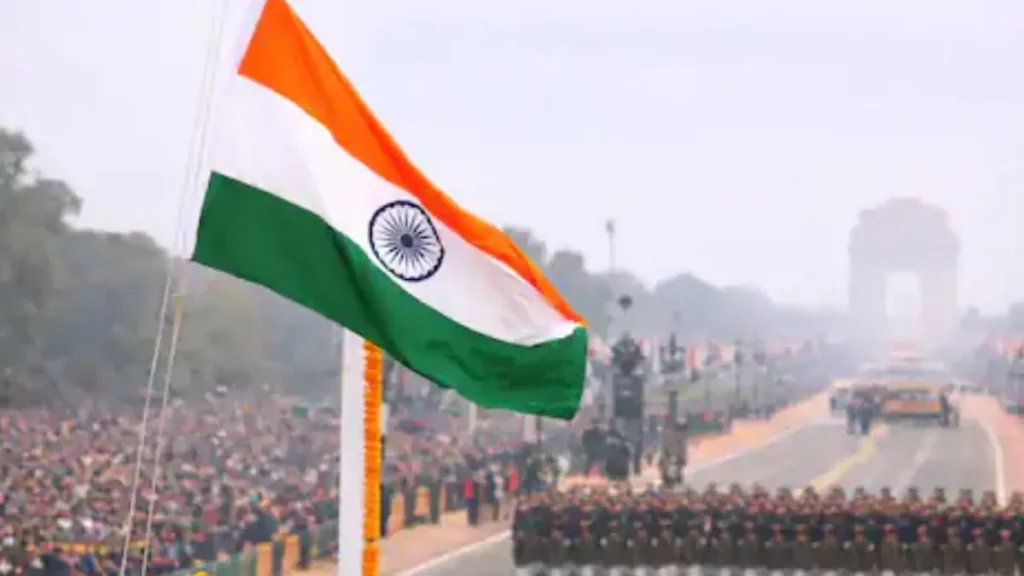
National Flag Day 2026 India – Learn the history, significance, Flag Code of India, Pingali Venkayya, Ashoka Chakra, and the role of the Tiranga in India’s freedom movement. Important current affairs and GK notes for UPSC, SSC, Banking, Railways, Defence, Police, PCS, and other competitive exams.
Introduction
National Flag Day is observed in India every year on 22 July to commemorate the historic adoption of the Indian National Flag (Tiranga) by the Constituent Assembly on 22 July 1947, a few weeks before India attained Independence. The day serves as a reminder of the nation’s unity, sovereignty, democratic values, and the sacrifices made by countless freedom fighters. The Tiranga is not merely a national symbol but also represents India’s constitutional ideals and collective identity.
Why National Flag Day is Celebrated
National Flag Day celebrates the official adoption of the Indian National Flag by the Constituent Assembly in 1947. The Tricolour symbolizes the unity of India’s diverse population and reflects the principles enshrined in the Constitution. Every year, educational institutions, government offices, and citizens observe the day by organizing awareness programmes about the flag’s history, proper usage, and national importance.
The observance also encourages citizens to respect the Flag Code of India and understand the values represented by the Tiranga. It reminds every Indian that national unity and constitutional values should remain above all differences.
History of the Indian National Flag
The evolution of India’s national flag spans several decades of the freedom movement.
The earliest concepts of a national flag emerged in the early twentieth century when freedom fighters felt the need for a common symbol against British colonial rule. Several versions were proposed by nationalist leaders and organizations before the final design was adopted.
The present Tricolour was inspired by the flag designed by Pingali Venkayya, an Indian freedom fighter and flag designer. On 22 July 1947, the Constituent Assembly adopted the saffron, white, and green tricolour with the Ashoka Chakra replacing the spinning wheel (Charkha) at the centre. The Ashoka Chakra, containing 24 spokes, symbolizes justice, righteousness, and continuous progress.
Significance of the Colours and Ashoka Chakra
Each element of the national flag carries deep symbolic meaning.
- Saffron represents courage, sacrifice, and selflessness.
- White symbolizes peace, truth, and honesty.
- Green stands for prosperity, fertility, and faith.
- Ashoka Chakra signifies law, dharma, progress, and movement, reminding citizens that a nation must continue moving forward.
These values collectively reflect India’s aspirations as a democratic republic committed to justice, equality, and development.
Role of the National Flag in India’s Freedom Movement
During the struggle against British rule, the Tricolour became a powerful symbol of resistance and unity. Freedom fighters proudly carried different versions of the national flag during protests, marches, and movements demanding self-rule.
The flag united people across religions, languages, and regions under one national identity. It inspired millions to participate in the Non-Cooperation Movement, Civil Disobedience Movement, and Quit India Movement. Even before Independence, the flag had become a symbol of hope, sacrifice, and freedom.
Today, the Tiranga continues to represent the ideals for which countless freedom fighters laid down their lives.
Flag Code of India
The Flag Code of India provides guidelines regarding the display, handling, and respectful use of the national flag.
Important provisions include:
- The national flag must always be treated with dignity and respect.
- It should never touch the ground, water, or be used as drapery or clothing.
- Damaged or soiled flags should be disposed of respectfully.
- Citizens are permitted to hoist the national flag throughout the year, provided they comply with the Flag Code.
- During official State Mourning, the flag may be flown at half-mast as directed by the Government of India.
Importance for Government Exam Aspirants
National Flag Day is an important topic for UPSC, State PSCs, SSC, Railways, Banking, Defence, Police, and Teaching examinations. Questions are frequently asked about:
- Date of National Flag Day
- Adoption of the Tiranga
- Pingali Venkayya
- Meaning of the colours
- Ashoka Chakra and its 24 spokes
- Flag Code of India
- Constituent Assembly decisions
- Role of the national flag during the freedom movement
Understanding these concepts also strengthens preparation for Polity, History, and General Awareness sections.
Why this News is Important
Important from Current Affairs Perspective
National Flag Day 2026 reminds citizens of one of the most significant constitutional milestones before India’s Independence. As the nation continues celebrating democratic values, awareness regarding the National Flag and the Flag Code remains highly relevant.
The observance promotes constitutional literacy and encourages responsible citizenship. It also reinforces respect for national symbols, making it an important topic in civic education and public awareness campaigns.
Importance for Competitive Examinations
Questions on National Flag Day regularly appear in competitive examinations because they combine history, polity, and constitutional knowledge.
Candidates should remember:
- 22 July 1947 – Adoption of the National Flag.
- Pingali Venkayya – Designer of the original flag.
- Ashoka Chakra – Replaced the Charkha.
- 24 spokes – Represent righteousness and progress.
- Flag Code of India – Governs proper display and use of the national flag.
Since these facts are repeatedly asked in UPSC, SSC, Banking, Railways, Defence, and State PSC examinations, National Flag Day remains an important current affairs topic.
Historical Context
Evolution of India’s National Flag
Before Independence, India did not have a universally accepted national flag. Different versions emerged during the freedom movement beginning in the early twentieth century.
The flag designed by Pingali Venkayya became the basis for the final national flag. After careful deliberations, the Constituent Assembly adopted the present design on 22 July 1947, replacing the spinning wheel with the Ashoka Chakra to reflect constitutional governance and progress.
Since Independence, the Tiranga has become one of the strongest symbols of India’s unity, democracy, sovereignty, and national pride.
Key Takeaways from National Flag Day 2026
| S.No. | Key Takeaway |
|---|---|
| 1 | National Flag Day is observed every year on 22 July. |
| 2 | The Constituent Assembly adopted the Tiranga on 22 July 1947. |
| 3 | Pingali Venkayya designed the original version of the Indian National Flag. |
| 4 | The Ashoka Chakra with 24 spokes symbolizes law, righteousness, and continuous progress. |
| 5 | The Flag Code of India lays down rules for displaying and respecting the National Flag. |
FAQs: National Flag Day 2026
1. What is National Flag Day?
National Flag Day is observed every year on 22 July to commemorate the adoption of the Indian National Flag (Tiranga) by the Constituent Assembly on 22 July 1947.
2. Why is National Flag Day celebrated in India?
The day celebrates the official adoption of the Tiranga and promotes awareness about its history, significance, and the importance of respecting the National Flag.
3. When was the Indian National Flag adopted?
The Indian National Flag was officially adopted by the Constituent Assembly on 22 July 1947, a few weeks before India’s Independence.
4. Who designed the Indian National Flag?
The present design of the Indian National Flag is based on the design created by Pingali Venkayya, a freedom fighter and flag designer.
5. What do the three colours of the Tiranga represent?
- Saffron: Courage and sacrifice
- White: Peace, truth, and honesty
- Green: Prosperity, faith, and growth
6. What does the Ashoka Chakra symbolize?
The Ashoka Chakra, with 24 spokes, represents dharma (righteousness), justice, movement, and continuous progress.
7. What replaced the Charkha in the National Flag?
The Ashoka Chakra replaced the spinning wheel (Charkha) in the final design adopted in 1947.
8. What is the Flag Code of India?
The Flag Code of India is a set of rules governing the display, use, handling, and respectful disposal of the Indian National Flag.
9. Which constitutional body adopted the National Flag?
The Constituent Assembly of India adopted the National Flag on 22 July 1947.
10. Why is National Flag Day important for competitive exams?
It is important because questions related to the date, history, Flag Code, Pingali Venkayya, Ashoka Chakra, and symbolism of the Tiranga are frequently asked in UPSC, State PSC, SSC, Banking, Railways, Defence, Police, and Teaching examinations.
11. How many spokes are there in the Ashoka Chakra?
The Ashoka Chakra has 24 spokes.
12. Under which law is the proper use of the National Flag regulated?
The proper display and use of the National Flag are governed by the Flag Code of India, 2002, along with relevant provisions of the Prevention of Insults to National Honour Act, 1971.
Some Important Current Affairs Links

